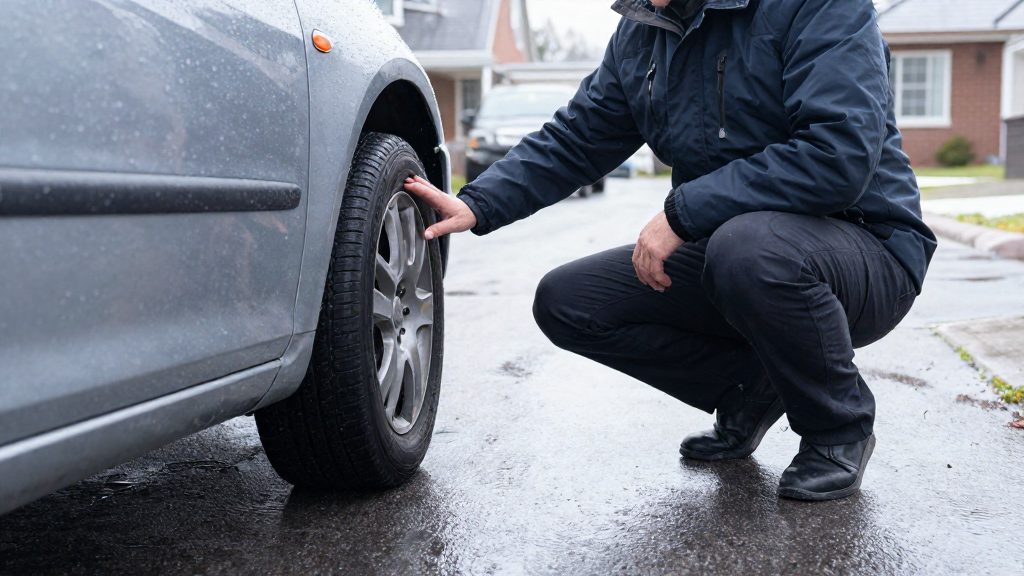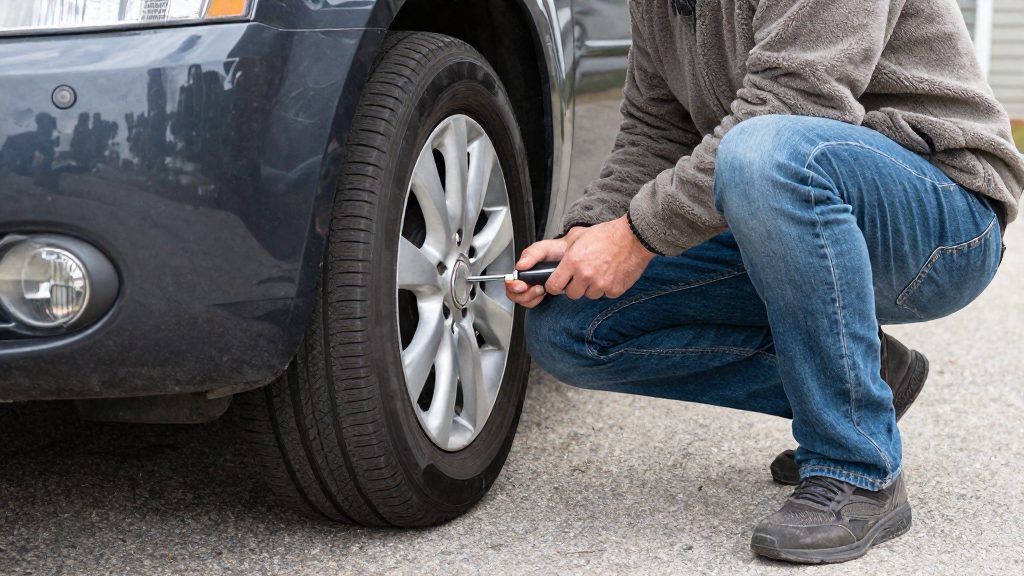
In Canada, a passenger car tire must be replaced once its tread is worn down to 1.5 mm (2/32 of an inch), the level of the tread wear indicators, according to Transport Canada and the Ontario Ministry of Transportation. Measure each tire in its major grooves before the inspection, and treat that figure as the point where replacement is required, not as a target to aim for. For winter driving, Transport Canada advises against tires worn close to 4 mm (5/32 of an inch) on snow-covered roads, and Québec’s SAAQ recommends at least 4.8 mm across the full width. Inspection and tire rules are set by each province, so confirm the standard that applies where you live before you book.
What is the minimum tread depth for a passenger car in Canada?
Transport Canada’s tire guidance states that tires with tread worn down to the same level as the tread wear indicator, which it gives as 1.5 mm or 2/32 of an inch, must be replaced. The Ontario Ministry of Transportation describes the same threshold in its driver’s handbook: replace tires when the tread is less than 1.5 mm deep or when the wear indicators touch the road. For heavier vehicles, the Ontario handbook sets a stricter rule. Vehicles weighing more than 4,500 kilograms must replace their front tires when the tread is less than 3 mm deep.
Some press reports describe a 2 mm failure point for Ontario safety inspections. The official sources consulted for this article do not confirm that figure. Do not assume a tire will pass at 1.5 mm or 2 mm without checking the current standard for the inspection you are booking. The tread wear indicators are a useful visual check, but they only show the limit once the tread has worn down to them, so a measured reading gives you more warning.
How do you measure tread depth correctly?
A tread-depth gauge gives you a number you can compare with the 1.5 mm limit, which a visual check cannot do. The official sources consulted describe tread wear indicators and do not describe a coin method, so treat any coin check as a rough warning only.
Follow these steps on each of the four tires:
- Park on level ground with the tires cold, so heat from driving does not affect the reading.
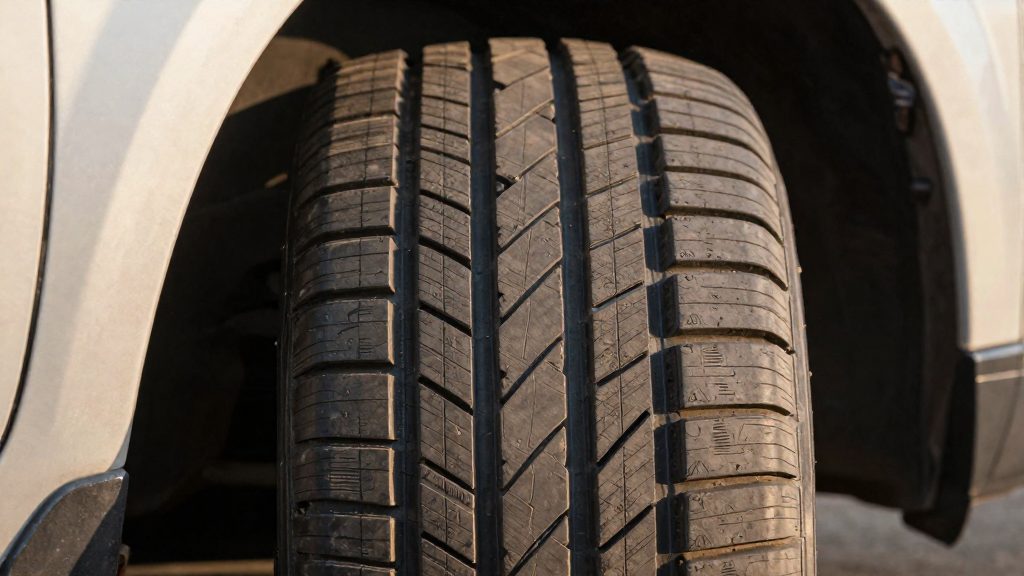
- Locate the tread wear indicators. Transport Canada describes them as small raised bars that run across the grooves, normally six spaced evenly around the tire.
- Place the gauge in a major groove, not on a wear bar. A reading taken on a raised bar does not show the depth of the groove.
- Repeat the measurement at several points across the width of the tread and around the circumference, because wear is often uneven. Record the lowest reading for each tire.
- If one edge of a tire is worn more than the rest, do not just replace the tire. Have a technician check alignment and inflation, since the cause can wear a new tire just as quickly.
Bring the lowest reading from each tire to the inspection appointment so you know in advance which tire, if any, is at the limit.
Why does winter driving raise the tread threshold?
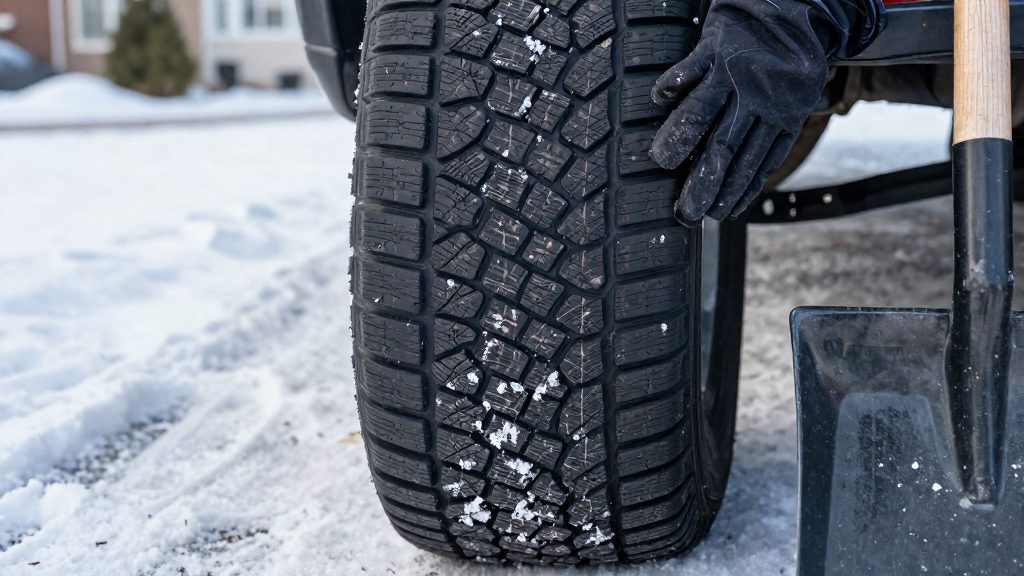
Tread grips snow and slush differently from dry pavement, which is why winter guidance sets a higher figure than the legal floor. Transport Canada advises that tires worn close to 4 mm (5/32 of an inch) should not be used on snow-covered roads.
In Québec, the SAAQ recommends that tread be at least 4.8 mm (6/32 of an inch) across the entire width of the tire for better traction. It presents this as a recommendation rather than a legal minimum. Québec’s winter tire rules are more specific. Most motorized road vehicles registered there must have winter tires from December 1 to March 15 inclusive. Only tires with the snowflake-on-mountain pictogram and studded tires count as winter tires, and studded tires are permitted from October 15 to May 1 inclusive. If you drive in another province, these dates and pictogram rules do not apply to you, and you should check the rules where you are registered.
When should you replace tires before an inspection?
Replace a tire before the inspection if its tread is near the wear indicator level, rather than hoping it passes. Transport Canada advises replacing tires before they reach the minimum tread depth for optimum traction in wet or snow conditions. A tire that only just passes a measurement is still close to the limit, so it is the weakest point when you brake on a wet road.
Tire age matters as well, even when the tread looks good. The Ontario handbook says tires should not be older than 10 years, and that tires deteriorate with age even when they are not in use. Transport Canada explains that the four-digit date code on the sidewall identifies the date of manufacture, but its guidance does not set an age limit. The last four digits give the week and year, so 3613 means week 36 of 2013. According to the SAAQ, older tires have harder tread that grips snow and ice less well.
Damage is a separate reason to replace a tire, whatever its tread depth. If you see a bulge, a cut, or a cord showing through the rubber, stop driving on that tire and have it checked before you go to the inspection.
What should you do if a tire is already at the limit?
If any tire is at or below 1.5 mm, plan to replace it before the inspection rather than relying on the inspection to find the problem. Book the replacement early, since you will need the tire fitted before the vehicle is presented for inspection. Avoid driving on a worn tire in rain or snow while you wait. The official sources consulted do not give a rule for how long a tire at the limit may still be driven, so the safest course is to replace it as soon as you can.
Frequently asked questions
Do I have to replace all four tires if only one is below the limit?
The official sources consulted do not specify whether all four tires must be replaced when only one is below the limit. Ask the inspection station and a tire technician how they apply their standard to your vehicle.
Does the inspection check the spare tire?
The official sources consulted do not specify whether a spare is included. Ask the inspection station before your appointment.
Where can I find my province’s inspection standard?
Start with your provincial transportation ministry’s website. For Ontario, the Ministry of Transportation publishes its driver’s handbook on ontario.ca.
Does the tire pressure matter for the inspection?
The official sources consulted for this article do not specify a pressure check as part of the tread rule. Check the recommended pressure on the vehicle’s tire information placard or in the owner’s manual.