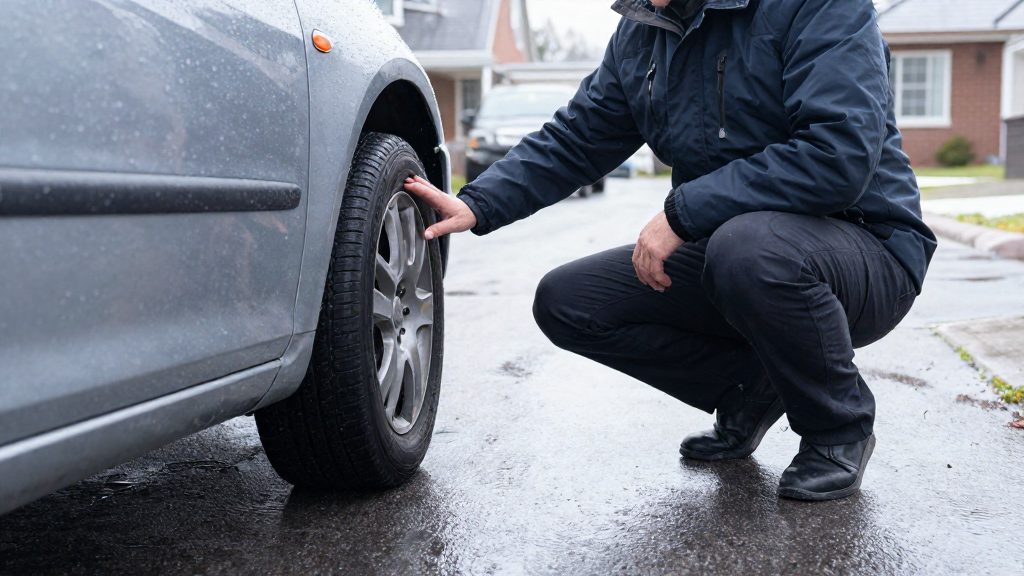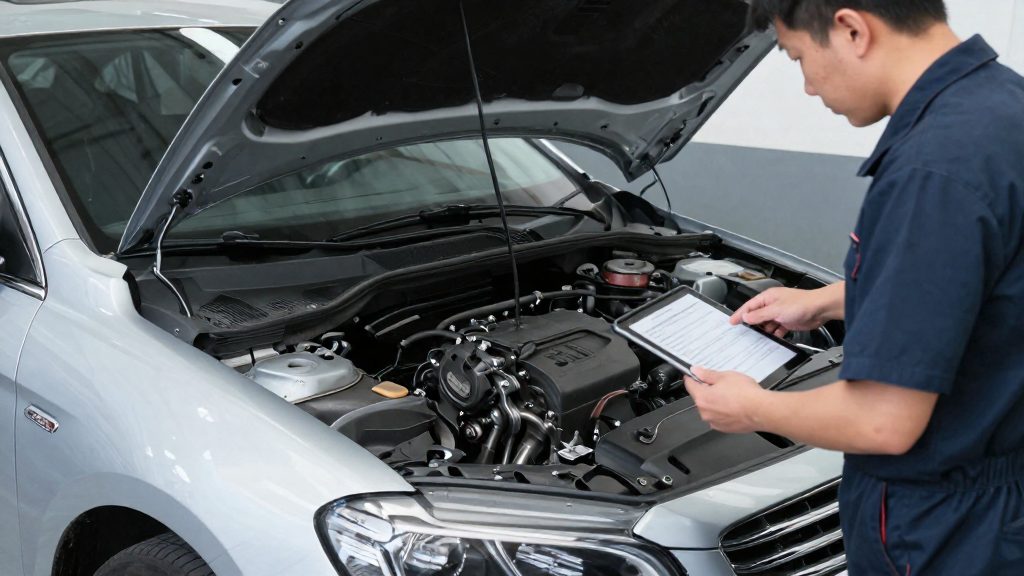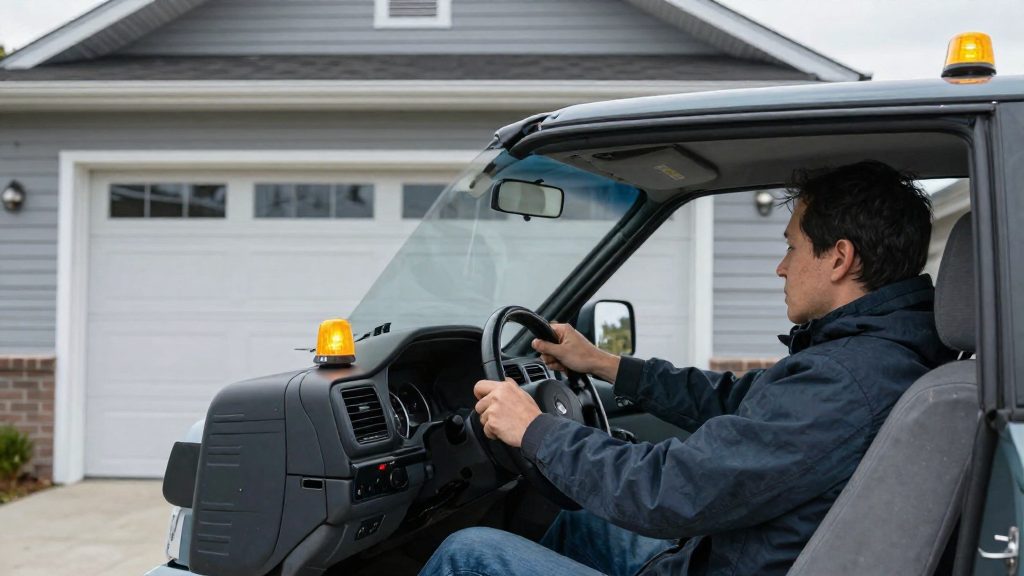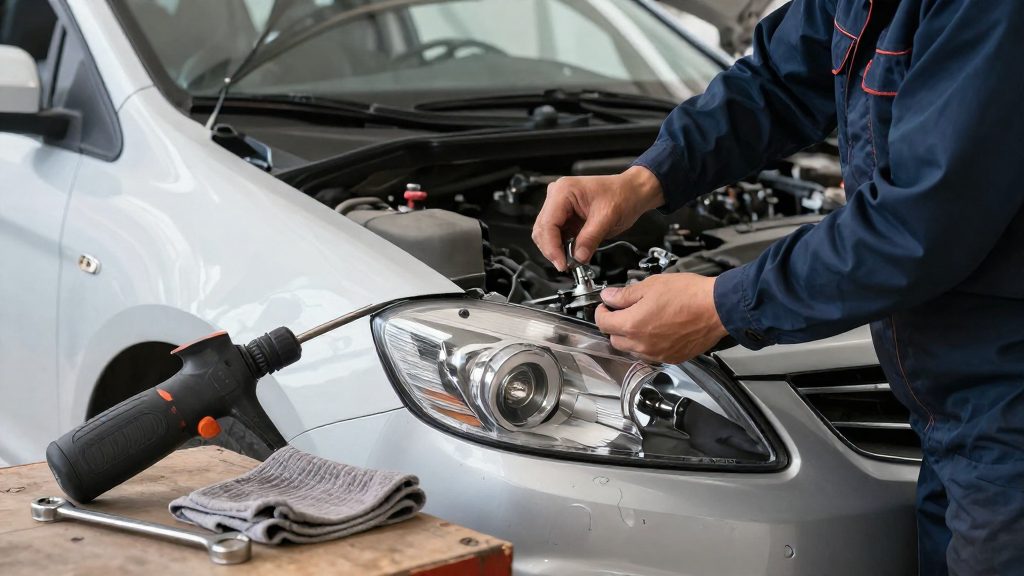
Before a Safety Standards Certificate inspection in Ontario, check that every light on your vehicle works and that the brakes feel firm and even, with no brake warning light on the dashboard. Inspection centres test against the Ministry of Transportation’s Passenger/Light-Duty Vehicle Inspection Standard, so a home check cannot tell you whether you will pass. It does let you fix simple faults, such as a blown bulb, before you book an inspection you could fail. The guidance below covers Ontario only.
When do you need a Safety Standards Certificate in Ontario?
The Government of Ontario says a certificate is required in four situations: when you register a rebuilt vehicle, when you transfer a used vehicle to a new owner (unless the new owner is your spouse), when you register a vehicle bought in or brought from another province, territory or country, and when you change a vehicle’s status from unfit to fit. You can buy and register a vehicle without one, but you cannot put plates on a vehicle without one. The official page also states that a certificate is not needed to register a used snowmobile, off-road vehicle, motor-assisted bicycle or trailer.
How long is the certificate valid?
According to the Government of Ontario, a certificate is valid for 36 calendar days after the inspection date. Count that window from the inspection itself, not from the day you finally register the vehicle. If the certificate expires before you register, you need a new inspection and a new certificate. Book the inspection close to your registration appointment and keep the paperwork with the vehicle. Costs differ from one inspection station to another, and the government does not set them, so ask the station directly before booking.
How do you check your lights before inspection?
The exact pass and fail limits for each lamp are set in the Passenger/Light-Duty Vehicle Inspection Standard. This guide does not restate numeric limits, so consult the current version of the standard before relying on any figure. Carry out the checks below on level ground in a safe place, with the engine running, and switch the lights through each position.
- Headlights: check low beam and high beam on both sides. Look for cracked or cloudy lenses and for moisture inside the housing. A headlight that is visibly aimed too high or too low should be adjusted before inspection.
- Turn signals and hazards: check the front and rear signals on both sides. A flash that is much faster than usual often means a bulb has failed on that side.
- Brake lights: press the pedal while someone stands behind the vehicle, or check the reflection in a garage door or a dark window. If the vehicle has a high-mounted centre stop lamp, check it as well.
- Reverse lights, plate lights and fog lamps: confirm each one works, and that fog lamps come on only when you select them.
If a bulb has failed, check the matching fuse first, using the fuse layout in your owner’s manual. When a bulb sits in a pair, replacing both at the same time is a sensible habit, because the other one is probably near the end of its life.
How do you check your brakes before inspection?
Most of these checks take a few minutes in a driveway or a quiet car park. Any road test must be done in a safe, empty place, at low speed, and never in traffic.
- Pedal feel: the pedal should be firm. Be cautious if it slowly sinks under steady pressure, pulses when you are not braking, or the car feels spongy.
- Noise and vibration: grinding, squealing or a shudder when braking points to worn friction parts or a fault that needs a technician.
- Pulling: the car should stop in a straight line. Pulling to one side is a reason to stop testing and have the system checked.
- Parking brake: on a gentle slope in a safe spot, apply the parking brake and confirm the vehicle holds. Release it fully and confirm the warning light goes out.
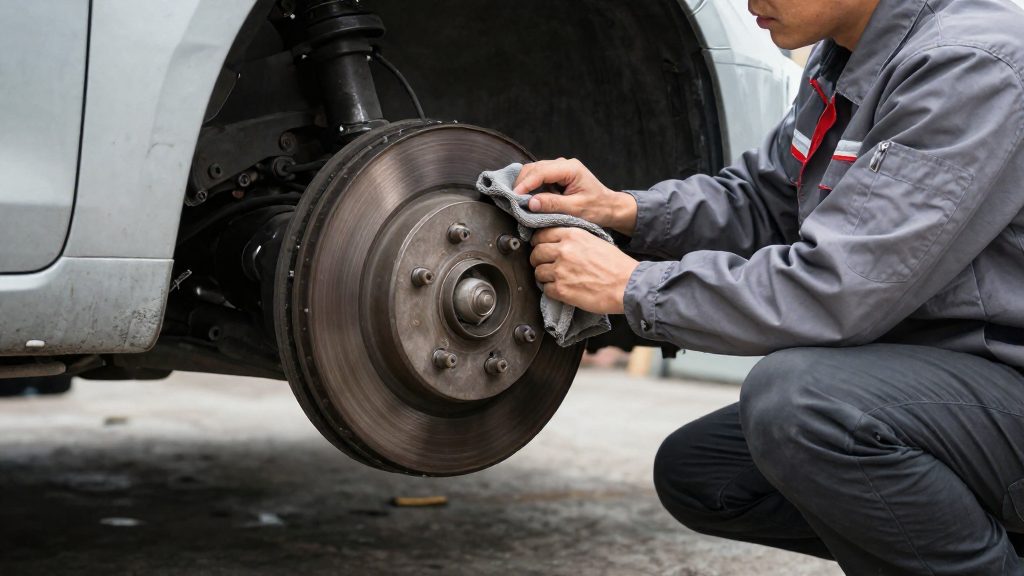
- Brake fluid: with the engine cold and the vehicle level, check the reservoir against its markings. The owner’s manual gives the location and any specific instructions. Never top up above the maximum mark. A gradual drop can be normal as pads wear, but a steady loss between checks suggests a leak, which needs professional diagnosis.
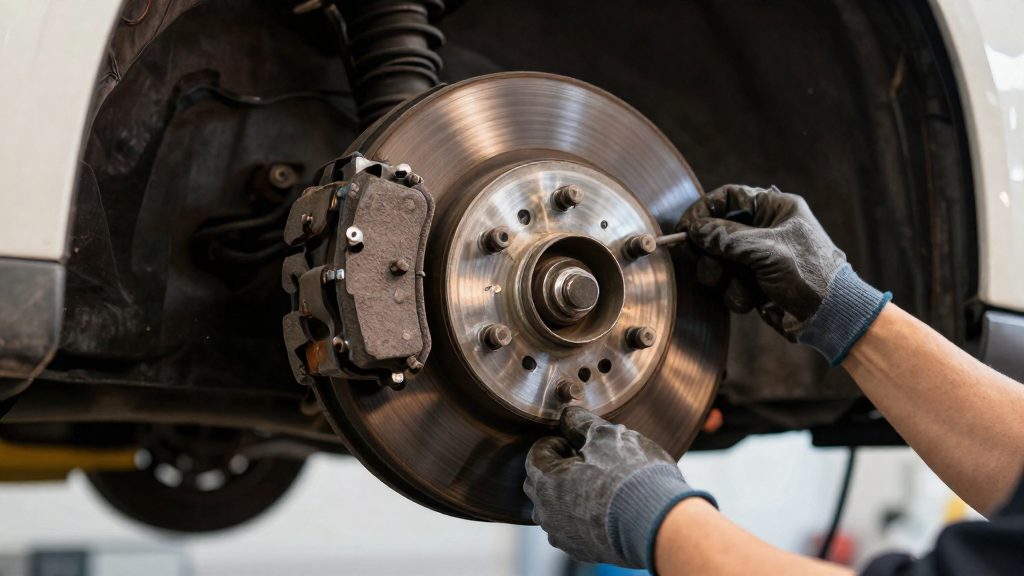
- Pads and discs: where you can see through the wheel, look at the friction material and the discs for deep scoring or metal-on-metal wear. Anything beyond a light surface look should go to a technician. The official sources consulted do not give thickness limits for home checks, so rely on the manufacturer’s specifications.
Why does the brake warning light matter before inspection?
Your owner’s manual is the authority on what each dashboard light means for your vehicle. Manuals differ in detail, but the general guidance is similar. A red brake warning light that stays on after the engine starts, or that comes on while you drive, can mean low brake fluid or a fault in the braking system, and many manuals say to stop safely and not keep driving until the cause is found. The amber anti-lock brake (ABS) light is a separate indicator. A light that flashes briefly at start-up is normally a system self-check. A dashboard light is not a pass or fail result, but it is a clear sign that the system needs diagnosing before anyone tests it.
How do you prepare the vehicle on inspection day?
Clean the headlight and tail lens covers, and clear snow, ice and road grime from the lamps and the plate area so the inspector can see each light clearly. Make sure no cargo, accessories or stickers block a lamp or a reflector. Start the engine and check that the dashboard shows no unexplained warning lights. If you have already had a repair, keep the receipt, since it shows the work was done and what was replaced.
What should you do if a light or brake fails?
A failed light is usually a quick repair. Replace the bulb or fuse, check that the light works, and then book. A brake problem is different. If the pedal feels soft, the warning light stays on, the car pulls to one side, or you hear grinding, do not drive it to the inspection. Arrange a tow or a mobile repair and have the cause fixed first. Once the repair is done, ask the inspection centre how a re-inspection is handled, because the official sources consulted do not set a fee or a time limit for it.
Does this guidance apply outside Ontario?
No. The certificate rules above are Ontario’s. Other provinces and territories set their own vehicle inspection and registration rules, so check with the provincial or territorial authority where you register the vehicle. The lights and brakes checks are useful everywhere, but the Ontario inspection requirements do not transfer to other jurisdictions.
Frequently asked questions
Do I need an inspection to renew my Ontario plates every year?
The Government of Ontario lists four situations where a certificate is required, and an annual plate renewal is not one of them.
Does a passed inspection mean my brakes will stay safe for the year?
No. The official page states that the certificate is not a warranty or guarantee of the vehicle’s condition, so keep checking your lights and brakes between inspections.
Can any mechanic issue a Safety Standards Certificate?
No. Inspections must be carried out at a DriveON Vehicle Inspection Centre, so confirm the station is one before you book.
What is required for a salvage vehicle?
A salvage vehicle must be inspected at a specialized centre licensed for structural inspections, and it needs both a Structural Inspection Certificate and a Safety Standards Certificate.