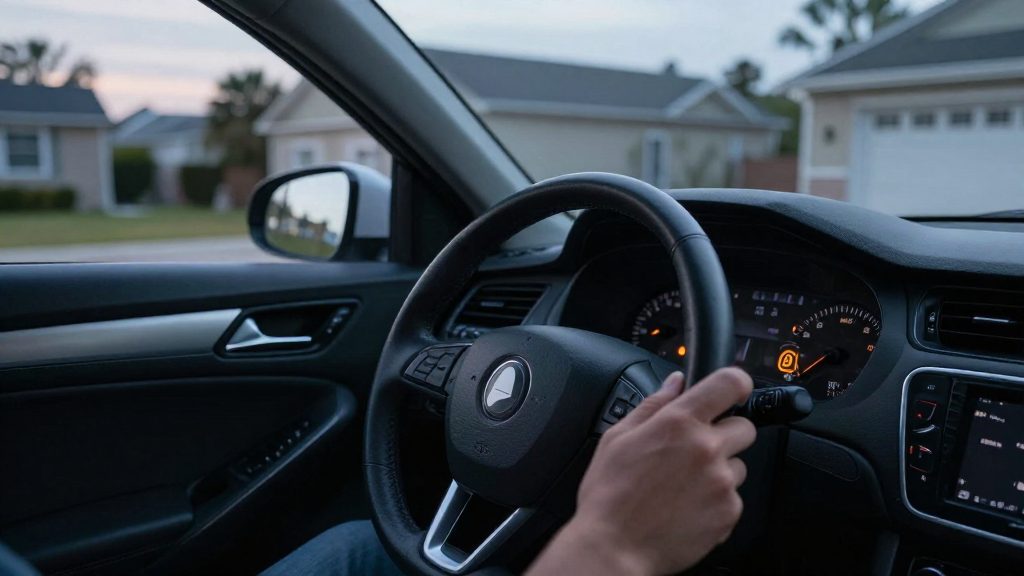
A flashing check engine light is more urgent than a steady one. In most vehicles it signals an active engine misfire, which can quickly damage expensive components. Reduce your speed and engine load, avoid highway driving, and pull over somewhere safe as soon as you can. If the engine runs rough, loses power, smokes, or smells of burning, shut it off and call for a tow. Otherwise, drive gently to a licensed repair facility and have the cause diagnosed without delay.
Why does a flashing light mean something different from a steady one?
Transport Canada’s advisory on dashboard warning lights says that a light that “comes on and stays on when you are driving” calls for checking the owner’s manual and following its instructions. It also says a dealer or licensed auto repair facility should diagnose and repair the problem “without delay” (Transport Canada, 2014). That advice covers warning lights in general, so your owner’s manual is the authority on what a flashing pattern means for your specific model.
In most vehicles, a flashing light is used to report an active misfire, meaning one or more cylinders are not burning fuel properly. Unburned fuel can then reach the exhaust, where it can overheat the catalytic converter, the emissions component that treats exhaust gases. A steady light usually points to a fault the system has stored for later attention. It still needs prompt diagnosis, but it does not normally call for stopping the engine straight away. That difference is why a flashing pattern calls for faster action.

What causes a flashing light?
Misfires have several possible causes, and the official sources consulted do not rank them by frequency, so you should not assume one. Worn or fouled spark plugs, a failing ignition coil, a fuel delivery problem affecting one cylinder, a vacuum or air leak, and a faulty sensor sending wrong data to the engine computer can all produce the same flashing light. Only a diagnosis can tell them apart, which is why the shop’s test results matter more than a guess based on the dashboard.
How should you react the moment the light starts flashing?
Start by reducing the stress on the engine without making sudden moves in traffic.
- Ease off the accelerator. Avoid hard acceleration, steep hills, and towing, since each one raises engine load.
- Pull over safely. Signal, check your mirrors, and stop on the shoulder or in a parking lot, then turn on your hazard lights.
- Listen and watch. Rough running, shuddering, a sudden loss of power, a rising temperature gauge, a burning smell, or visible smoke all mean you should switch the engine off.
- Don’t assume a restart fixes it. If the light later becomes steady after a short drive, the fault is still there, and the same care applies until a technician has looked at the vehicle.
Once the car is parked, let the engine cool and avoid repeated restarts to see whether the light goes off. Restarting adds stress to the engine and tells you nothing reliable about whether the misfire has stopped.
Can you keep driving with a flashing light?
Only in a limited sense. If the engine runs smoothly and you have no other symptoms, the safest option is a short, gentle drive at low speed, on local streets, directly to a licensed repair facility. Avoid highways, long trips, and heavy traffic, and do not use the car for daily commuting until it has been checked. The official sources consulted do not set a mileage or time limit for driving with a flashing light, and no distance can be called safe in advance. If you are uncertain about the engine’s condition, arrange a tow, which is the lower-risk choice.
When should you call for a tow?
Call for roadside assistance or a tow when any of the following applies: the light flashes and the engine runs rough or stumbles; the vehicle loses power or stalls; the temperature reading climbs; you see smoke or smell fuel or burning; the repair facility is far away; or you are on a highway and cannot reach the next exit safely. If you must wait for help, move the car out of the traffic lanes if you can do so safely, keep your seatbelt fastened, and stay with the vehicle rather than walking along a busy road.
Could a loose gas cap be the cause?
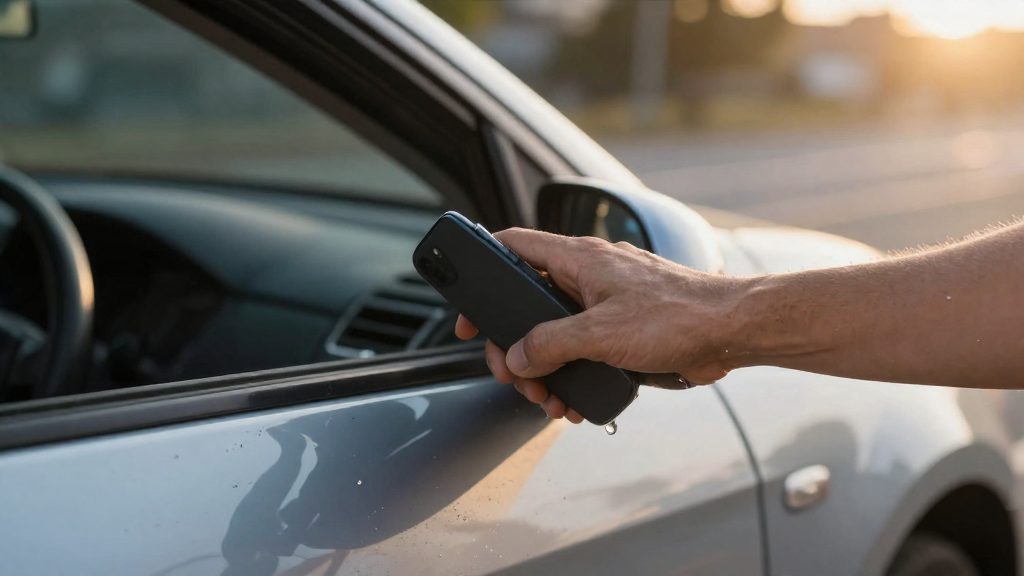
Probably not when the light flashes. A loose, cracked, or missing fuel cap is a common reason for a check engine light because it lets the evaporative emissions system register a leak, and that system is designed to keep fuel vapour from escaping. That fault normally produces a steady light, not a flashing one. If the light is steady and the car runs normally, tighten the cap until it clicks and check that the seal is undamaged. The system may need several drives before the light goes off after a fix. The official sources consulted do not give a set number, so if the light stays on or returns, have a shop check the system.
How do you get the fault code read?
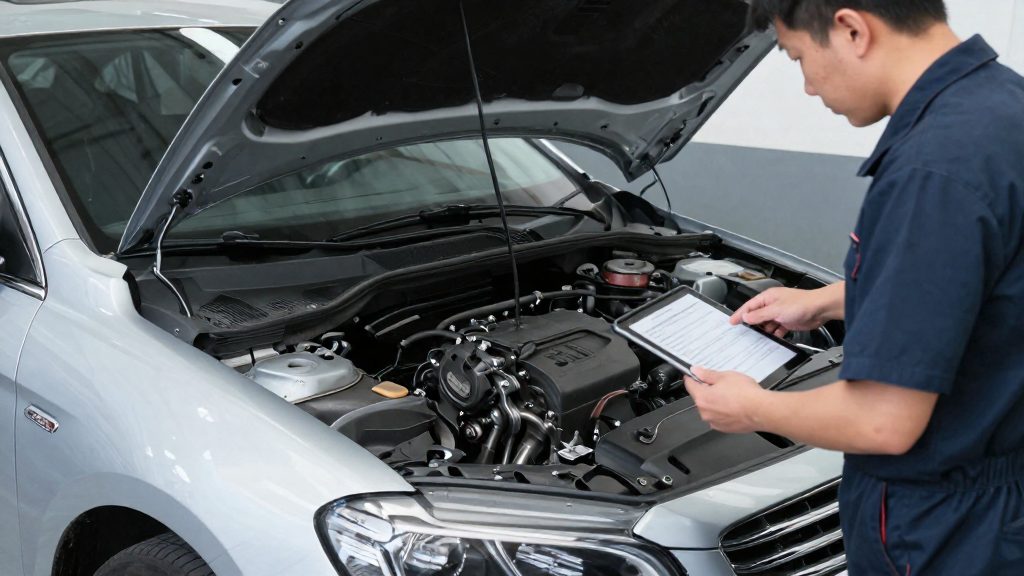
A repair facility can read the stored codes with a scanner connected to the diagnostic port, usually located under the dashboard near the steering column. Many parts retailers also offer a free scan, but a code only indicates the system where the fault was detected, not necessarily the failing part. Ask for the exact code, the freeze-frame data (the engine conditions recorded when the fault was set), and the test results behind any recommended repair. Keep a written copy. That record helps any later diagnosis and shows whether a repair was actually completed.
Could a safety recall be involved?
A recall is possible, but you cannot tell from the light alone. Search the Government of Canada recalls and safety alerts database by make, model, and year, and read any alert that mentions the engine, fuel, emissions, or ignition. If an alert matches your vehicle, follow its instructions and book the remedy with the manufacturer or dealer named in it. Do not wait for a recall to be confirmed before acting on a flashing light, because a recall does not change the urgency of a misfire.
Does a warning light affect a provincial inspection?
Periodic inspection rules are set by each province, and they differ: some provinces require regular safety inspections, while others do not. The official sources consulted do not say whether a flashing check engine light causes an inspection failure, so check with your provincial ministry responsible for transportation before an inspection is due. Whatever the rule, a flashing light is a reason to book diagnosis now rather than at the inspection station.
Frequently asked questions
Can I clear the code with a scanner and keep driving?
Clearing the code may turn the light off for a while, but it does not repair the cause, so the misfire and the light can return. It can also erase the stored data a technician needs. Have the code read and the fault diagnosed first.
Does a flashing light mean the engine will fail right away?
Not necessarily, but the official sources consulted do not give a timeline for damage. The risk grows the longer a misfire continues, so treat the flashing light as a reason to stop or arrange a tow.
Are oil pressure and engine temperature warnings the same as the check engine light?
No. They are separate lights with their own meanings, and some call for stopping the engine as soon as it is safe. Check your owner’s manual for the symbol on your dashboard and the action it requires.