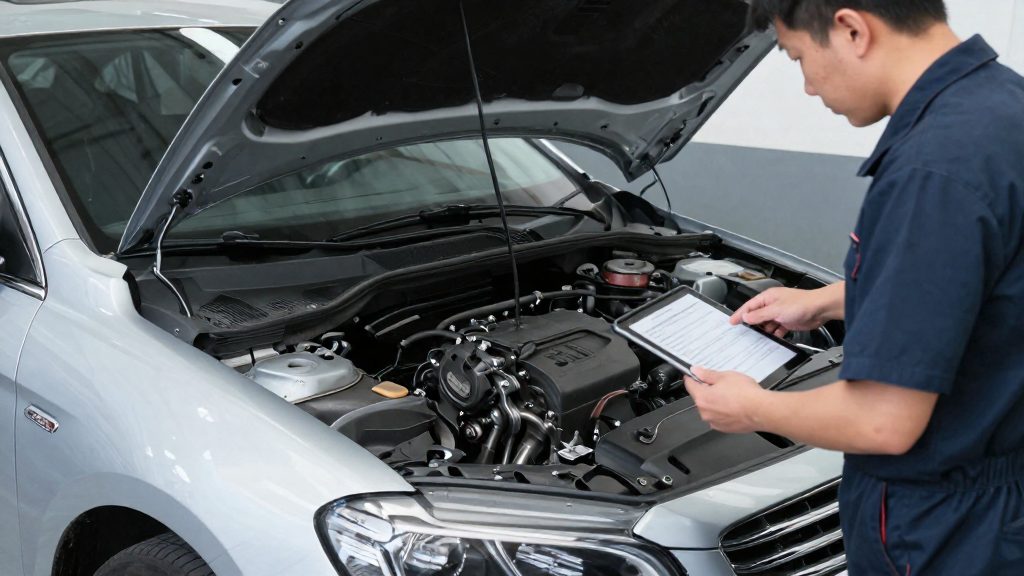
Before a safety inspection in Canada, the warning lights to deal with first are the ones linked to braking, airbags and the systems that keep the car stable. A lit brake warning, an airbag light or an anti-lock braking (ABS) light can mean a safety system is not working as designed, so have it diagnosed and repaired before you book. Rules differ across the country. The examples below come from Ontario’s Safety Standards Certificate and the Ministry of Transportation’s inspection standard, so confirm the requirements with your own provincial or territorial authority before the appointment.
Which warning lights should you fix first?
Start with the brake warning light, usually a red brake symbol or the word BRAKE. Ontario’s Passenger/Light-Duty Vehicle Inspection Standard (2022 edition) lists a brake indicator lamp as a rejection item when it is missing, is not red or amber, or does not operate as the manufacturer’s service instructions specify. As a general rule, red means stop and check the system promptly, while amber means check soon. A brake light that stays on, or a pedal that feels soft or sinks further than usual, is a reason to have the braking system inspected by a qualified technician before you drive anywhere non-essential.
The airbag warning light, often labelled SRS or showing a seated figure, is treated in the same way. The same standard lists the airbag tell-tale as a rejection item when it signals a malfunction or does not behave as the manufacturer specifies. It also rejects an airbag that has been permanently deactivated without a key-switch option. Never disconnect airbag wiring or cover the light to make it go off. That is unsafe, and it can cause a rejection on its own.
The ABS light also needs attention, but the official sources I could consult do not settle whether an illuminated ABS light causes a failure under the current Ontario standard. Some garage guidance says it is recorded on the report rather than failed, while other guidance says the opposite. Do not rely on either view. An ABS fault means the anti-lock function may not work during hard braking, so have it diagnosed.
Other lights, including the check engine light and the tire pressure monitoring light, are worth checking because they point to faults that affect emissions, fuel economy or tire safety. A steady check engine light usually calls for a scan at a convenient time. In most vehicles, a flashing one signals an active misfire that can damage the exhaust system, so reduce your driving and have the car looked at promptly. The official sources consulted do not say whether these lights cause a failure at the inspection, so treat them as repair priorities rather than as inspection rules. Your owner’s manual gives the meaning of each symbol for your specific model.
What does a Safety Standards Certificate actually cover?
In Ontario, a Safety Standards Certificate shows that a vehicle met the minimum safety standards on the day it was issued. It is not a warranty or a guarantee of the vehicle’s condition, so a pass does not protect you from a defect that develops afterward. Any Vehicle Inspection Centre licensed by the Ministry of Transportation can issue it, and the certificate can be sent by email once the vehicle passes.
The certificate is needed in specific situations: when registering a rebuilt vehicle, when transferring a used vehicle to a new owner (unless the new owner is a spouse), when registering a vehicle from outside Ontario, and when changing a vehicle’s status from unfit to fit. Its validity is short. It is valid for 36 calendar days after the inspection, and if it expires before the vehicle is registered, a new inspection and certificate are needed. Book the inspection so that registration falls inside that window.
How do you check for open recalls before the inspection?
A recall is an action taken by a manufacturer, usually with Transport Canada oversight, to fix a safety defect. Check for open recalls before you book, because a repair you have not yet made may be covered by one. Start with the vehicle identification number (VIN). It is 17 characters long and appears on your registration documents and at the base of the windshield on the driver’s side. Designated manufacturers must provide a VIN lookup tool on their websites, so enter the 17-digit VIN there to see which recalls apply to your specific vehicle.
Transport Canada also lists recalls in its Motor Vehicle Safety Recalls Database, which covers recalls issued by vehicle and equipment manufacturers. Search both sources, because a recall can be missed after a change of ownership. Transport Canada encourages owners to have safety recalls addressed as soon as possible. The official sources consulted do not say whether recall repairs are free in every case, so ask the dealer or manufacturer when you book the repair.

Why run a diagnostic scan before the appointment?
A scan tool reads the stored fault codes behind a warning light. This shows whether the problem is a loose sensor or something in the brake, airbag or steering systems, and it is the quickest way to separate a minor fault from one that needs urgent repair. A code is a clue, not a diagnosis, so a qualified shop should confirm the cause before replacing parts. A scan also helps with an intermittent light, because the fault may be stored even when the light is off at the moment you check.
When should you stop driving and book a repair?
Stop driving and arrange a tow or a qualified repair when the brake warning light is on together with reduced braking, a soft or sinking pedal, or brakes that feel weaker than usual. Do not drive to the inspection in that condition. If only the airbag light is on, you can drive normally to a shop, but book the diagnosis promptly, because the airbags may not deploy as designed in a crash. For a flashing check engine light, reduce your driving as described above.
Once the repair is done, book the inspection. If a light returns after repair, take the fault information back to the workshop rather than going through the inspection with the fault unresolved. If you suspect a safety defect that is not covered by any open recall, you can report it to Transport Canada through its online defect complaint form.
Frequently asked questions
Can I clear a warning light with a scan tool before the inspection?
Clearing a code does not repair the fault, and the light can come back. The official sources consulted do not address whether clearing codes affects an inspection, so fix the cause first and ask the inspection station.
What if my vehicle fails the inspection?
Repair the reasons listed on the inspection report, then return to a licensed inspection centre. The official sources consulted do not specify re-inspection fees or timelines.
Who do I contact if I suspect a safety defect with no open recall?
Report it to Transport Canada by phone at 1-800-333-0510 or through its online defect complaint form.