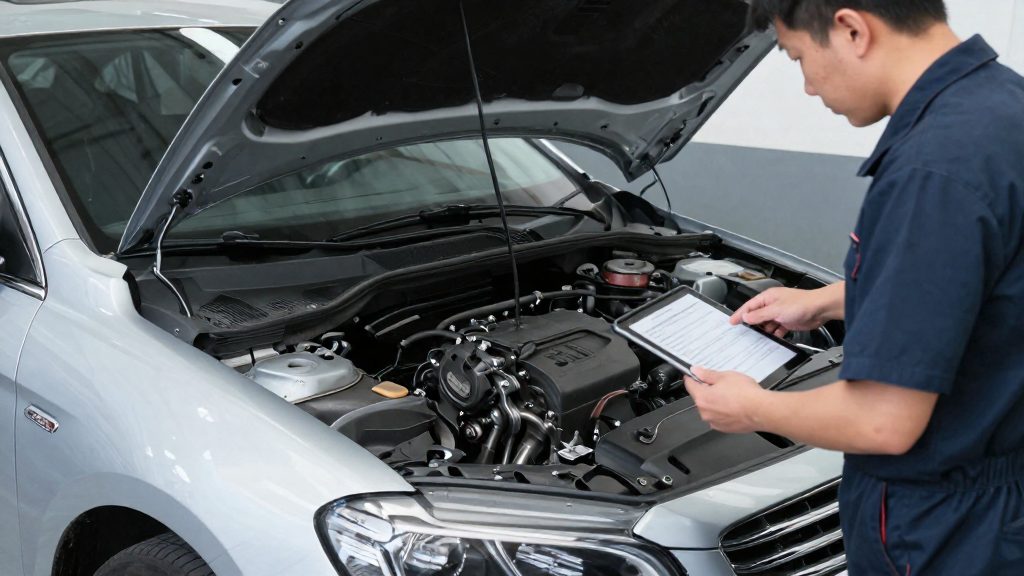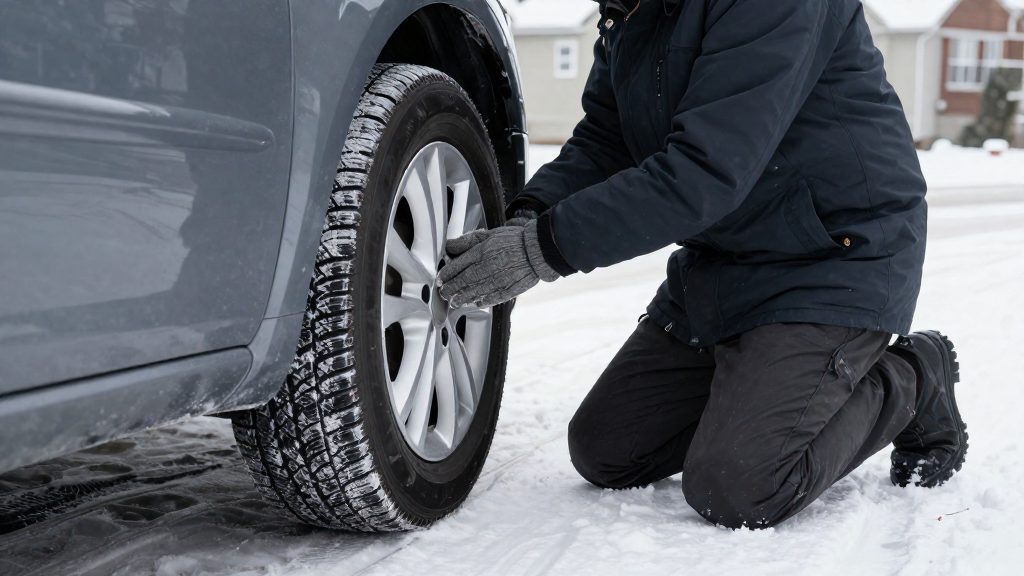
A winter driving car safety checklist for Canada starts with five checks to complete before the first cold snap: confirm whether your province requires winter tires and on which routes, keep tires at the correct pressure, look up open safety recalls with your vehicle identification number, pack a winter emergency kit, and understand which dashboard warning lights need action before you travel. Transport Canada sets the federal baseline, while provinces such as Quebec and British Columbia add their own tire rules.
Why does winter driving need extra car checks?
Cold weather changes how a vehicle grips the road and how well a driver can see. Transport Canada’s winter advice focuses on traction, control and stability: winter tires give better grip on slippery, snowy roads, and a well-prepared vehicle reduces the risk of losing control. The department published this guidance in 2010. It is the most specific national statement on these points among the official sources consulted for this article, so treat it as a starting point and check current provincial rules before you drive.
When do winter tires become mandatory?
Winter tire obligations depend on where you live and drive. In Quebec, Québec.ca states that vehicles must be fitted with winter tires from December 1 to March 15. Drivers who do not comply face a fine of $200 to $300. The same page lists exemptions, including trailers, vehicles registered outside Quebec, heavy vehicles, agricultural machinery, motorhomes and motorcycles used as emergency vehicles. A vehicle bought from a dealer is exempt for seven days after purchase, and a leased vehicle for the seven days before the lease ends, provided you carry the sales contract or lease.
British Columbia works differently. The provincial government states that winter tires or chains are required on most routes from October 1 to April 30. On select highways that do not run through mountain passes or high-snowfall areas, the requirement ends on March 31. Coverage is route-specific, so consult the province’s route maps before a trip rather than assuming a whole region is covered.
Outside these provincial rules, Transport Canada’s advice still applies as good practice: install winter tires on all wheels, not only on the driven axle. Look for the three-peak mountain snowflake symbol on the tire sidewall. Transport Canada briefing material describes this symbol as optional for manufacturers whose tires meet federal winter performance minimums. The official sources consulted do not settle whether an all-season tire with an M+S marking meets every provincial route requirement, so check the provincial guidance for your route before relying on one.
How often should you check tire pressure in winter?
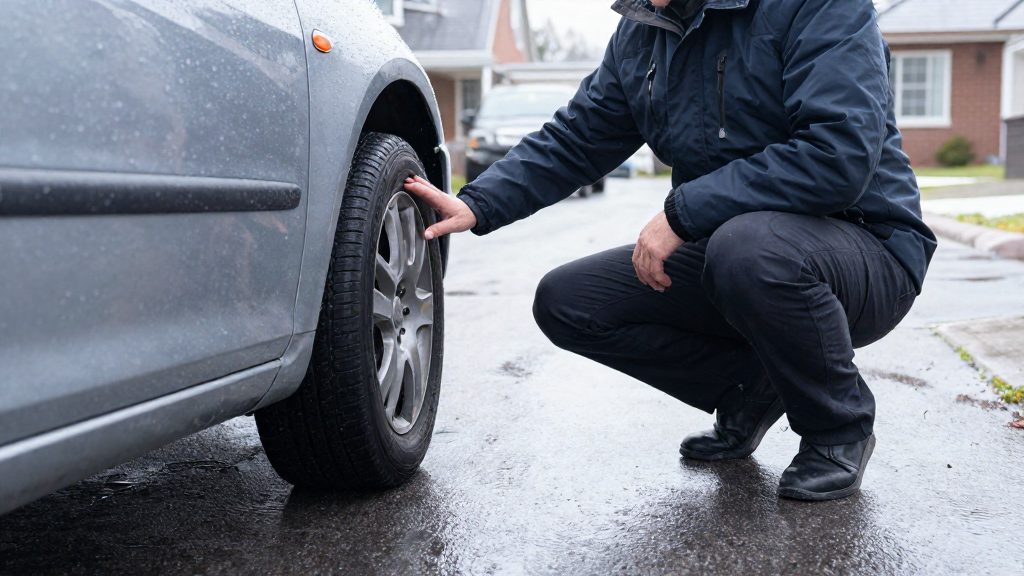
Transport Canada advises checking tire pressure at least once a month, preferably after the vehicle has been parked outside overnight, because pressure falls as temperatures drop. Check when the tires are cold, using a gauge you trust. Inflate to the pressure shown on the placard, usually on the driver’s door frame, or in the owner’s manual, not to the maximum printed on the tire sidewall. If a tire feels hot after driving, wait until it has cooled before you measure it, because a warm reading is higher and can lead you to under-inflate.
Fit valve caps on each tire valve to keep snow and ice out of the valve core. Once a month is a minimum. Check more often if you notice a warning light or a change in how the vehicle handles.
What belongs in a winter emergency kit?
Transport Canada’s 2010 release tells drivers to carry a winter emergency kit but does not list its contents. The Government of Canada’s emergency kit guidance, updated on 2025-09-12, lists household items such as water, food, a flashlight, a radio, batteries, chargers, a first aid kit, medication and copies of important documents. It does not state that these items are the vehicle kit. The official sources consulted here do not specify a vehicle kit list, so build yours around the trips you actually make.
For winter driving, practical items include a blanket and warm clothing, a snow shovel, an ice scraper with a brush, traction material such as sand or cat litter, a phone with a charger, and food and water that will not freeze. Keep the kit in the passenger compartment or the trunk where it is easy to reach in a crash or breakdown, not buried under cargo.
How do you check for open safety recalls?
Transport Canada names four ways for Canadians to check recalls. The motor vehicle safety recalls database covers recalls issued in Canada from 1970 to the present. The Government of Canada recalls and safety alerts app shows recent recalls for vehicles, tires and child car seats. The motor vehicle recalls web feed lists the latest vehicle recalls and offers updates. Finally, the manufacturer’s website accepts your vehicle identification number (VIN). The VIN is 17 characters long and appears on the registration document and on the vehicle itself.
Since January 1, 2025, designated vehicle manufacturers must provide a lookup tool on their websites, and Transport Canada states that all manufacturers must comply by mid-2026. Enter your 17-digit VIN there to see which recalls apply. If a recall applies, contact the dealer or manufacturer to arrange the repair, and follow any instruction not to drive the vehicle until it is fixed. Transport Canada also flags airbag recalls for separate checking, so do not skip that category.
Which dashboard warning lights need action before a cold trip?
Transport Canada’s ‘Stay safe when driving’ page, last modified on 2025-01-22, includes a section on warning lights and indicators, including the airbag readiness light. The page summaries consulted do not give a full table of symbols, so the owner’s manual for your model is the reference for each icon and the action it requires.
Before a winter trip, pay particular attention to three lights. An airbag readiness light that stays on means the airbag system needs to be checked. In some tire pressure monitoring systems, the light appears only when a tire is already well below its target pressure, so a manual check with a gauge remains necessary even when the light is off. Any warning light that stays on after the vehicle has been started, or that flashes, should be checked before a long drive. If a light comes on while you are driving, stop when it is safe to do so and consult the manual before continuing.
Do you need an inspection before winter?
The official sources consulted for this article do not set a national winter inspection requirement for private vehicles. Inspection and safety certificate rules are set by each province, so check your provincial transport website for what applies to your vehicle.
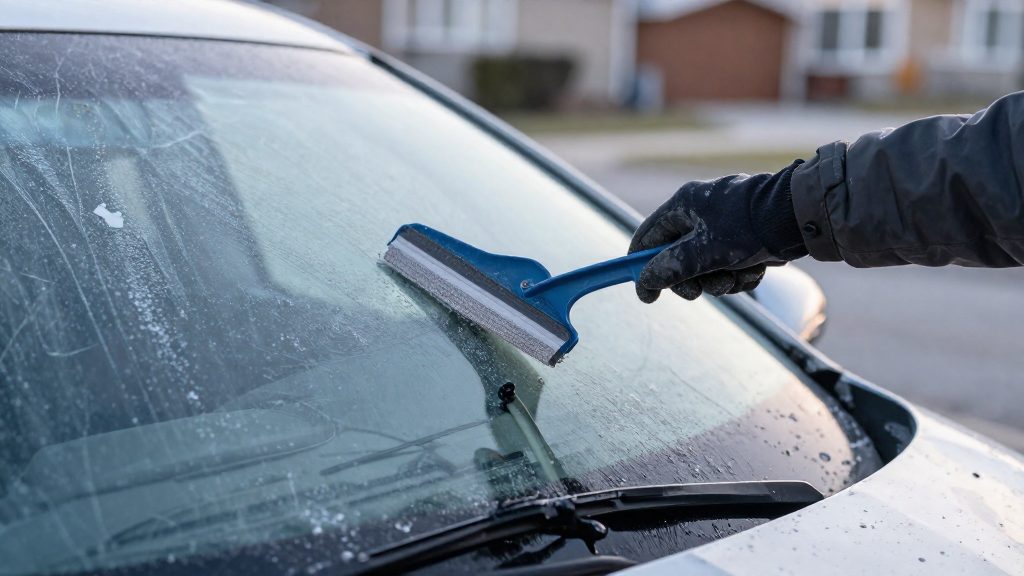
A pre-winter self-check is still useful. Confirm that headlights, brake lights and wipers work, check tire pressure as described above, and clear snow and ice off the whole vehicle before driving, including the roof, windows and lights, so that you can see and be seen. Do not start the vehicle with a layer of snow on the roof that could slide onto the windshield while you drive.
Frequently asked questions
Can I check a used vehicle’s recalls before I buy it?
Yes. The Transport Canada database and the manufacturer lookup both work from the VIN, so ask the seller for the 17-digit number and run the check before you commit to the purchase.
What should I do if I get stuck in snow?
Stay with the vehicle if help is not close. Keep the exhaust pipe clear of snow, and if you run the engine for heat, do it only in short periods with a window slightly open to limit carbon monoxide risk.
Does a recall repair come with any guarantee?
The official sources consulted do not state repair terms or timelines. Ask the manufacturer or dealer how the repair is scheduled and whether parts are available before you rely on the vehicle for a long trip.