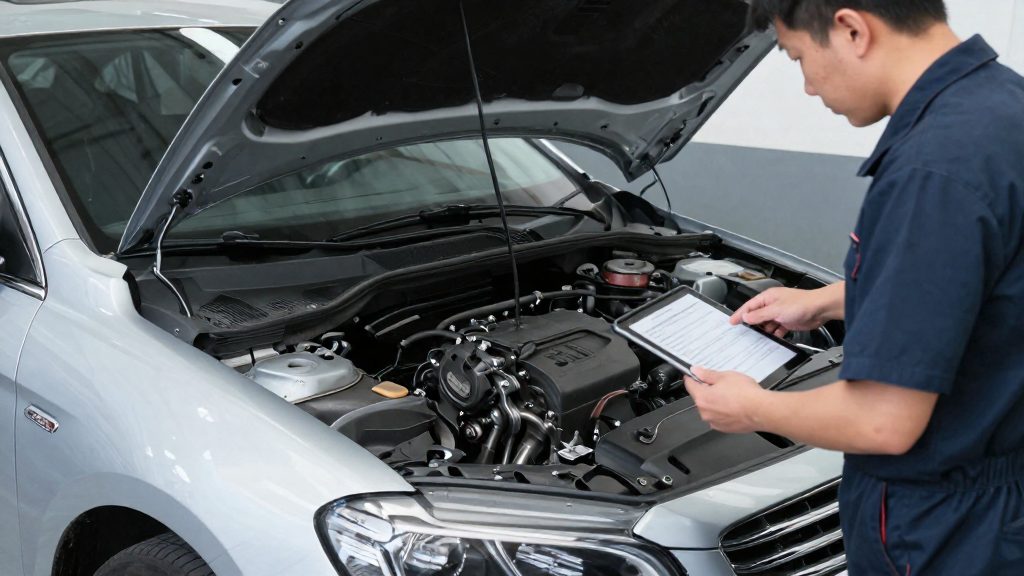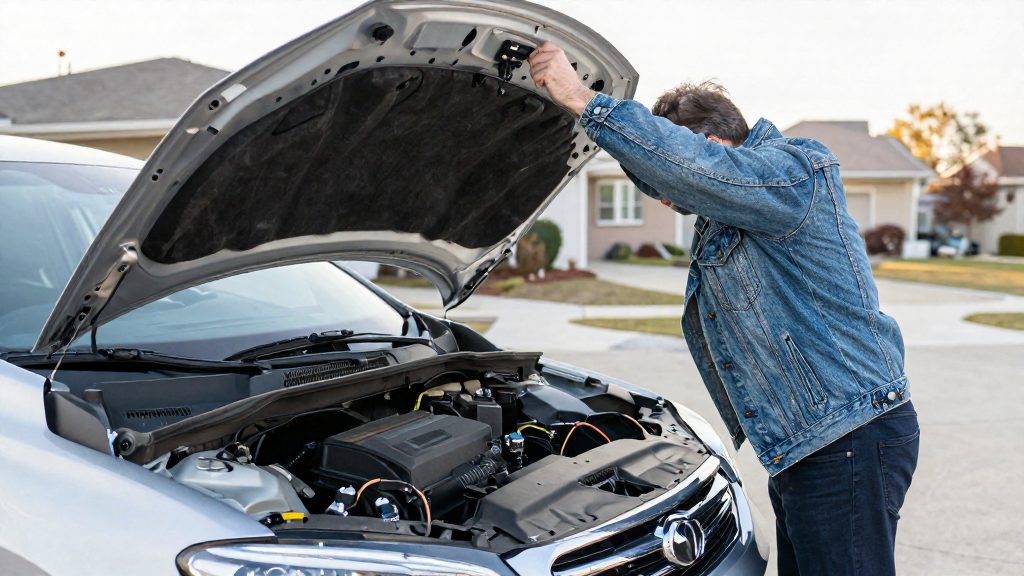
When the battery warning light comes on while you are driving, the charging system is usually not working properly, most often because the alternator is no longer recharging the battery. The owner’s manual for one manufacturer’s current model says not to keep driving with the charging system warning light on, because the engine could stop unexpectedly. The safe response is to pull over as soon as you can do so without endangering anyone, move off the traffic lane, and have the vehicle inspected by a qualified repairer.
What does the battery warning light actually mean?
The light is best understood as a charging system indicator rather than a simple test of the battery. While the engine is off, the battery supplies the electricity needed to start the car. Once the engine is running, the alternator takes over: it generates the electricity for the ignition, lights, engine management and electronics, and keeps the battery topped up. When the light appears during a journey, the system is telling you that the electrical output has dropped below what the car needs.
The owner’s manual for one manufacturer’s current model describes the light as signalling a problem with the alternator or the charging system. In practice, this means the car is running on the energy stored in the battery, which will be depleted as you drive. The warning is therefore not a minor cosmetic issue: the car may keep running for a while, then lose power without much notice.
Why does the light come on while you drive?
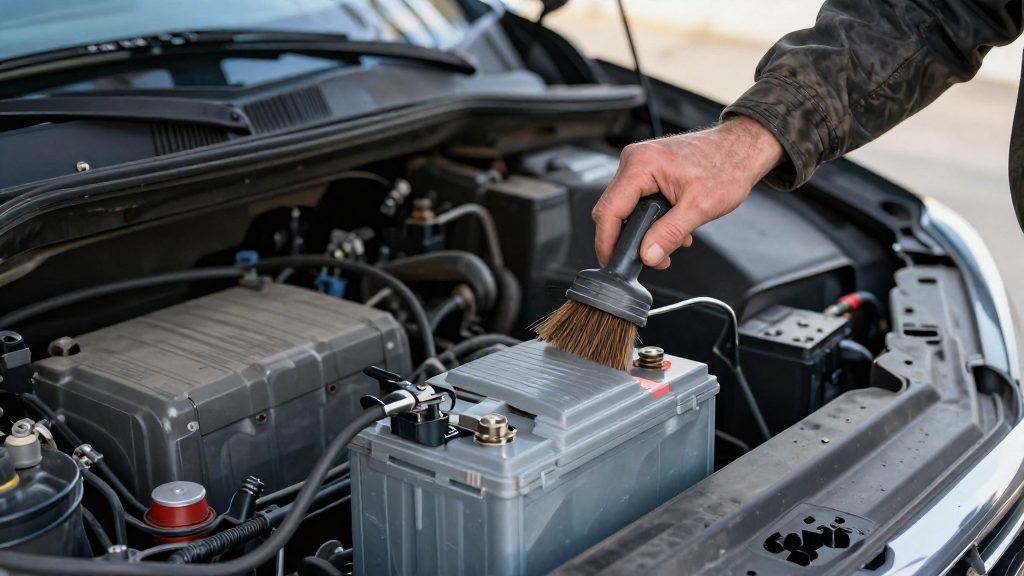
Several faults can trigger the light, and a driver usually cannot tell which one is responsible without testing. The most likely cause is a failing alternator. Other possibilities include a worn or slipping drive belt that turns the alternator, loose or corroded battery terminals and cables that interrupt the flow of current, and a battery that is too weak to hold charge. A weak battery alone can also cause the light to appear, which is why a battery test and a charging system test are both part of a proper diagnosis.
Cold weather can make a weak battery more noticeable, because batteries deliver less power at low temperatures. That does not make the light harmless. If the light comes on during a cold morning or after a long drive, treat it as a charging system warning until a repairer has checked it.
Many owners notice the light briefly at engine start, when the system runs a self-check. A brief glow that goes out as the engine runs is not the same as a light that stays on while driving. The official sources consulted do not describe this behaviour for every model, so check the warning light section of the owner’s manual for your vehicle and model year.
How should you react the moment the light appears?
Stay calm and look at the dashboard for other warnings. Dimming headlights, a visible drop in the brightness of the instrument panel, power steering that becomes heavier, or a sudden loss of acceleration all suggest that the electrical system is struggling and that the engine may stop. If any of these occur, your priority is to reach a safe stopping place quickly.
Signal, check your mirrors, and pull over at the first place where you can stop safely and fully off the traffic lane. The owner’s manual for one current model gives this as the instruction: drive to the side of the road and park off the right-of-way. Do not stop on a bridge, in a tunnel, or on a curve where other drivers cannot see you. Hazard lights help make the stopped car visible, but they draw power from the same battery, so use them sparingly once the engine is off.
While you are still driving, reduce the electrical load. Turn off the air conditioning, heated seats, rear window defroster, audio system and any device charging from the cigarette lighter or USB port. Keep only the lights required by conditions and the wipers if you need them for visibility. These steps do not repair the fault, but they slow the rate at which the battery is drained, giving you more time to reach a safe place. Do not turn the engine off while you are still moving, because loss of power at speed affects steering and braking assistance.
Once you are parked, do not assume the problem has resolved itself because the light has gone out or the car starts again. A fault that caused the light to appear can return, and the car may fail later in a less safe location.
When is it safe to keep driving, and when is it not?
The clearest official guidance available is the one in the owner’s manual: do not continue driving with the charging system warning light illuminated. The reason given is that the engine could stop unexpectedly. The official sources consulted do not give a fixed time or distance that a car can cover with the light on. Estimates circulating in the press depend on the age and state of the battery, the electrical load, and the temperature, and none of them is a guaranteed figure for your vehicle.
That uncertainty is the reason to avoid planning a trip on the assumption that the car will get you home. If the light stays on and you are not already close to a repairer, the safest course is the shortest route to a safe place to stop, followed by professional assistance. Driving on a highway, through a busy intersection or on an unlit road with the car losing power is considerably more dangerous than the same delay in a quiet car park.
If the light is on but the car is operating normally and you have to move it to a nearby location, keep the journey as short as possible, apply the load reduction steps above, and avoid any long stops with the engine off, which may leave the car unable to restart.

When should you call for roadside assistance?
Call for help rather than attempting a long drive if any of the following applies: the light stays on after the engine has warmed up, the car feels weak or sluggish, the lights dim, the engine has stalled or hesitated, you cannot find a safe place to pull over, or you are unsure how to interpret the warning. Roadside assistance is also the right choice if you are on a highway with no shoulder or in conditions where stopping would be dangerous. Contact the roadside assistance provider linked to your insurance, vehicle warranty or membership, and describe what the dashboard is showing.
If you are towed or driven to a workshop, ask for a diagnosis of the charging system, not just a battery replacement. A qualified repairer can measure the output of the alternator and the condition of the drive belt and battery cables, so the cause is identified before parts are replaced. The owner’s manual also recommends having the car checked by an expert repairer, and it is wise to follow that advice even if the light appears to clear.
How do you check the owner’s manual and recalls in Canada?
Start with the owner’s manual for your exact model and year. Look in the section on warning lights and find the entry for the charging system or battery. Manufacturers publish these manuals online as well as in print, and the wording for your vehicle can differ from one model to the next, so use the correct edition.
Next, check whether your vehicle has an open safety recall that involves the charging system or electrical components. Transport Canada explains that since January 1, 2025, vehicle and vehicle equipment manufacturers have had to publish safety recall information on their websites, and that designated vehicle manufacturers must provide a VIN lookup tool. Enter the 17-digit Vehicle Identification Number on the manufacturer’s website to see which recalls apply to your car. Your VIN is printed on your registration and insurance documents and is visible at the base of the windshield on the driver’s side.
If you prefer a government source, Transport Canada’s Motor Vehicle Safety Recalls Database lists recalls issued by vehicle and vehicle equipment manufacturers. You can search by make, model and year. Transport Canada advises owners to check whether their vehicles have outstanding safety recalls and to have any recall addressed as soon as possible, because unresolved safety issues can pose serious risks to occupants and other road users. A recall that concerns the charging system should be handled by an authorised repairer at no cost to the owner under the terms of the recall notice, and you should keep a record of the work carried out.
A recall check is worth doing even when the dashboard is quiet, because recalls are not announced by a warning light. Repeat the check whenever you buy a used car, and keep the owner’s manual in the vehicle so that you can consult the warning light section quickly when a light appears.
Frequently asked questions
Why check recalls if the battery light is not on?
Transport Canada advises owners to check whether their vehicle has outstanding safety recalls, and a recall is not signalled by a dashboard warning light. A check using the VIN or the make, model and year takes only a few minutes.
Can I keep driving if the battery light goes off after a few minutes?
The official sources consulted do not say that a light which clears is evidence of a healthy charging system. Have the vehicle checked by a qualified repairer, as the owner’s manual recommends, before relying on it again.