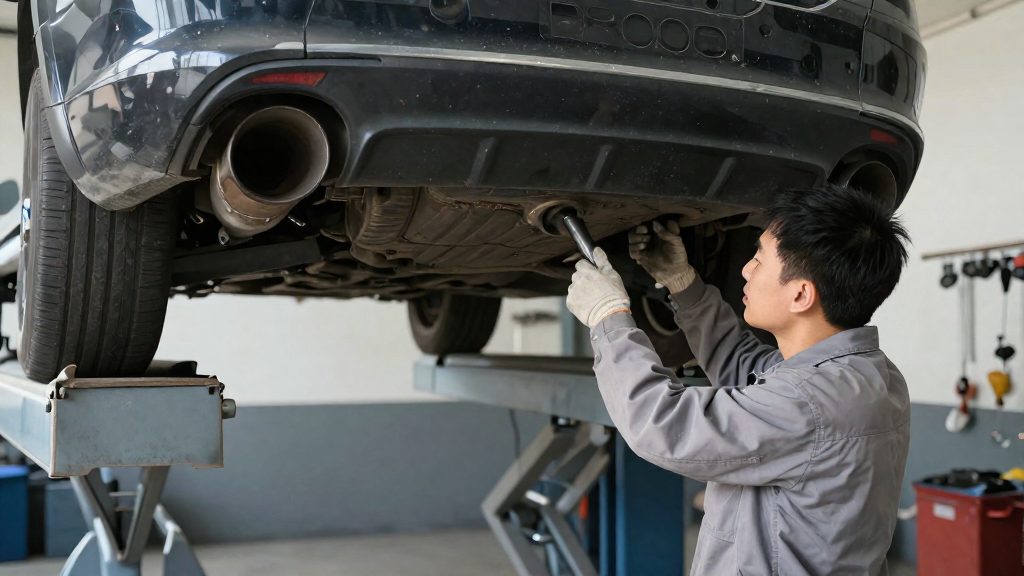
US emissions test inspection rules depend on where your vehicle is registered and which vehicles the local program covers. There is no nationwide testing interval for every car. Start with your registration renewal notice, then confirm your vehicle’s eligibility, deadline, and approved testing location through your state’s official program. The U.S. Environmental Protection Agency (EPA), updated September 18, 2026, directs motorists to state and local agencies for those requirements.
How do you find the emissions inspection rules that apply?
An emissions inspection and maintenance program identifies vehicles producing excessive pollution so owners can address the underlying problems. State and local agencies administer these programs within the federal clean-air framework, according to the EPA.
Use the EPA’s directory of state and local emissions programs to reach the relevant authority. Have your registration address, vehicle model year, fuel type, and vehicle identification number available. Check whether the requirement concerns routine renewal, an ownership transfer, or registration after a move; those situations can have different conditions.
If the notice and your understanding of an exemption conflict, contact the program before assuming you can skip testing. Ask the agency to confirm how it classifies your particular vehicle.
When does your vehicle need an emissions test?
Eligibility rules are specific to each program. These examples show why an exemption or schedule from another state should not guide your decision.
| Registration location | Examples of applicable requirements |
|---|---|
| California | For covered vehicles, renewal Smog Checks generally occur every other year when required by the renewal notice. Gasoline, hybrid, and alternative-fuel vehicles have a newer-vehicle renewal exemption; BAR calculates the first renewal inspection by adding eight to the model year. Its example is a 2020 vehicle first needing that inspection in 2028. |
| Texas emissions program areas | TCEQ specifies annual testing for covered gasoline vehicles from two through 24 model years old. Electric vehicles, diesel vehicles, motorcycles, and mopeds are excluded from that emissions requirement. |
| New York | The DMV requires vehicle inspections at least every 12 months, with emissions testing performed alongside the annual safety inspection for vehicles subject to the emissions program. |
Sources: California Bureau of Automotive Repair, Texas Commission on Environmental Quality, updated February 2, 2026, and New York State DMV.
Your county can matter as much as your state. Texas publishes its covered counties and specifies a November 1, 2026, start for Bexar County. Check that official list against your registration location.
Also distinguish emissions testing from a safety inspection. According to the Texas Department of Public Safety, Texas eliminated the registration safety inspection requirement for noncommercial vehicles effective January 1, 2025. That change did not eliminate the separate emissions requirements in designated areas.
What happens during an emissions inspection?
The inspection method depends on the vehicle and the local program. An on-board diagnostics inspection, often called an OBD inspection, reads information from the vehicle’s computer. It can identify emissions-system problems without measuring exhaust directly at the tailpipe.
The Nevada DMV’s explanation of OBD testing describes a technician identifying the vehicle, connecting approved equipment to its diagnostic port, and retrieving emissions and diagnostic information. Keep the connector accessible and ask the station about any device already plugged into it, such as a monitoring accessory.
Other inspections measure tailpipe emissions, and some programs also examine emissions-control equipment visually. New York, for example, checks the presence and connection of required emissions devices on gasoline vehicles, according to the New York State DMV.
A vehicle that seems to run normally can still have an emissions fault. The test evaluates the applicable inspection criteria, so normal acceleration or an absence of visible smoke does not establish that it will pass.
How should you prepare without hiding a problem?
Continue maintenance according to the manufacturer’s instructions rather than buying an unspecified tune-up solely for inspection. Mention recent battery work, repairs, or warning lights when arranging the appointment.
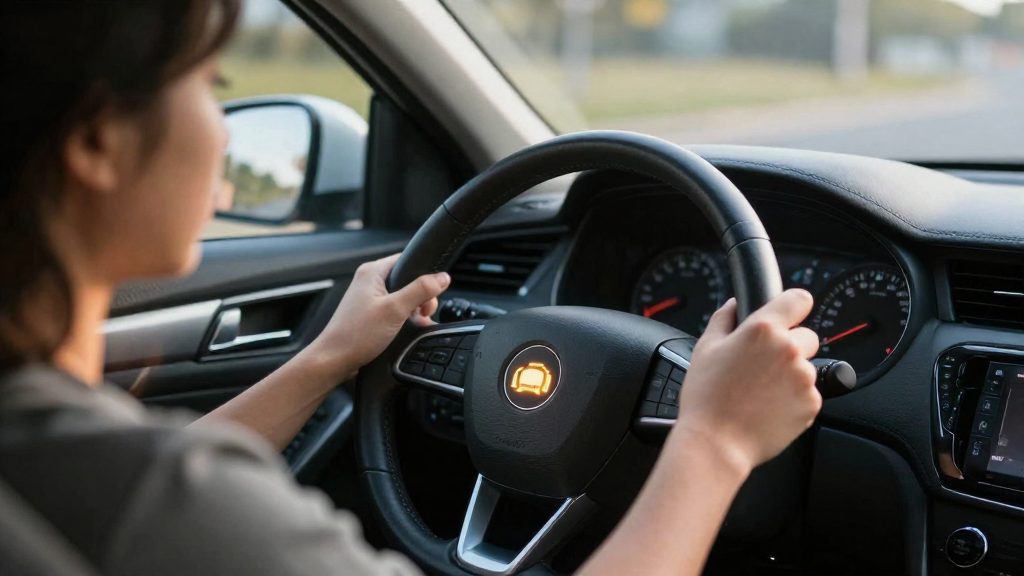
Do not clear trouble codes or disconnect the battery to extinguish the check engine light. The computer must complete emissions-system self-checks called readiness monitors. Erasing information can leave those checks incomplete, producing a not-ready result instead of a passing inspection.
The North Carolina Department of Environmental Quality explains that readiness can be affected by battery replacement, disconnection, or recent maintenance. Ask your technician or manufacturer for the correct drive-cycle instructions for your vehicle. A drive cycle is the operating sequence needed for its diagnostic checks; there is no universal mileage that guarantees completion.
Follow traffic laws and the owner’s manual while completing that sequence. If readiness remains incomplete, have the cause investigated rather than repeatedly erasing codes.
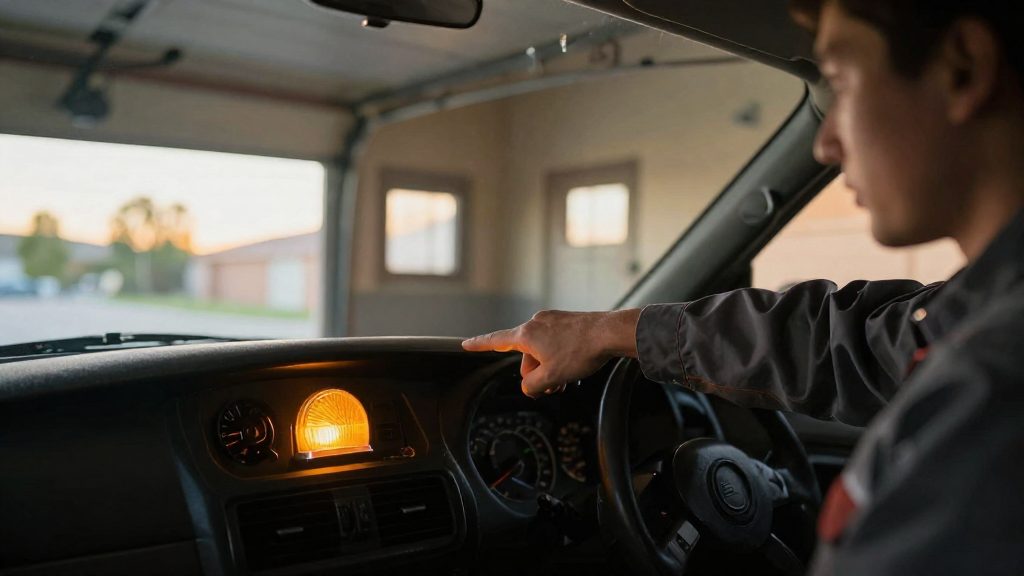
A flashing check engine light requires a different response: the Nevada DMV advises reducing speed and seeking immediate service because a severe fault can damage the catalytic converter. Follow the manufacturer’s safety instructions, and arrange assistance if you cannot continue safely.
How do you choose an appropriate inspection station?
Use the official program’s station locator and confirm that the facility can inspect your vehicle’s fuel type and class. Describe any unusual circumstances when calling, such as an engine conversion or a vehicle configuration the station may not routinely handle.
Read any station designation on your renewal notice. In California, a notice requiring a STAR station means you must choose a station with that authorization. The California DMV directs owners to authorized stations and the Bureau of Automotive Repair for this purpose.
Ask whether the facility performs inspections, repairs, or both, so you know what services are available if a problem appears. Bring the renewal paperwork requested by the program. Before traveling, confirm appointment arrangements and the documents needed for your particular transaction.
What should you do after a failed or rejected test?
Start with the written inspection result. Ask the inspector which category caused the problem: an emissions fault, incomplete readiness, communication with the vehicle computer, or a visual inspection issue. Those findings call for different next steps.
For an actual fault, arrange diagnosis of the reported condition. A diagnostic code identifies an area needing investigation; ask the repairer to explain the diagnosis and proposed repair before authorizing replacement parts. Check your warranty booklet and ask the manufacturer whether the affected component has applicable emissions coverage. The New York State Department of Environmental Conservation recommends the owner’s manual or warranty booklet as the starting point for coverage information.
If you may need a waiver, check its conditions before authorizing nonurgent work. Qualifying repairs, documentation, approved facilities, and inspection history can affect eligibility. Necessary safety work should still receive prompt attention.
For example, the Texas Commission on Environmental Quality, updated February 27, 2026, describes separate provisions for low-mileage vehicles, unavailable parts, qualifying low-income owners, and vehicles that remain unable to pass after emissions repairs. These are distinct applications with their own conditions. Keep the original failed report, repair orders, and subsequent results together, and contact the administering agency about the appropriate route.
Financial repair assistance is another possibility. California’s Consumer Assistance Program offers repair assistance and vehicle retirement options to eligible consumers, subject to available funding. If applying, check the approval process before arranging program-funded repairs: the BAR application instructions state that work performed before application approval is not reimbursed. Assistance should be treated as an application process, rather than an automatic benefit following failure.
When do buying a vehicle or leaving the state change the process?
Before completing a used-car purchase, establish who must supply the required emissions documentation and whether that documentation remains valid for the transfer. In California, BAR says a covered private-party vehicle must have passed a Smog Check within the previous 90 days. Its newer-vehicle exemption for ownership transfers differs from its renewal exemption. See BAR’s ownership-transfer requirements.
Permanent relocation and temporary travel also require different checks. For a move, consult the destination state’s registration authority about the inspection needed for initial registration. Do this while planning the transfer, especially if the vehicle has modified emissions equipment or an unusual registration history.
For temporary travel, ask the state where the vehicle remains registered whether it accepts another state’s inspection. Acceptance is not automatic. The New York State Department of Environmental Conservation says New York does not accept emissions tests performed outside the state and directs affected owners to the DMV about an extension.
California offers a separate application for a temporary smog exemption when an eligible vehicle is temporarily outside the state. The California DMV application requests information about the vehicle’s location and circumstances. Submit the applicable request rather than assuming that being away suspends the requirement.
How do you finish registration or handle an approaching deadline?
After passing, complete the registration transaction required by your DMV. Keep the inspection report until the registration is resolved, even if the station transmits results electronically. New York’s DMV, for example, requires an electronic record of the applicable passing inspection or documentary proof for renewal. See its registration enforcement explanation.
If repairs threaten to run past your registration expiration, contact the DMV about lawful operating options before driving with expired registration. A repair appointment or failed test does not itself establish permission to drive.
California’s temporary operating permit rules provide different options depending on the transaction and circumstances. Eligibility can involve the failed inspection report, insurance, and completion of registration requirements. Ask which authorization applies and observe its restrictions. Permission to move or operate the vehicle also does not establish that its mechanical condition is safe; follow the repairer’s assessment and manufacturer’s instructions before returning it to use.
Frequently asked questions
Can a loose gas cap turn on the check engine light?
Yes. New York’s Department of Environmental Conservation explains that a loose or damaged cap can trigger an evaporative-emissions fault. Secure it according to the owner’s manual, and seek diagnosis if the warning persists or returns. New York State DEC.
Does a California transfer between relatives always require a Smog Check?
California exempts qualifying transfers between specified relatives. However, the exemption does not apply simply because a relative bought a vehicle for you without first titling it in their name. Confirm your relationship and transaction with the DMV. California DMV.
Can a nonworking check engine light cause an inspection failure?
Yes. North Carolina checks that the malfunction indicator illuminates with the ignition switched on and the engine off. A nonworking indicator can cause failure, even when the dashboard otherwise appears clear. North Carolina DEQ.