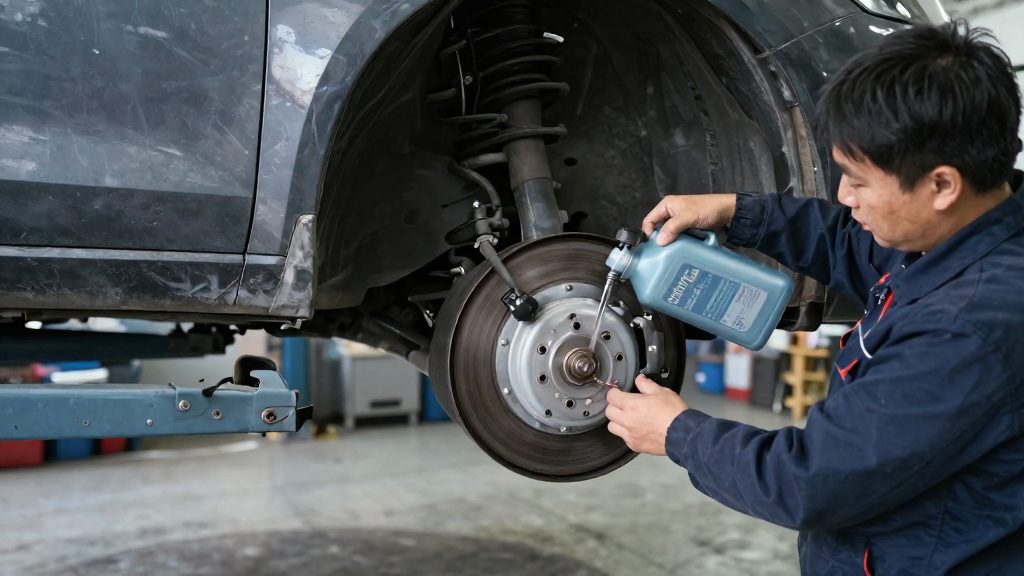
What the brake fluid replacement schedule covers
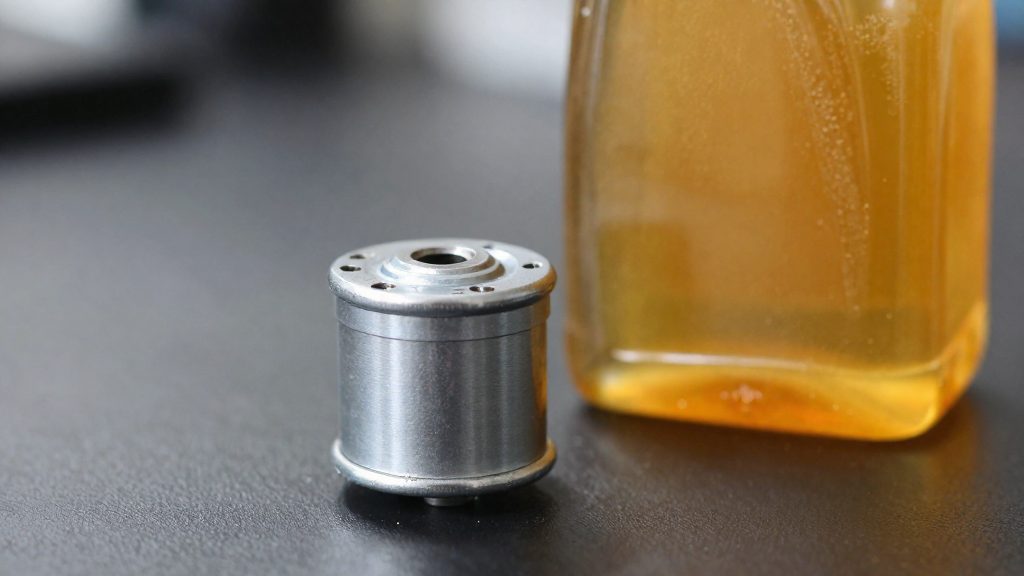
Brake fluid is the hydraulic fluid that carries force from the brake pedal to the brake assemblies at each wheel. The brake fluid replacement schedule tells you how often to drain the old fluid and refill the system with fresh fluid of the correct grade. Unlike engine oil, there is no universal number that fits every car. Each manufacturer sets its own interval, and it appears in the maintenance section of the owner’s manual.
Read the wording carefully. Some manuals list brake fluid only as an item to inspect and top up, with no fixed replacement interval. Others give a time or mileage for replacement. “Check” and “replace” are different tasks. A manual that only says “check” does not mean the fluid can stay in the system indefinitely.
Is there a federal replacement rule in the United States?
No federal rule sets a replacement interval for vehicle owners. Federal Motor Vehicle Safety Standard No. 116 (FMVSS 116), codified at 49 CFR 571.116, covers the brake fluid itself, the containers it is sold in, and the labeling on those containers. Its purpose is to reduce brake system failures caused by improper or contaminated fluid. In practical terms, the standard governs what goes into the system, and the owner’s manual governs when it must be replaced.
Where to find your vehicle’s interval
Start with the owner’s manual. Look in the maintenance schedule for brake fluid and note whether it says replace, inspect, or both. Check whether it lists a time or a mileage. Also look for a separate severe-service schedule, which some manuals include.
If you no longer have the manual, the manufacturer’s owner website usually offers a digital copy. A dealership service department can also confirm the schedule for your vehicle using its vehicle identification number (VIN). The same manual will specify the fluid grade. Use only that grade. Many reservoir caps or labels also show the grade, but the manual is the reference to confirm it.
Why moisture makes replacement necessary
Brake fluid absorbs water from the surrounding air over time, which is why it is described as hygroscopic. NHTSA’s interpretations of FMVSS 116 state that moisture in a brake system degrades braking performance and safety by lowering the fluid’s boiling point. Moisture also increases the possibility of vapor lock and promotes corrosion of brake system components.
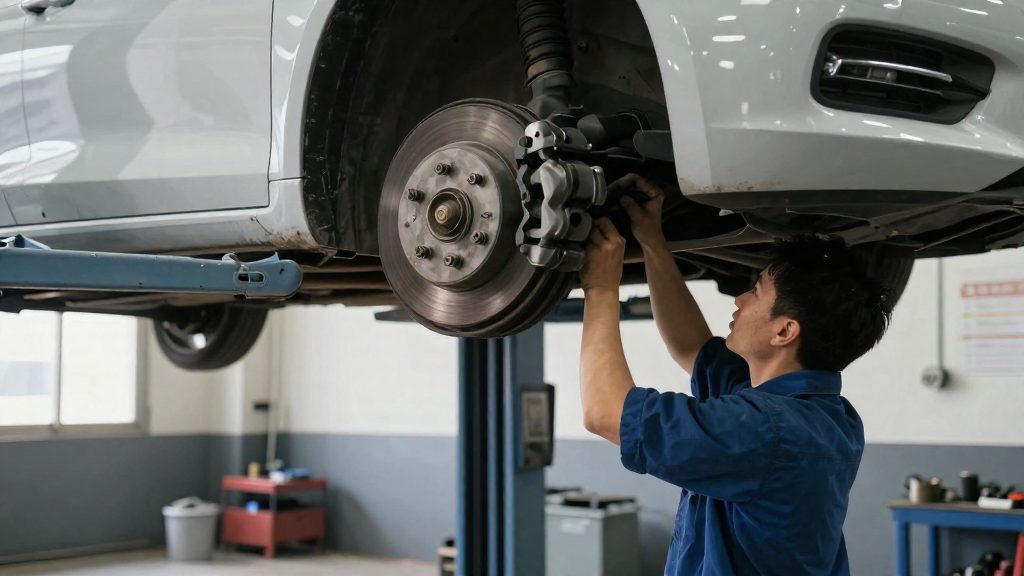
Vapor lock happens when fluid boils and forms vapor in the lines. Vapor compresses instead of transmitting pressure, so the pedal can feel soft or the brakes can fail to hold. Corrosion, meanwhile, shortens the life of calipers, wheel cylinders, and lines. Both risks grow the longer old fluid stays in the system, which is the reason the replacement schedule exists.
Understanding DOT grades
The grades are named DOT 3, DOT 4, DOT 5, and DOT 5.1. Under FMVSS 116, DOT 5 containers must be labeled “DOT 5 SILICONE BASE,” while DOT 5.1 must be labeled “DOT 5.1 NON-SILICONE BASE.” The label tells you the chemical base, and it is the first thing to check. DOT 3, DOT 4, and DOT 5.1 are glycol-based fluids that absorb water. DOT 5 is silicone-based.
The standard also sets minimum equilibrium reflux boiling points, a measure of how well a fluid resists boiling. For wet fluid, the minimums are 140 °C for DOT 3, 155 °C for DOT 4, and 180 °C for DOT 5. For dry fluid, they are 205 °C for DOT 3, 230 °C for DOT 4, and 260 °C for DOT 5. Wet values matter most in daily driving, because absorbed water is what lowers the boiling point in service.
Do not switch between silicone-based and non-silicone grades unless the manufacturer’s instructions allow it, because the two bases are not interchangeable.
When to service sooner
Many owner’s manuals list a shorter interval for severe use. Conditions that often qualify include frequent towing, repeated hard braking, long mountain descents, and heavy stop-and-go traffic. Check whether your manual defines these conditions, and follow the shorter interval if your driving matches them.
If you live in a humid area, ask your technician whether the fluid’s moisture content can be tested at your next service. Any leak in the brake system is a reason to inspect the system right away, rather than waiting for the scheduled date.
Warning signs and what to do now
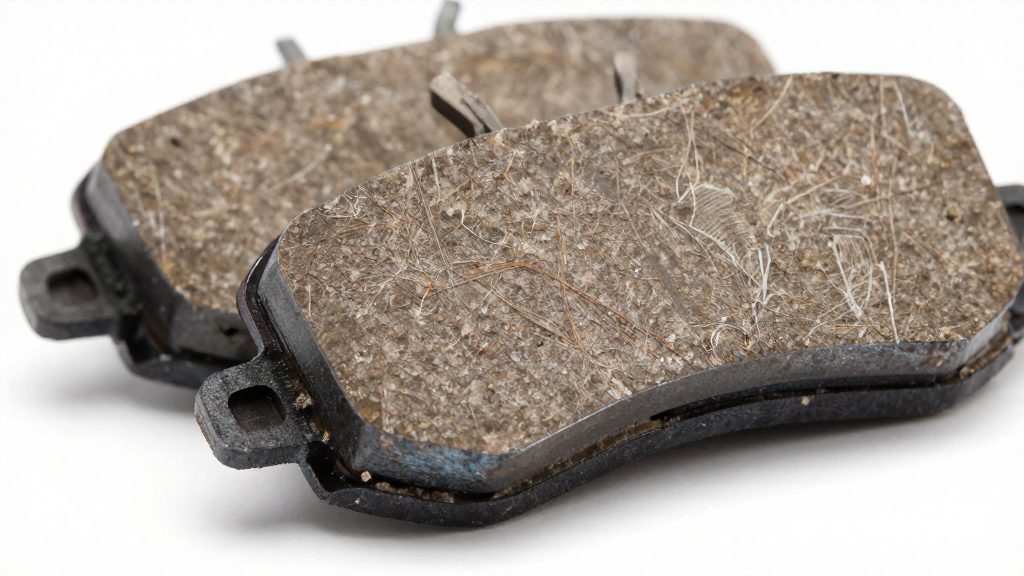
Watch for a soft or sinking brake pedal, longer stopping distances, brakes that fade during repeated use, a brake warning light, or a reservoir level below the minimum mark. A low level can come from a leak or from brake pads wearing down, since fluid moves into the caliper as pads thin. Have it checked in either case.
If the pedal feels soft, the brake warning light is on, or stopping distance has grown, do not continue driving normally. Pull over when it is safe to do so, and arrange a tow or a service visit. Adding fluid to a low reservoir does not repair a leak, so do not rely on topping up as a fix.
Working with brake fluid safely
Brake fluid damages paint and some plastics. Wipe up spills right away with water. Wear eye protection, since the fluid can irritate the eyes. Keep fluid in sealed containers, because an open container absorbs moisture. Never reuse drained fluid. Take used fluid to a facility that accepts automotive fluids for recycling, and do not pour it down a drain or onto the ground.
Frequently asked questions
Is topping up brake fluid the same as replacing it?
No. Topping up adds fresh fluid to the reservoir, but the moisture already in the system stays there. Replacement removes the old fluid from the system and refills it.
Does dark brake fluid mean it must be changed right away?
Dark fluid suggests contamination or age, but color alone does not measure moisture content. Follow the schedule in your owner’s manual, and have the fluid and brakes inspected if the color concerns you.
Can I change brake fluid myself?
Possibly, if you follow the manufacturer’s bleeding procedure and use sealed fluid of the grade in your manual. Air left in the lines reduces braking, so press the pedal and confirm it feels firm before driving. If you have any doubt, have a qualified shop do the service.