What the check engine light means
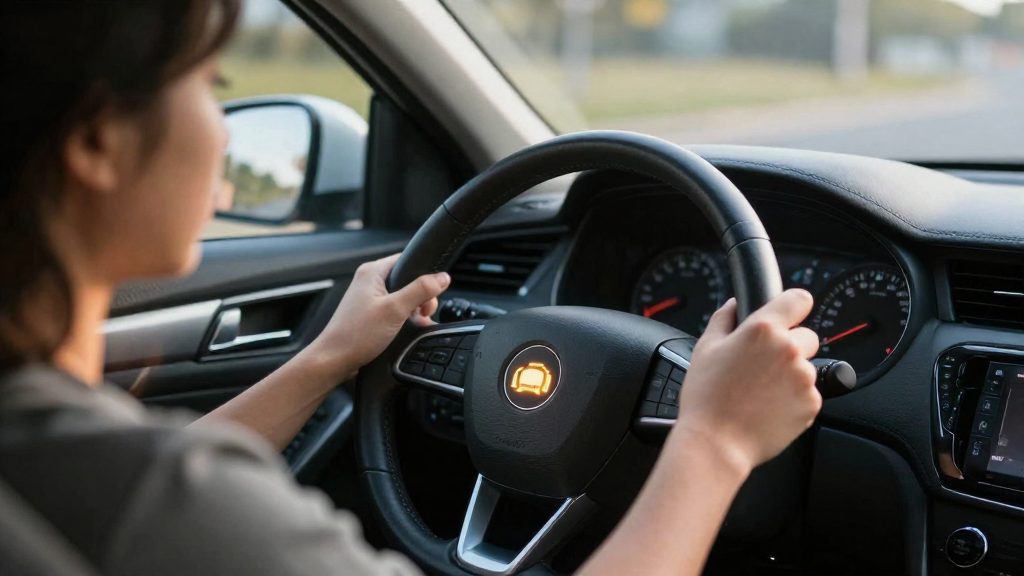
The check engine light, also called the malfunction indicator light, is part of your car’s on-board diagnostics system. When the engine computer detects a problem that could affect emissions or engine performance, it stores a trouble code and turns the light on. The light does not name the failed part. It tells you the computer found something outside its normal range and that the car needs a closer look.
Because one symbol covers many possible faults, from a loose fuel cap to a worn spark plug, the light alone cannot tell you how serious the problem is. The way the light behaves is the best clue you have, along with how the car is running.
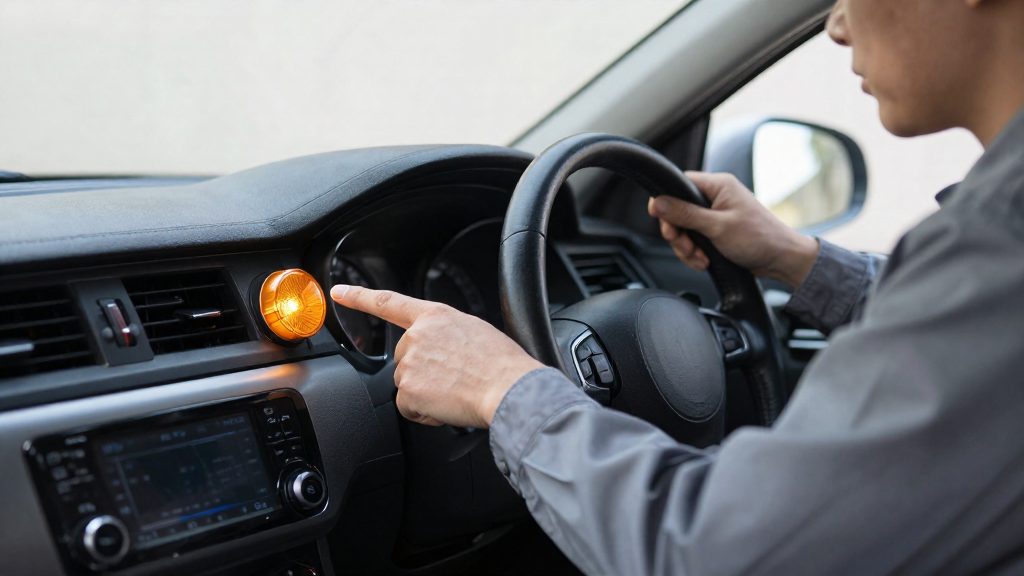
Steady light or flashing light
A steady light means the computer has detected a fault and stored a code. The car may still feel normal, but it is not running as cleanly as it should. This is not usually an emergency, but it should not be ignored. A small fault left alone can lead to a larger repair, and a steady light can also mean the car will fail an emissions test.
A flashing light is a different situation. It usually points to an engine misfire, meaning fuel is not burning properly in one or more cylinders. The unburned fuel can reach the exhaust and overheat the catalytic converter, which can be damaged in a short time. A flashing light is a severe malfunction. Stop driving as soon as it is safe to do so, and have the car towed or taken to a shop rather than continuing.
If the light changes from steady to flashing, treat it the same way. If it comes on and goes off, note the conditions, such as cold starts, hard acceleration, or rain, because a technician will want to know when it happens.
Can I keep driving?
Some situations call for stopping right away, whatever the light is doing. Pull over safely and turn the engine off if you notice loss of power, rough running or shaking, a strong smell of fuel or burning, smoke, or a steady warning light for oil pressure or engine temperature. Your owner’s manual explains which warning lights are urgent on your model, and you should follow it.
If the light is steady and the car drives normally, you can usually continue to a repair shop or home, keeping an eye on the gauges and the engine’s performance. Until the car is checked, avoid towing, carrying heavy loads, and sustained high speeds, because these put more demand on the engine. If the light stays on, get the car serviced promptly, even if it seems to run normally.
Some cars also switch to a reduced-power mode to protect the engine when a fault is detected. If that happens, the car may feel sluggish. Do not try to override it. Get the car looked at.
Common causes
Start with the simplest one: the fuel cap. A loose or broken cap is a common reason the light comes on. Remove the cap, check the rubber seal for cracks or wear, and tighten it until it clicks. The light may not go off right away. It often needs a few trips of normal driving before the computer clears it, if the fault does not return.
If the cap is not the cause, the light usually points to one of several systems. A misfire can come from a worn spark plug, a failing ignition coil, or a fuel delivery problem. An oxygen sensor that reports bad readings can affect fuel mixture and emissions. A vacuum leak, a faulty mass airflow sensor, or a problem in the emissions control system can also trigger the light. Each of these needs a proper diagnosis, because the same code can be caused by more than one fault.
The cause is not always a failed part. A sensor may be reporting correctly while a wiring connector is loose, corroded, or damaged. This is why guessing and replacing parts can waste time and money.
Reading the trouble code
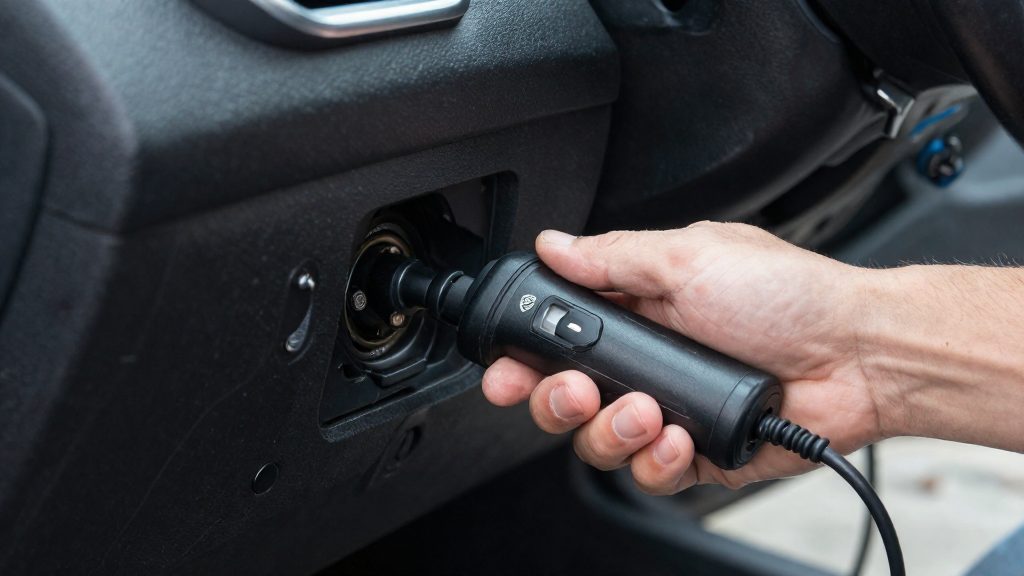
A stored trouble code is the most useful information the car can give you. On cars built for the US market from model year 1996 onward, the code is read through a standard OBD-II port, usually located under the dashboard on the driver’s side. A shop or technician can read the code and show you the freeze-frame data, which records the engine conditions when the fault was stored.
A code points to a system or circuit, not a confirmed part. Ask the technician what the code means, what tests were done to confirm the fault, and what repair is recommended. A good diagnosis confirms the problem before parts are replaced.
Do not clear the code to hide the light before a test or a trip. Clearing the code erases the stored information the technician needs. It can also reset the monitors that the car uses to check its own emissions systems, so the car may not pass an emissions test until it has been driven through a range of normal conditions.
Emissions tests and your state
Whether a check engine light affects your registration or inspection depends on where you live. Many states run emissions tests in some counties or metro areas, and not all do. Where they apply, an illuminated check engine light is generally treated as a failure. The Nevada Department of Motor Vehicles, for example, states that a vehicle will not pass an emissions test while the light is on. Your own state motor vehicle agency sets the rules that apply to you, so check its website before your inspection date.
If the light is on when your test is due, get the car tested anyway. A failed test produces a report that can support the next steps your state offers, such as additional repairs or a waiver, and it can show exactly what the inspection found.
Check for open recalls
If the light came on along with unexplained symptoms, it is worth checking whether your car has open safety recalls. The National Highway Traffic Safety Administration runs a free lookup at nhtsa.gov/recalls. You enter the 17-digit vehicle identification number, or VIN, which is printed on your registration and at the lower part of the windshield on the driver’s side. If a recall is open, contact a dealer for the manufacturer’s remedy. A recall does not mean the check engine light is caused by it, but it is a quick check that can prevent a larger problem.
What to do next
- Note the details. Write down whether the light is steady or flashing, any other lights on, what the car was doing, and the conditions when it came on.
- Check the gas cap. Tighten or replace it if the seal is damaged, then drive normally for a while and watch the light.
- Decide whether to drive. If the light is flashing, or you notice any warning sign, stop safely and arrange a tow or roadside help. If the light is steady and the car runs normally, drive gently to a shop.
- Have the code read and diagnosed. Ask for the code, the test results, and the recommended repair. Do not replace parts based on the code alone.
- Keep safety in mind when you look under the hood. Only open the hood with the engine off and cool. Keep hands, hair, and loose clothing away from the fan and belts. Do not open a hot radiator or coolant cap, and never work under a car supported only by a jack.
- Follow the manufacturer’s guidance. Your owner’s manual lists the warning lights on your model and the maintenance intervals. When the manual and a general guide disagree, the manual wins.
The check engine light is an early warning, not a verdict. Most of the time, a prompt check and a correct diagnosis solve the problem before it becomes expensive. Acting on the light is the simplest way to protect both your car and the people in it.
Frequently asked questions
Does the light turn off by itself after a repair?
Often it does, once the fault stops recurring over several normal drives. The stored code may remain until it is cleared, so a shop can confirm the repair and check the car’s readiness status.
Do electric cars have a check engine light?
Usually not in the same form. Battery-electric cars have no combustion engine to misfire, so their warning lights are different. Check your owner’s manual for the lights that apply to your model.
Can I read the code myself?
Yes. A basic OBD-II reader plugs into the port under the dashboard and displays the code. Look the code up in your manual, then have a technician confirm the diagnosis before you replace any part.