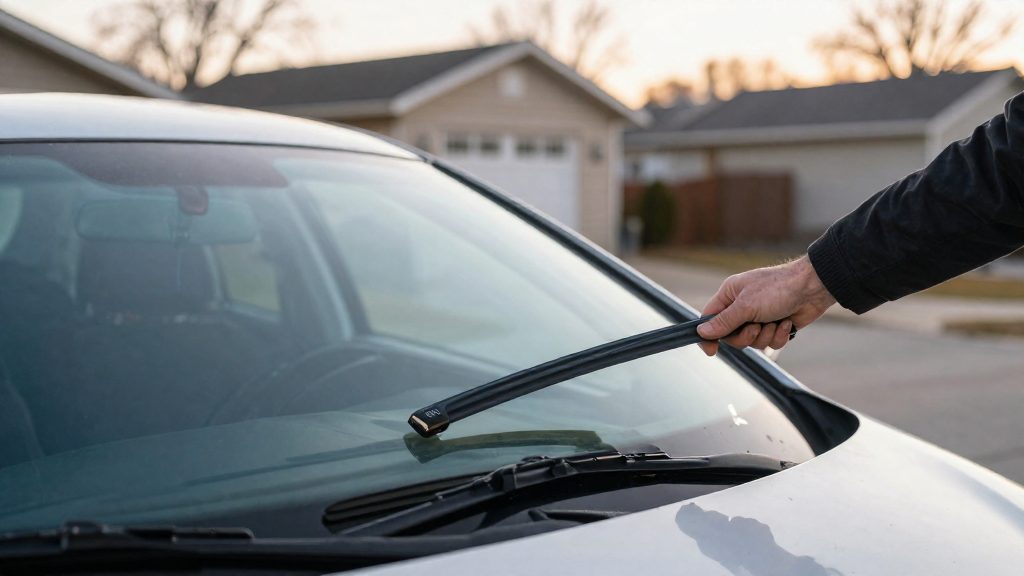
In Canada, the official sources consulted do not set a legal replacement interval for wiper blades. As a practical rule, the Canadian Automobile Association (CAA) says the average wiper blade lasts only about six months, so inspecting and replacing them twice a year is a sensible habit, and sooner if they streak, chatter, crack or tear. Winter is when blades work hardest, so the best moment to check them is before the first heavy snowfall.
When should you replace wiper blades in Canada?
Six months is an average, not a guarantee. The CAA’s winter car care guidance tells drivers to check their blades as soon as they notice streaking, and Transport Canada advises drivers to keep wipers in good condition and to replace any blade that streaks. A blade that lives in a garage and sees light use in summer can last longer than one that works through every storm.
A simple routine suits most drivers: inspect the blades when you switch to winter tires in autumn, and again in spring. Tie the check to a date you will remember, such as the change of clocks. If a blade shows damage, replace it at once rather than waiting for the calendar.
Blade life also depends on the design and materials. The official sources consulted do not give a general lifespan for specific blades, so the manufacturer’s documentation for your blades, usually printed on the packaging or given in the owner’s manual, is the reference for expected life and for the correct size.
Why do wipers wear faster in winter?
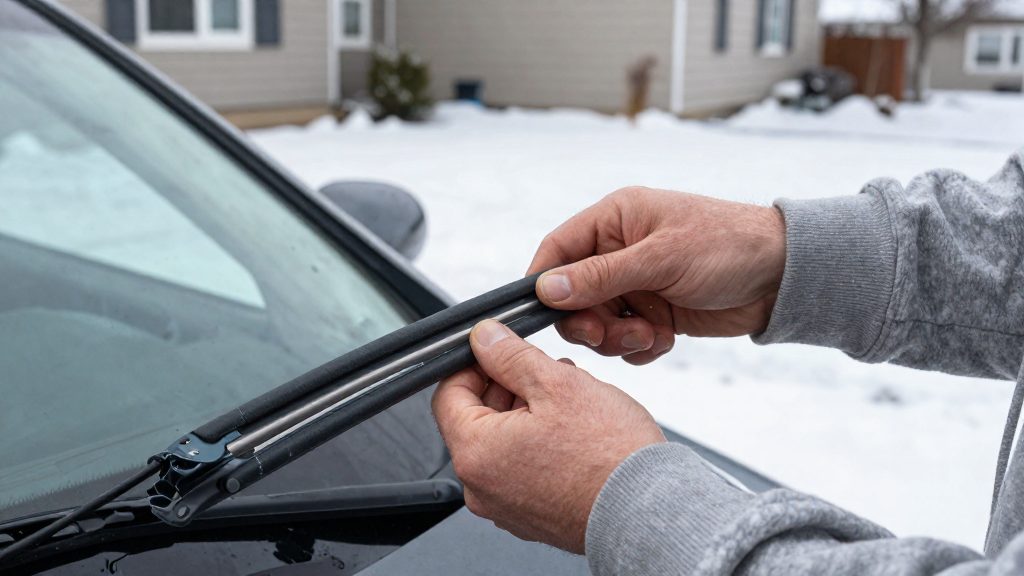
Winter adds work and stress. Blades clear snow, slush and sometimes ice, and every pass over a gritty or frozen windshield wears down the rubber edge. Cold also stiffens rubber, so a blade that performed well in October can streak or chatter in January. Repeated freezing and thawing can make the edge brittle and cause it to split. These are general wear patterns rather than measured rates, and the official sources consulted do not publish a Canadian replacement rate for winter.
What are the signs your wipers need replacing?
Streaking is the clearest signal, and Transport Canada’s winter guidance tells drivers to replace blades that streak. Other warning signs include:
- smears or hazy patches that remain after the washer fluid has been sprayed;
- chattering or skipping across the glass;
- visible cracks, tears or missing rubber along the wiping edge;
- a bent frame, or a blade that no longer lies flat against the glass.
Check each blade on its own, because one often wears faster than the other. To test them, run the wipers on a wet windshield in daylight and watch the edge. Do not wait for a failure you can see at night, when headlights reflect off smears and visibility drops sharply.
Should you lift wipers before a snowfall?
The CAA’s advice, as reported by The Weather Network in December 2024, is to keep blades resting on the windshield in winter rather than lifting them off the glass. The reasoning given is that a raised blade can gradually lose pressure against the glass, which reduces its wiping performance. A wiper that snaps back sharply on a very cold day can also crack the windshield. The CAA’s own winter car care pages consulted do not cover this point, so treat it as reported guidance rather than an official rule.
Whatever you choose, never force a frozen blade free. Run the defroster first to warm the glass, then clear ice gently with a scraper. Do not pour hot water on cold glass, because the sudden temperature change can crack it. If a blade is stuck, a forced wiper can tear the rubber and strain the motor.
Which wipers and washer fluid suit Canadian winters?
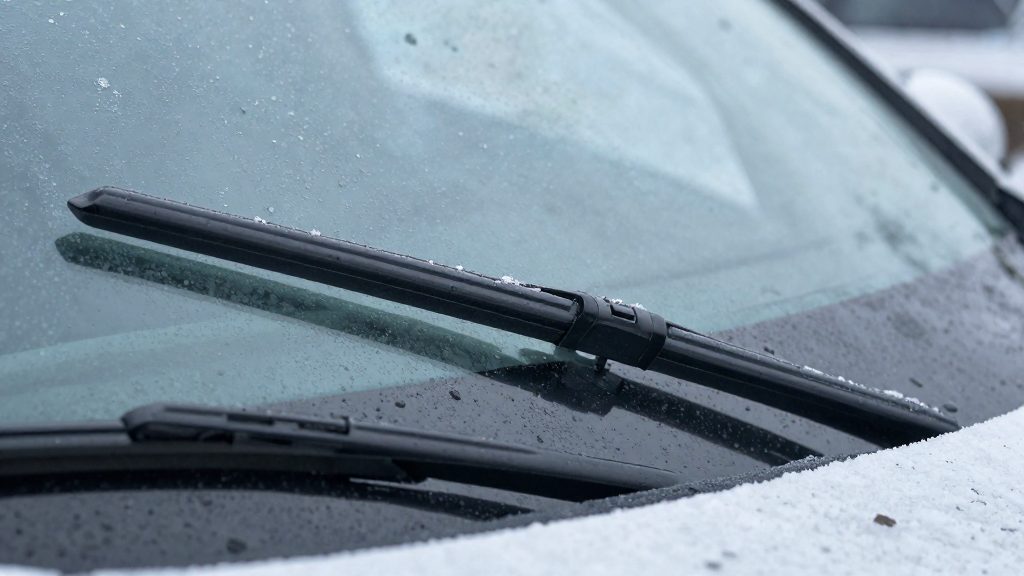
Transport Canada advises drivers to use wipers designed for winter, and the CAA notes that some drivers prefer winter-specific blades. These blades often have a protective cover over the frame to limit snow and ice build-up. The official sources consulted do not require a particular design, so choose according to the climate where you drive and the fitting guide for your vehicle.
Washer fluid matters too. Transport Canada recommends filling up with winter washer fluid rated for the -40°C range and carrying an extra container in the vehicle. Keep the reservoir full, because a washer that runs dry leaves you unable to clear a salt film, which is when the wipers are needed most.
How do wipers fit into vehicle inspections?
Vehicle inspection rules are set by each province or territory, so the requirements that apply to you depend on where your vehicle is registered. In Ontario, the Ministry of Transportation’s passenger and light-duty vehicle inspection standard (2022) lists the windshield wipers and washer among the inspected items. That document sets the criteria, including what counts as a failure, so read your province’s current standard before relying on any detail.
Where no inspection applies, a wiper that does not work on every speed setting, or a washer that does not spray, is still worth fixing before winter.
How do you replace a blade safely?
Get the right size and fitting from the owner’s manual or the blade maker’s fit guide. Then:
- Lift the wiper arm away from the glass until it locks in the upright position.
- Release the old blade using the tab or latch described in the manufacturer’s instructions.
- Fit the new blade, check that it clicks securely, and lower the arm gently onto the glass.
Hold the arm while you work, because if it drops onto the glass it can crack the windshield. Keep your fingers clear of the spring tension. Before you drive, test the new blades on a wet windshield and confirm they sweep the full area without touching the trim.
Frequently asked questions
Do I need to replace both blades at the same time?
The official sources consulted do not specify. Replacing the pair is a common choice when one blade is worn, and each position should take the size listed in the owner’s manual.
Can a worn wiper blade fail a vehicle inspection?
It can, where the province includes wipers in its inspection. In Ontario the Ministry of Transportation standard covers them, but criteria differ across jurisdictions, so check your province’s current standard.
Is it safe to run the wipers on a dry windshield?
It is best avoided. Spray washer fluid first, because wiping dry glass wears the rubber quickly and can leave fine scratches on the windshield.
Why do new blades still streak?
Check that the blade is fitted correctly and that the arm holds it at the right angle. Road film can also cause streaks, so clean the glass thoroughly. If the problem continues, consult the manufacturer’s documentation for your model.