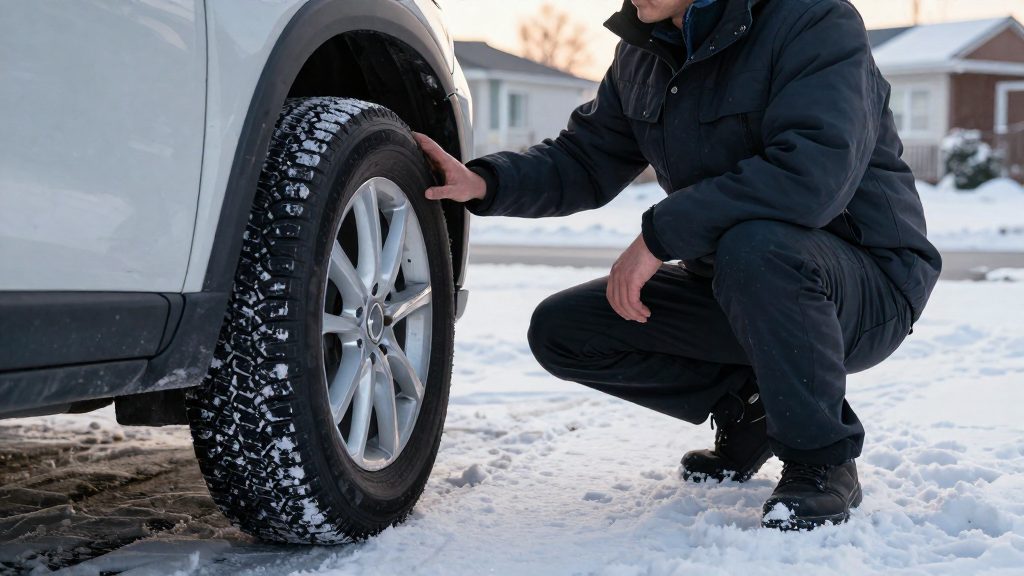
A weekly car safety check at home is a short walk-around in which you look at the tires, lights, fluids and dashboard, then confirm whether a safety recall applies to your vehicle. Transport Canada advises checking tire pressure and tire wear at least once a month, even on vehicles fitted with a tire pressure monitoring system, so a weekly routine leaves a comfortable margin. The checks take only a few minutes and catch problems that build up slowly. They do not replace the maintenance schedule in your owner’s manual or a professional inspection.
Why do weekly checks at home matter?
Most safety problems on a car develop gradually. A tire that loses air over several weeks, a bulb that burns out without warning, or a slow fluid leak can go unnoticed until it becomes dangerous. A regular look makes changes easier to spot and gives you time to book a repair before a small fault turns into a breakdown or a collision risk.
A warning system is not a substitute for looking yourself. According to ICBC’s DriveSmartBC guide, which quotes Transport Canada, some tire pressure monitoring systems, or TPMS, only warn when pressure falls below the minimum recommended level and do not display the actual pressure. The same guide states that the federal Motor Vehicle Safety Act does not mandate TPMS. In practice, a working TPMS is a useful extra, but a manual check remains the reliable way to know your pressures.
How do I set up a safe check?
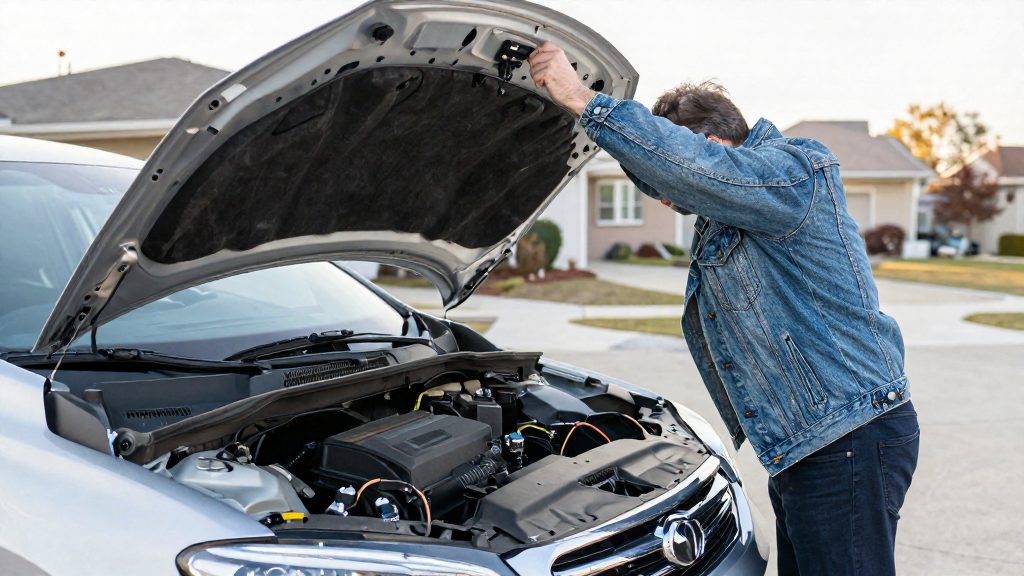
Choose level, firm ground away from traffic. Switch the engine off, set the parking brake and turn on the hazard lights if you will be near a road. If the engine has been running, let it cool before you touch anything under the hood, because the engine, exhaust and radiator can stay hot for a long time. Keep hands, loose clothing and long hair away from moving parts, such as the cooling fan and drive belts.
Never work under a vehicle supported only by a jack. If you need to get underneath, use proper stands rated for the vehicle and check that it is stable before you move beneath it. Keep a tire gauge, a flashlight, a pair of gloves and your owner’s manual in the vehicle so you can complete the check without improvising.
How do I check tire pressure and tread?
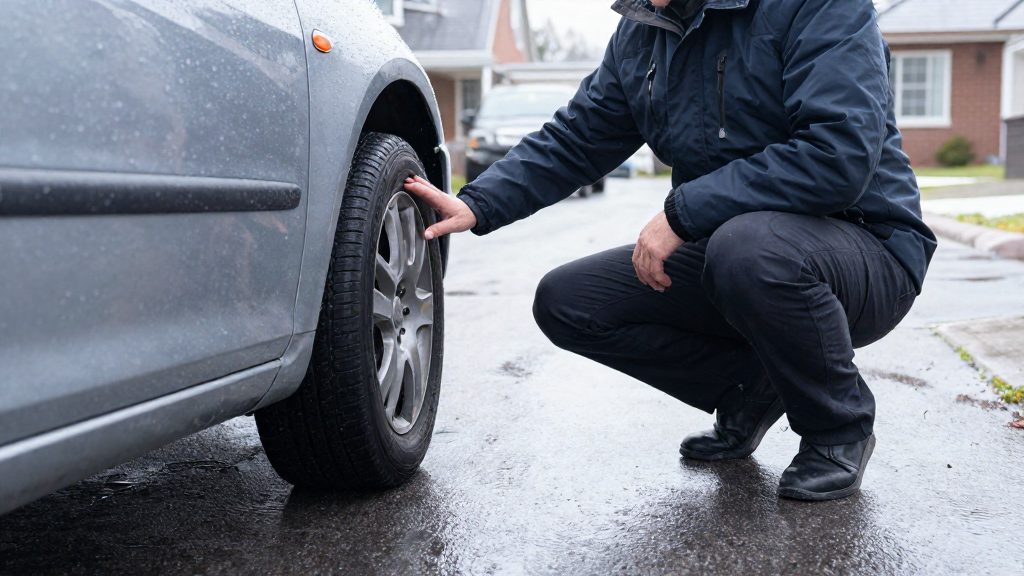
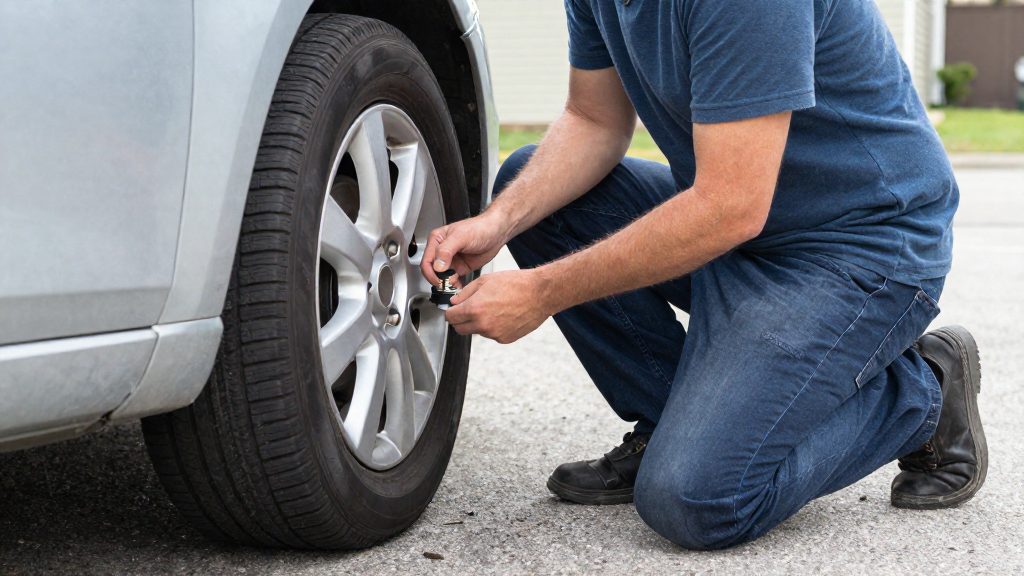
Transport Canada advises measuring the inflation pressure of all tires, including the spare, at least once a month. Measure only when the tires are cold. The Government of Canada defines cold tires as those on a vehicle that has been stationary for at least three hours or has not been driven more than 2 km (Transport Canada, 2013). A tire that has just been driven warms up, and its reading rises, so a figure taken after a highway trip will be falsely high and may lead you to let air out unnecessarily.
The recommended pressures are printed on the tire information label. If you cannot find the label, check your owner’s manual. Use the vehicle’s recommended figure, not the maximum pressure moulded on the tire sidewall, which is the limit for the tire rather than the target for your vehicle. Adjust the pressure with a gauge you trust, and recheck it after inflating.
Underinflation has consequences you cannot see from the outside. According to Transport Canada, it increases rolling resistance, which reduces tread life and increases fuel consumption, and it can lead to sudden tire failure. Underinflation also builds up heat, which can cause serious damage. If a tire is seriously underinflated, avoid driving on it, both for your own safety and to prevent further damage. Have it inspected by a tire professional before you drive any distance.
While the tire is in front of you, look at the tread and sidewall. Look for uneven wear across the tread, cracks in the rubber, bulges, cuts and objects embedded in the tread. Measure tread depth with a gauge if you have one. The official sources consulted do not give a single tread depth that applies to every vehicle, so if the tread is low or the wear is uneven, ask a qualified technician to assess the tire and tell you when to replace it.
What should I check on the lights and signals?
With the vehicle on level ground, switch on the ignition or the lights and walk around the car. Check the low beam and high beam headlights, the parking lights, the brake lights, the reverse lights, the front and rear turn signals, the hazard lights and the licence plate light. To see the brake lights without a helper, back up to a garage door, a window or a glass surface and press the pedal so that you can see the reflection.
A bulb that has failed reduces your visibility to other drivers and makes your intentions harder to read. If a bulb needs replacing, use the bulb type listed in your owner’s manual. Halogen bulbs should be handled with gloves or clean cloth, because skin oil on the glass can shorten their life. Let a bulb cool before you remove it, and do not touch the glass of a hot bulb.
Also look at the lenses and the wiper blades. Cracked lenses let moisture in and can weaken the light output. Worn wiper blades leave streaks and reduce visibility in rain or snow. Replace damaged parts promptly rather than waiting for the next scheduled service.
How do I check fluids and the oil level?
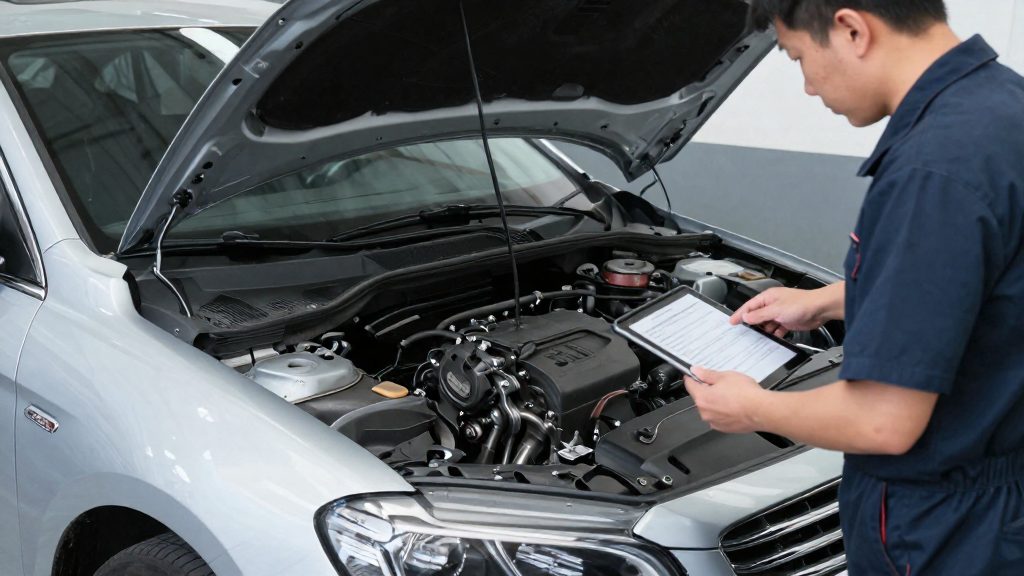
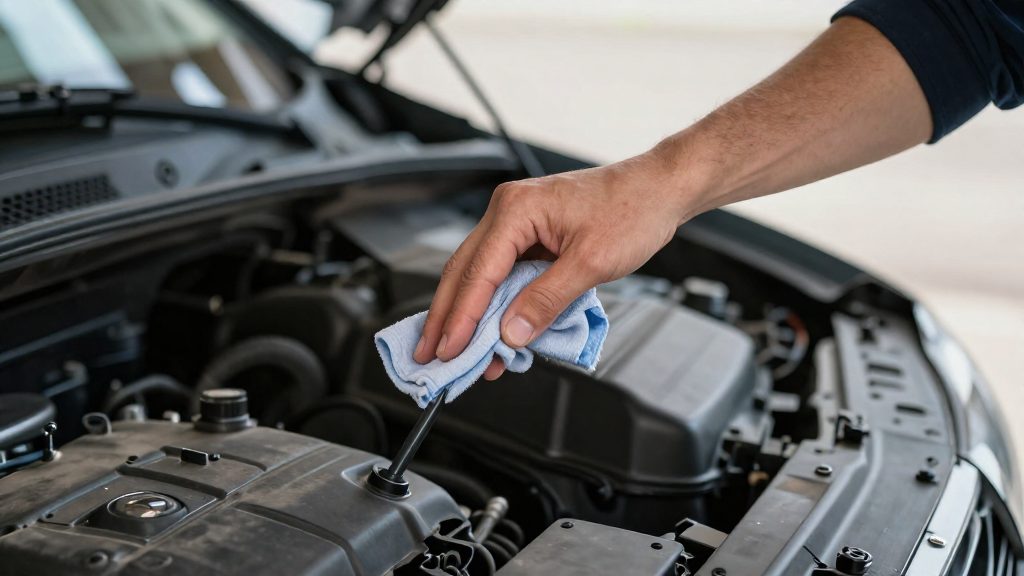
The owner’s manual sets out the correct method for each fluid, including whether the engine should be warm or cold when you check it, where the vehicle must be parked, and which marks on the dipstick show the acceptable range. Use these instructions rather than general rules, because they differ between vehicles. Check the engine oil, the coolant reservoir, the brake fluid reservoir and the windshield washer fluid.
Note the level and the colour of each fluid. A level that drops between checks, dark or dirty oil, or a puddle under the vehicle can signal a leak or excessive consumption, and these should be examined by a technician before the vehicle is driven further. Never open a coolant cap while the engine is hot, because the pressurised coolant can cause serious burns. Brake fluid can damage paint, so wipe up any spill with a damp cloth.
The official sources consulted do not give a single oil change or fluid replacement interval that applies to all vehicles. Follow the schedule in your owner’s manual, and treat the weekly check as a way to spot changes between scheduled services.
What do dashboard warning lights mean?
Dashboard symbols vary by make, model and year, so the owner’s manual is the reference for your vehicle. As a general principle, red warning lights call for more urgent attention than amber or yellow ones, and some lights mean you should stop safely as soon as possible. Do not ignore a light that stays on, and do not assume a light has gone out just because it has stopped flashing.
The tire pressure warning light deserves particular attention. When it lights, check all tires with a gauge when they are cold, and adjust them to the recommended pressures. If the light stays on or keeps flashing after you have corrected the pressures, have the system checked. ICBC’s DriveSmartBC guide, quoting the British Columbia Vehicle Inspection Manual, says an inspector will tell the owner if the TPMS indicator does not work or stays on. That notice is not a pass or fail item in that inspection.
How do I check for recalls in Canada?
A recall is the manufacturer’s correction for a vehicle safety defect or a non-compliance with a safety standard. Transport Canada’s motor vehicle recall database covers recalls issued in Canada from 1970 to the present. Transport Canada states that consumers are responsible for staying up to date on recalls of their vehicle, tires or child car seats, so the check is your job, even though manufacturers do send notices.
Since 1 January 2025, all vehicle manufacturers must publish safety recall information on their websites. Designated manufacturers must also provide a VIN lookup tool, so you can check your 17-digit Vehicle Identification Number against their recall records (Transport Canada, 2025). Your VIN is usually shown on your registration papers and on the vehicle itself. If you are unsure where to find it, check your owner’s manual. Transport Canada also suggests checking recalls before you buy or import a vehicle.
If a manufacturer has your contact details, for example from a warranty or product registration, it must notify you directly of a recall. You can also register with the manufacturer or subscribe to Transport Canada’s motor vehicle safety recalls RSS feed to receive updates. A recall notice, which is issued as a Notice of Defect or a Notice of Non-Compliance, describes the issue and the safety risk and lists the steps to fix it. Manufacturers almost always carry out recall repairs free of charge. When a notice arrives, contact a dealer to book the repair, and follow any instruction in the notice about driving the vehicle before the repair is made.
Do I still need a provincial inspection?
Canada has no single national inspection schedule for passenger vehicles. Each province and territory sets its own rules, including whether a periodic inspection is required and when an inspection is triggered, such as when a vehicle is sold or moved to another province. Because the rules differ so much, check the current requirement on your provincial or territorial government website before you plan a repair or a move.
A weekly home check does not satisfy any provincial inspection requirement. It is a way to keep the vehicle safe between inspections and repairs, and it helps you recognize a problem worth reporting to a technician. If you do have an inspection due, the weekly records you keep will also help the technician understand what has changed.
Putting the routine together
A practical routine starts with a walk-around of the tires and lights, followed by a glance at the dashboard for any warning lights, and a quick check of the fluid levels. Once a month, measure the pressure in all tires with a gauge, including the spare, and check the tread. Schedule a recall lookup at least when you buy or import a vehicle, and whenever a notice arrives. Keep your owner’s manual handy so you can match each symbol and fluid reading to the correct instruction for your car.
Frequently asked questions
Do I need to keep a written log of my weekly checks?
The official sources consulted do not require a log. Writing down the date, tire pressures and any fluid level changes helps you spot trends, such as a tire that loses air each week, and gives a technician useful information.
Can I rely on any tire gauge?
The official sources consulted do not recommend a specific type of gauge. Choose one that gives a clear reading and check it occasionally against a gauge at a service station, since an inaccurate gauge leads to wrong adjustments.
Where is my VIN if I cannot find it on the car?
The VIN is usually printed on your registration papers as well as on the vehicle itself. If you cannot locate it, your owner’s manual or your insurer’s documents are good places to confirm its position before you enter it on a recall lookup tool.