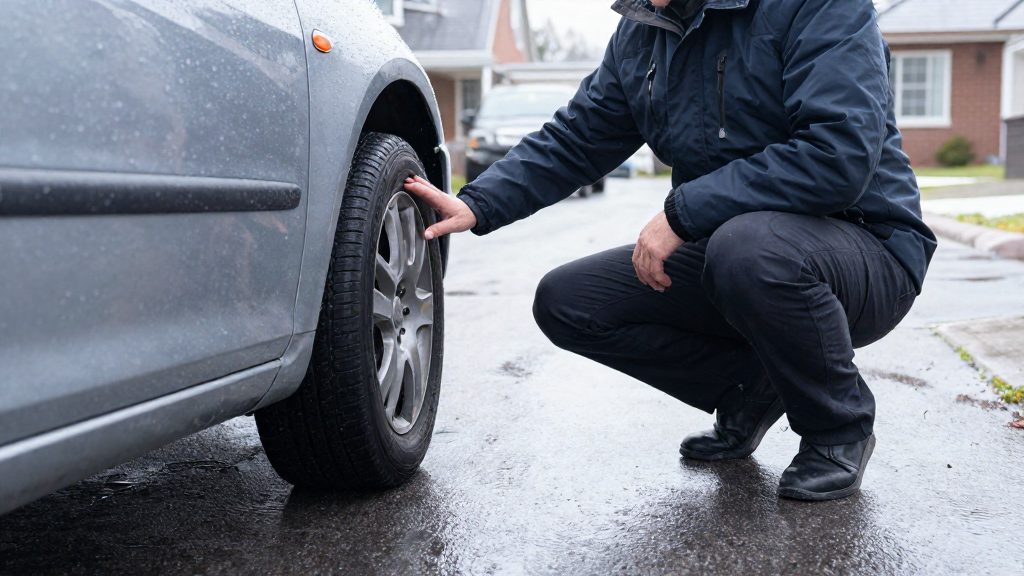
A monthly vehicle safety check is a short walk-around that catches wear and faults before they cause a breakdown or a crash. Focus on the items that change without warning: tire pressure, tread and damage, lights, wipers, fluid levels, brakes and the dashboard warning lights. Transport Canada advises checking tire pressure at least once a month, spare included, and the Ontario Ministry of Transportation lists the same core items in its official driver handbook. Each section below explains what to look for and what to do when something is wrong.
Why do monthly checks matter?
Most of these parts wear slowly, so a change from one week to the next is hard to notice. Tires are the clearest example. Transport Canada states that you cannot tell whether your tires have enough air just by looking at them, and that they may be underinflated by as much as 20 percent. A routine check turns a gradual change into a measurement you can act on.
How do I check tire pressure, tread and damage?
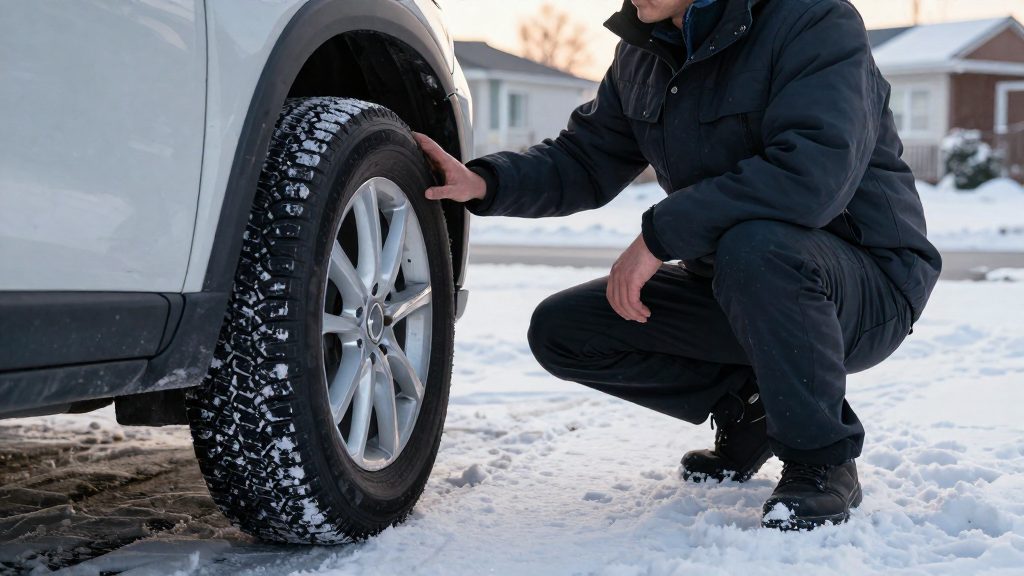
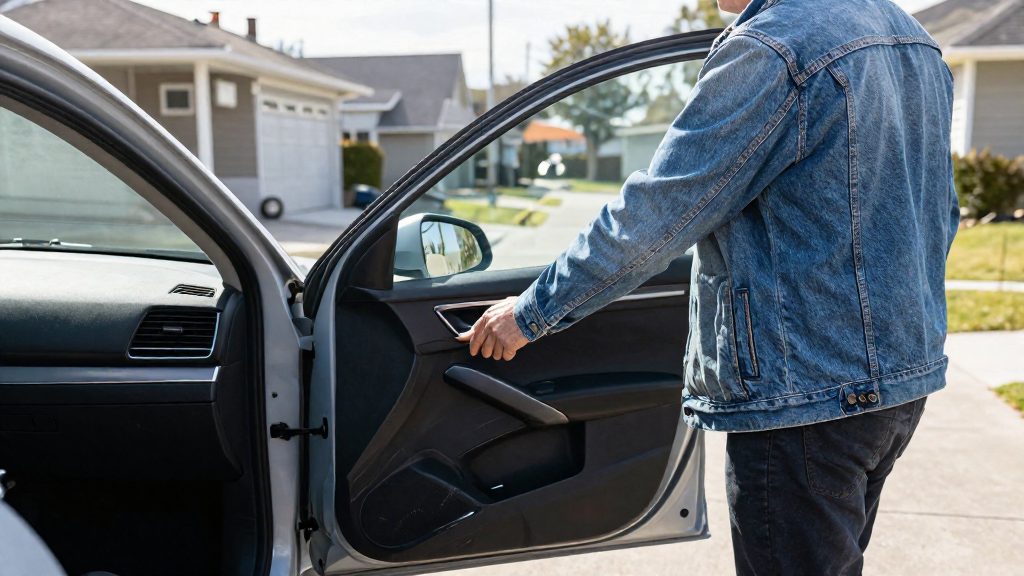
Start with the recommended pressure, not the number moulded on the tire wall. Transport Canada explains that the figure on the sidewall is the maximum for the tire, not the level recommended for your vehicle. The recommended pressure is on the tire information label, usually found on the edge of the driver’s door, the door post, the glove box or the fuel door. If you cannot find it, the owner’s manual lists the same figure.
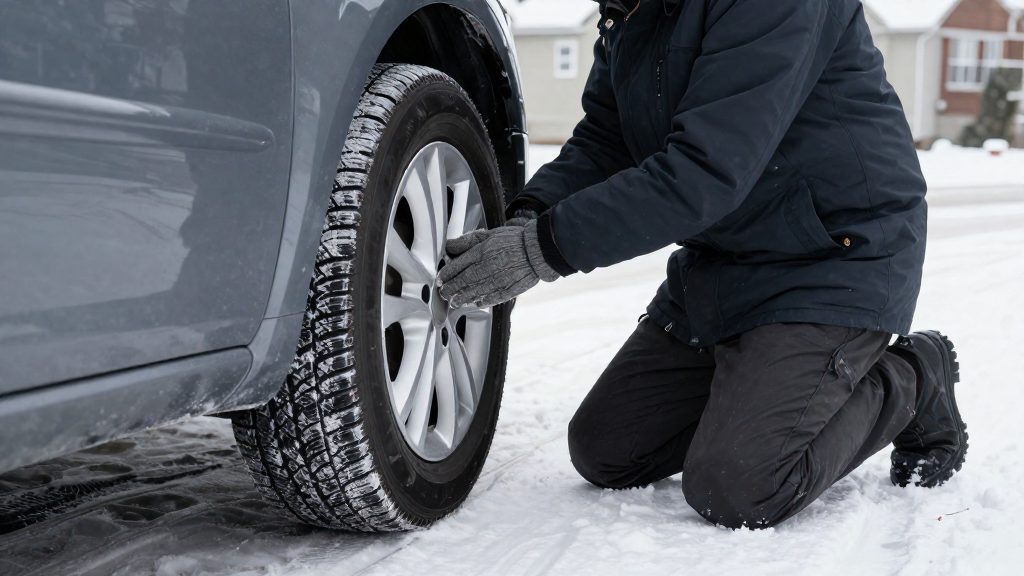
Measure when the tires are cold, meaning the vehicle has been parked for at least three hours or driven no more than 2 km. Include the spare in every monthly check. Pressure falls as temperatures drop, by about 7 kPa (1 psi) for every 5 °C, so check more often in autumn and winter and add air to reach the recommended value. Keep the valves clear of snow and debris. Transport Canada advises against driving on a seriously underinflated tire.
Then look at the tread and the tire walls. In Ontario, the Ministry of Transportation’s handbook says to replace a tire when the tread is less than 1.5 millimetres deep or when the tread-wear indicators touch the road. The same handbook says to replace a tire that has bumps, bulges, knots, exposed cords or cuts deep enough to expose the cords. Tires should not be older than 10 years. The official sources consulted do not explain how to read a tire’s manufacture date, so check the tire manufacturer’s documentation for that step.
How do I check lights, wipers and visibility?
With the vehicle parked, switch on each light in turn: headlights, high beams, turn signals and hazard lights. Ask someone to help you check the brake lights, or check their reflection on a garage door or a shop window. The Ontario handbook says to confirm that all lights work and to watch for burned-out or dim headlamps.
Check the windshield wipers for worn or torn blades, and top up the washer fluid. Keep lights, windows and mirrors free of ice, snow and dirt. The handbook lists these checks for planning a long trip, but they are just as useful in a routine monthly inspection during winter.
How do I check fluids, brakes and leaks?
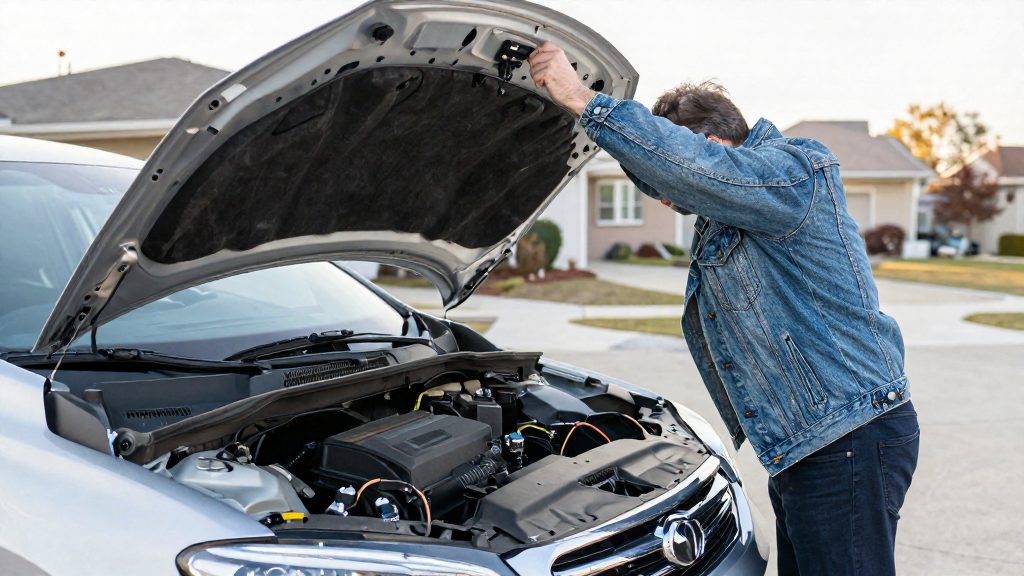
Check the oil and coolant levels with the engine cold, as the Ontario handbook specifies. Work on the engine only when it is cold, the vehicle is parked on level ground and the parking brake is set. Also look at the belts and hoses for visible wear.
While the vehicle is parked, look underneath for fresh fluid drips or new stains where it usually stands. Any new leak is a reason to have the vehicle inspected rather than to top up and forget it.
When you drive, listen for squeaking or grinding when you brake. The Ontario handbook says to have the brakes inspected as part of regular maintenance. Have the exhaust checked if it sounds noisy or rattles.
What do dashboard warning lights mean?
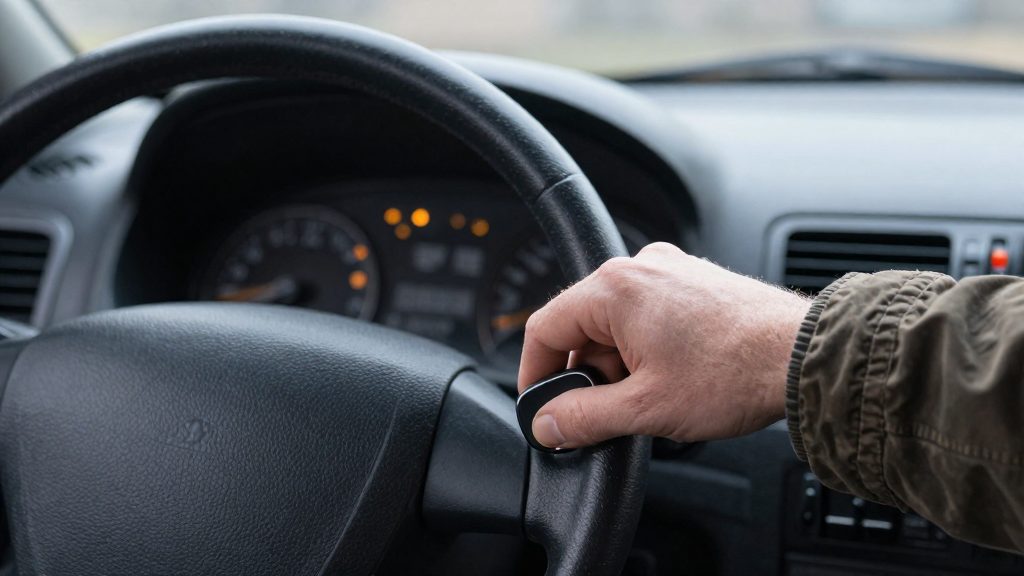
Warning lights should come on when the engine starts and then go out. The Ontario handbook says that a light that comes on while you are driving needs attention. The handbook does not describe the symbols for every vehicle, and the official sources consulted do not specify one response for each light. Check the owner’s manual for the meaning of the symbol and the recommended action. Have a qualified mechanic inspect any light that stays on or appears while you are driving.
How do I check for open recalls in Canada?
Transport Canada’s Motor Vehicle Safety Recall Database lets you look up recalls issued in Canada from 1970 to the present. Start by searching by make, model and year. To confirm the status for your specific vehicle, use the manufacturer’s VIN lookup with your 17-character Vehicle Identification Number, as the Manitoba government advises. Recall status can differ between vehicles of the same make, model and year, so the VIN check is the one to rely on.
Manufacturers must inform you of a recall when they have your contact information, usually through product registration or the warranty. As a consumer, you are responsible for staying up to date on recalls. Notices can reach second or third owners late, or go to a former owner, so make sure the manufacturer has your current details if you bought the vehicle used or have moved.
When a recall is open, contact a dealer that sells your vehicle’s make and arrange the repair. Transport Canada says the manufacturer will almost always make these repairs free of charge, and Manitoba’s guidance says you should not be charged for them. Book the repair promptly, because Transport Canada warns that an unrepaired safety recall puts you, your passengers and other road users at risk.
Which maintenance intervals should I follow?
Scheduled maintenance is set by mileage or time, whichever comes first, according to the Ontario handbook. Typical items include oil and filter changes, air and fuel filter replacement, tire rotation and brake inspection. The owner’s manual gives the specific intervals for your make and model, and it is the reference to follow. A monthly check does not replace these services; it helps you spot problems between them.
When should I book a professional inspection?
Book an inspection with a qualified mechanic when a warning light stays on or appears while you are driving, when you hear squeaking or grinding from the brakes, when the exhaust is noisy or rattles, or when you find a fresh fluid leak. Also have the tires checked when the tread has reached the Ontario replacement point, or when you see any of the damage described above. If you are unsure about a finding, have the vehicle inspected before a long trip.
Frequently asked questions
Does a clear recall search mean my vehicle is safe?
Not necessarily. The database and the manufacturer’s VIN lookup show recalls that have been issued, but the official sources consulted do not say how often new campaigns are announced. Repeat the check periodically, especially after buying a used vehicle.
Should I keep driving while a recall repair is pending?
The official sources consulted do not say whether a vehicle with an open recall can be driven. Follow the notice, ask the dealer what it says about driving before the repair, and book the work promptly.
Is a pocket gauge better than the gauge at a gas station?
Transport Canada says pocket gauges are generally more accurate than the gauges on gas station air pumps, so use a good-quality gauge for your monthly check.