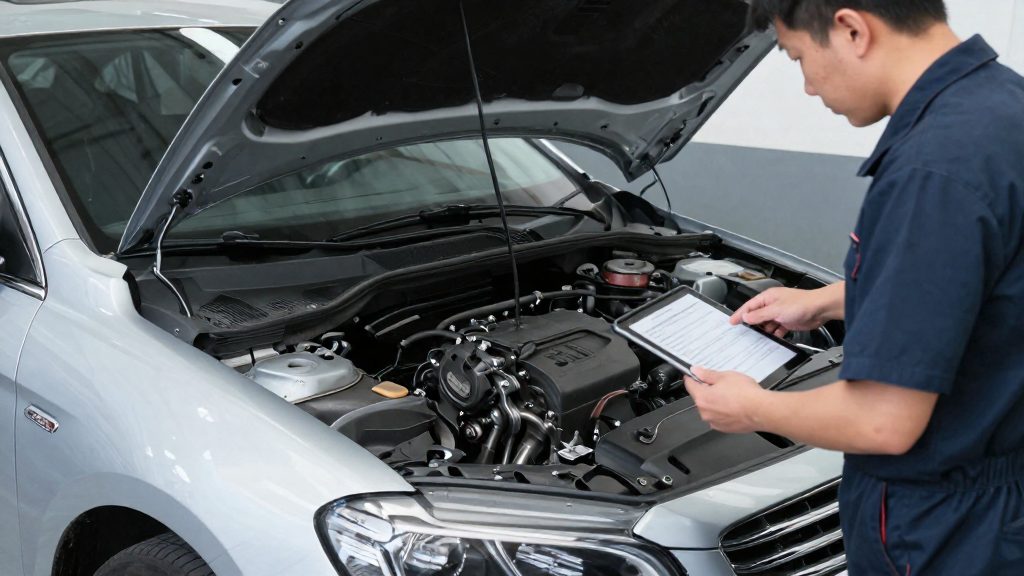
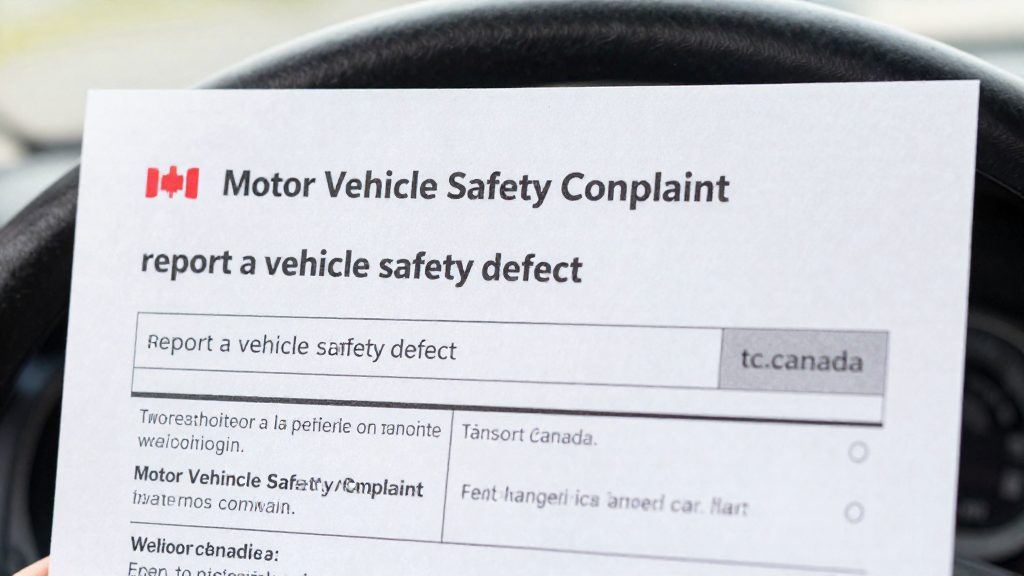
If a vehicle, a tire or a child car seat seems to have a flaw that could cause a crash, an injury or a fire, you can report it to Transport Canada’s Defect Investigations and Recalls Division. You can file through the department’s online Defect Complaint Form or by phone. Reporting does not replace a recall check or a visit to a qualified technician. This guide explains how to file, what the department does and does not investigate, how to check whether a recall already covers your car, and what to do while the problem remains unresolved.
How do you file a report with Transport Canada?
There are two ways to file. The first is the online Defect Complaint Form, linked from Transport Canada’s defect reporting page. The second is by telephone. 1-800-333-0510 is toll-free within Canada, and 819-420-4300 is for the Gatineau-Ottawa area or for calls from outside Canada (Transport Canada, 2023). Phone service runs Monday to Friday, 8 a.m. to 4 p.m. Eastern Time. If you call outside those hours, you can leave a message, and Transport Canada says it will return the call the next business day.
Whichever channel you use, have the basics ready: the make, model and model year, the 17-digit Vehicle Identification Number (VIN), the part or system involved, what happened and when, the mileage, and whether anyone was hurt, the vehicle caught fire, or steering or braking was lost. The official pages consulted do not list what the form asks for, so treat this as practical preparation rather than a formal requirement. Photos, a repair invoice or correspondence with a dealer can also help if you have them.
What counts as a safety defect?
Transport Canada applies a specific test. A safety defect is a flaw that starts in the design, manufacture or assembly of a vehicle, tire or child car seat, and that interferes with safe functioning. It must directly endanger people, including drivers, passengers, pedestrians, cyclists and others on the road. It appears with little or no warning, and it is not caused by normal wear, poor maintenance or owner negligence. The definition also says the flaw can affect a group of similar products, which is why a report from one owner can matter when others see the same failure on the same model (Transport Canada, 2023).
The department’s examples show the kind of problem it means. They include steering parts that fail suddenly and cause loss of control, fuel system parts that can cause a fire, electronic stability control that activates when it is not needed, wiring that may cause a fire or a sudden loss of lighting, airbags that deploy when they should not, and child car seat harnesses or buckles that are defective. Tires that are improperly designed or built and may fail unexpectedly are also covered.
In practice, ask whether the problem seems to come from how the product was designed or made, rather than from how it has been driven, aged or maintained. If you are unsure, report it anyway and let the department assess it.
Which problems does Transport Canada not investigate?
Not every complaint is a safety matter. Transport Canada says it does not investigate paint or cosmetic flaws, engine or powertrain performance problems, squeaks, rattles and noises that warn the driver before a part fails, non-structural or body panel rust, malfunctioning air conditioners and radios, airbags that do not deploy in less serious collisions without injury, or ordinary wear and tear (Transport Canada, 2023).
Two other federal departments handle different concerns. Fuel consumption complaints go to Natural Resources Canada at 1-855-525-9293. Emissions complaints go to Environment and Climate Change Canada at 1-800-668-6767. Both numbers are listed for calls within Canada. A faulty radio or a noisy air conditioner is a legitimate problem for your dealer or the manufacturer’s customer service, but it will not trigger a defect investigation, so filing a safety report for it wastes time you may need for a real hazard.
How do you check whether a recall already covers your vehicle?
Before or alongside a report, check for an open recall. Transport Canada’s 2025 news release says designated manufacturers must provide a VIN lookup tool on their websites. You enter your 17-digit VIN, and the tool shows which recalls apply to your vehicle. The requirements took effect on 1 January 2025, and all manufacturers were given until mid-2026 to comply (Transport Canada, 2025). That deadline has now passed. The official sources consulted do not name the designated manufacturers, so if a manufacturer’s website does not offer the tool, they do not say what to do. In that case, check Transport Canada’s Motor Vehicle Safety Recalls Database, which makes recalls issued by manufacturers available to the public.
Recall notices and repairs follow a set pattern. Manufacturers must notify owners when a safety-related defect has been identified. The notice must describe the defect, assess its safety risk and explain how to correct it. The correction is a repair carried out free of charge by the manufacturer, and Transport Canada urges owners to have recall repairs done as soon as possible (Transport Canada, 2019). Because notices go to the owner on record, an outdated address can mean you never receive one, so check the VIN lookup yourself.
If you buy a used vehicle, the department urges you to register it with the manufacturer so that future recall notices reach you directly. It also suggests asking the seller to complete outstanding repairs before you take possession. The official pages consulted do not say that an open recall prevents a sale.
When should you stop driving a vehicle?
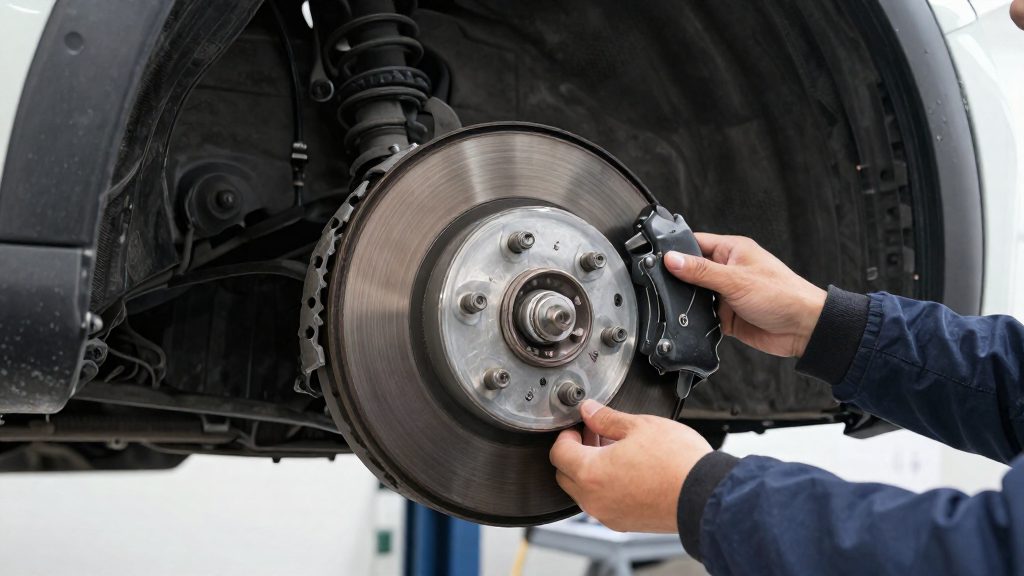
The official sources consulted do not set a threshold for when a vehicle must be taken off the road, and they do not give interim instructions for owners who have filed a report. The following is therefore a conditional approach, not an official rule. If you notice a sudden loss of steering or braking, a fuel smell or leak, electrical burning or smoke, or lights that fail without warning, these are the kinds of symptoms the department associates with safety defects. Pull over somewhere safe as soon as it is practical, avoid driving the vehicle further, and have it inspected by a qualified technician or the manufacturer before using it again.
For a child car seat with a suspect harness or buckle, the official sources consulted do not say whether to keep using it while a complaint is pending. Contact the manufacturer for guidance before the next trip. Do not attempt to repair steering, brake, fuel or airbag components yourself. The sources consulted do not address home repairs, and those components should be handled by a qualified technician or the manufacturer’s dealer.
What happens after you file a complaint?
Transport Canada says it will document and analyze your complaint, and investigate if needed. The page does not describe the steps beyond that. It does not say whether the department contacts the manufacturer, whether online complainants receive a reply, or whether it can order a recall. It also gives no timeline. The only callback commitment is the next-business-day return for calls left outside service hours.
Because the outcome is uncertain, keep your own record: the date and mileage at each symptom, photos, repair invoices, and any correspondence with the dealer or manufacturer. If the department asks for more detail, you will be able to answer quickly. If a recall is announced later for your model, run the VIN lookup again to confirm whether it applies to your specific car.
Frequently asked questions
Do I have to be the current owner to file a report?
The official sources consulted do not say whether a former owner, a passenger or a family member can file. If you are not the owner, contact the department directly to ask before submitting a complaint.
Will Transport Canada order a recall once I file a complaint?
The official sources consulted do not say whether the department can order a recall. Recalls are issued by manufacturers, and the published steps after a complaint are limited to documenting, analyzing and investigating if needed.
Can I report a problem with a vehicle imported from another country?
The official sources consulted do not address imported vehicles. Check the manufacturer’s documentation for the vehicle’s original market and ask Transport Canada how its recall coverage applies to your car.