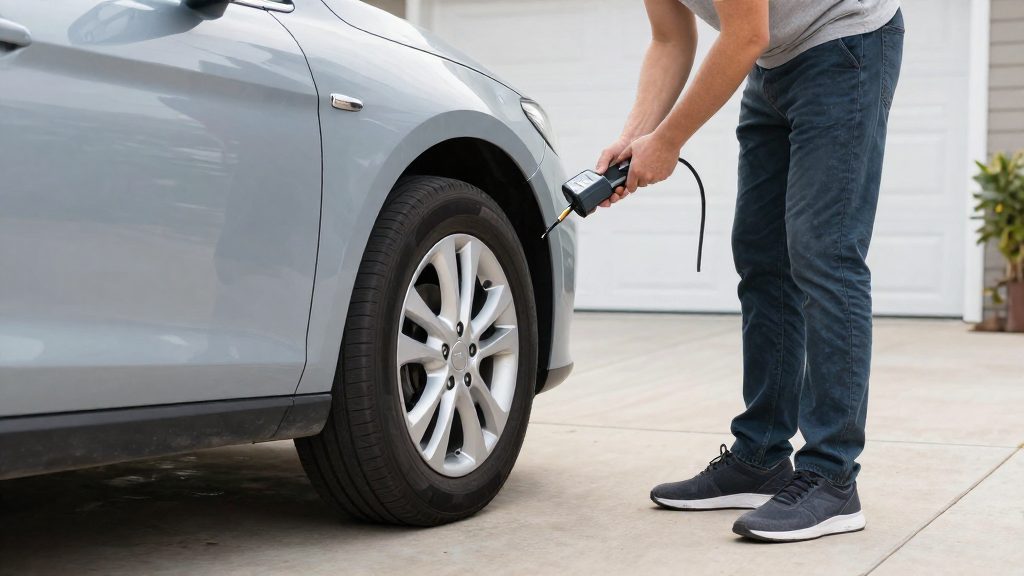
A flashing tire pressure light usually points to a fault in the tire pressure monitoring system (TPMS) itself, or to a drop in the voltage of one tire pressure sensor. It does not simply mean that a tire is low. Until you know the cause, drive gently, avoid high speeds, brake gradually, and do not keep driving for long with the light flashing. Check each tire with a gauge while the tires are cold, then have the system inspected by a qualified repairer as soon as possible.
What does a flashing tire pressure light mean?
A flashing light and a solid light are not the same signal. In the owner’s manual of a recent vehicle, a flashing TPMS light is described as a problem with the monitoring system or with a tire pressure sensor, and a message also appears on the multi-information display. What a solid light means depends on the vehicle, so read the section on the TPMS warning in your owner’s manual. The official sources consulted do not give a single flashing-then-solid pattern that applies to every vehicle.
Because the light reports a problem with the system, it does not tell you the pressure of each tire. A flashing light means the system may not be able to warn you reliably about low pressure. That is why you should measure the pressures yourself with a gauge and not rely on the light alone.
How should you drive when the light is flashing?
The owner’s manual of a recent vehicle gives three clear instructions. Do not drive at high speeds when the light turns on or flashes, because reduced braking and steering performance make speed dangerous. Slow down gradually rather than braking suddenly, which could cause an accident. And do not keep driving while the light flashes, because a tire may burst. Take appropriate measures as soon as possible.
In practice, reduce your speed, avoid highway driving if you can, and pay attention to how the steering and the car feel. If a tire looks flat or soft, or you can hear or see air escaping, pull over somewhere safe as soon as you can and stop driving on that tire. Do not wait to see whether the light changes.
What should you check right away?
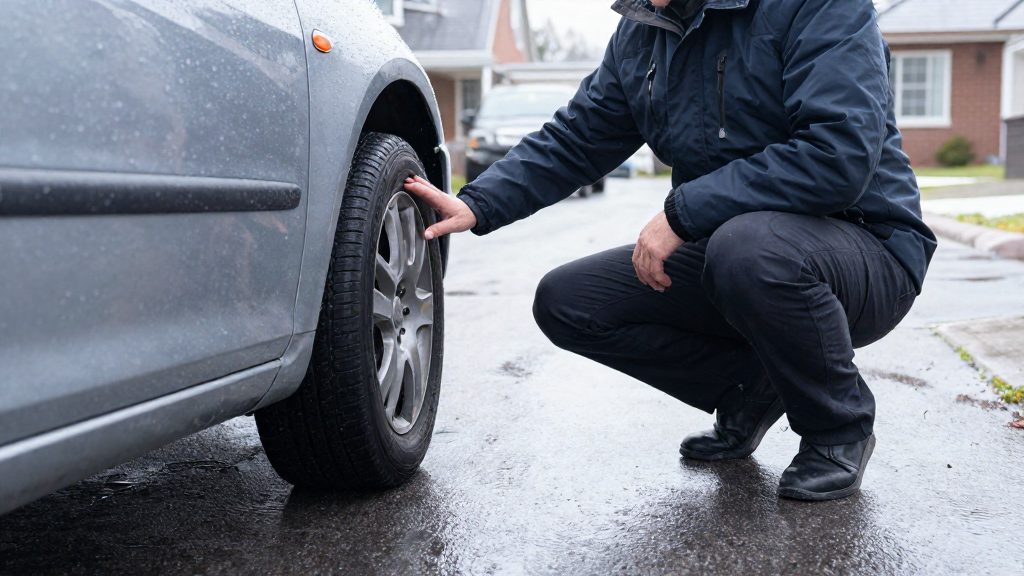
Start with a cold check, because readings taken after driving are not accurate. According to Transport Canada, tires are cold if the vehicle has been stationary for at least three hours or has not been driven more than 2 km. Measure the pressure of every tire, and do not forget the spare.
Next, compare each reading with the recommended pressure. Transport Canada explains that the recommended pressures are printed on the vehicle’s tire information label. If you cannot find that label, the owner’s manual lists them. Add air to any tire that reads below the recommended value, then check it again with the gauge, since a reading can change as you add air.
If the light keeps flashing after every tire is at the recommended pressure, the cause is more likely in the monitoring system than in your tires. Do not treat a correct set of readings as proof that the vehicle is safe to drive normally. The system still needs to be checked by a repairer.
How often should you check tire pressure?
Transport Canada advises measuring the inflation pressure of all your tires, including the spare, at least once a month. DriveSmartBC (2012), quoting Transport Canada, states that this advice still applies to vehicles equipped with a TPMS. A monitoring system is not a substitute for a gauge, because it may warn only when pressure has already fallen a long way.
Monthly checks matter most in cold weather. According to Transport Canada, a tire loses about 1 psi (7 kPa) for every 5°C drop in temperature, so a cold snap can leave tires under-inflated without any obvious sign. The same Transport Canada page warns that tires that look normal may still be underinflated by as much as 20%. A visual check is therefore not enough.
Is a TPMS required on vehicles in Canada?
The sources consulted do not show that a TPMS is required. DriveSmartBC (2012) reports that nothing in the British Columbia Motor Vehicle Act or its regulations requires a TPMS, and that the system is not required. It adds that Transport Canada was still evaluating whether TPMS offers an additional safety benefit. Because that page dates from 2012, confirm the current federal and provincial position with Transport Canada and with the authority in your province before relying on it.
If your vehicle does have a TPMS, inspection rules can still apply. According to DriveSmartBC (2012), the British Columbia Vehicle Inspection Manual asks the inspector to advise the owner if the indicator fails to operate or stays lit. That item is not a pass or fail criterion. Check the inspection rules that apply where you live, because they are set by each province.
When should you see a repairer?
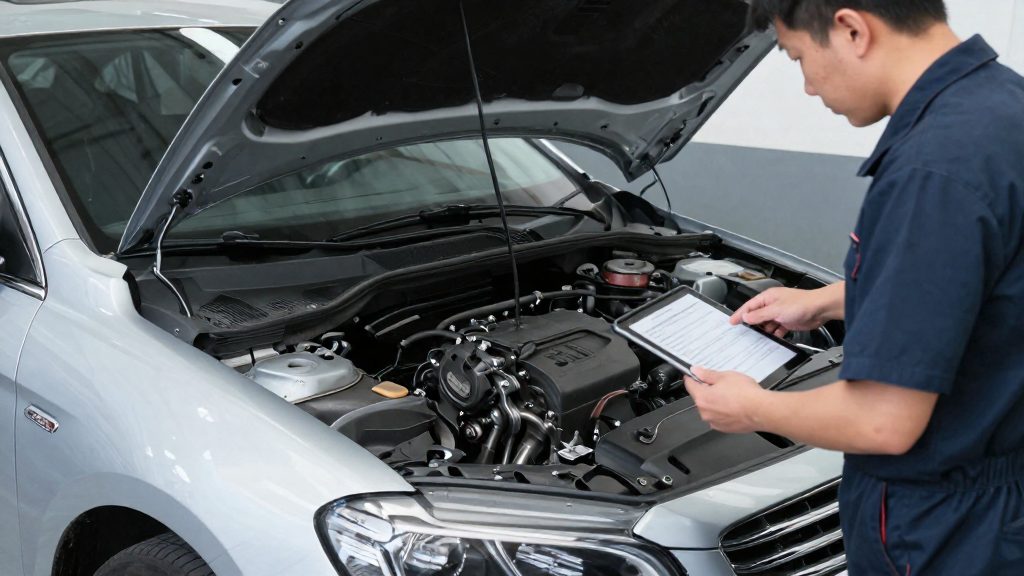
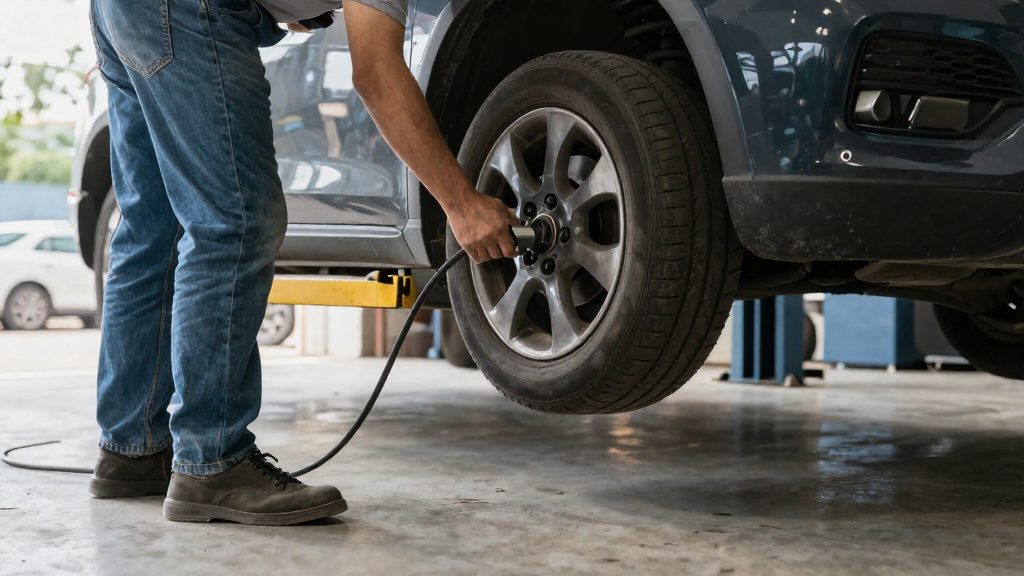
Book a visit with a qualified repairer, preferably one authorised for your vehicle make as the owner’s manual recommends, when any of these apply: the light still flashes after all tires are at the recommended pressure; the light stays on or comes back repeatedly; a tire is damaged, flat, or losing air; or the light appears after tire work.
When you book, describe exactly when the light flashes, whether it began after a cold spell or a tire change, and the pressures you measured on each tire, including the spare. This information helps the repairer find the fault faster. Until the system has been checked, keep measuring tire pressure by hand with a gauge, and do not assume the light will warn you of a problem.
Frequently asked questions
Can I reset the light myself after inflating my tires?
The official sources consulted do not describe a reset procedure. Check the owner’s manual first, and have a repairer confirm that the monitoring system is working.
Does the system need to be reset after a seasonal tire change?
The sources consulted do not say. The owner’s manual explains whether the sensors must be reset or relearned after a tire change on your vehicle.
Does a flashing light mean my tires need replacing?
Not necessarily. The light signals a fault in the monitoring system. The official sources consulted do not link it to tire wear, so have the tread checked separately.