What is a tire rotation?
A tire rotation moves each tire to a different wheel position on the same vehicle, so wear is spread across all four tires instead of collecting on one axle. Front and rear tires wear differently because of steering, braking, and weight distribution, so without rotation one pair often wears out well before the other. NHTSA lists rotation alongside wheel balancing and alignment as recurring tire services. Rotation does not repair a damaged or worn-out tire. It only evens out wear on tires that are still safe to use.

How often should you rotate your tires?
NHTSA’s guidance is to follow your owner’s manual. Where the vehicle manufacturer recommends rotation, NHTSA points to an interval of every 5,000 to 8,000 miles, and you should rotate sooner if you notice uneven wear. Driving conditions change how fast tires wear. Frequent highway driving, heavy loads, towing, and hard cornering or braking can all accelerate wear, so drivers in those conditions should look at their tread more often than the interval alone suggests. Write down the date and mileage of each rotation so you can see when the next one is due. If your manual gives no interval, ask a qualified technician to base the schedule on the manufacturer’s written guidance rather than a generic rule.
Where do you find your rotation interval?
Look in the maintenance section of your owner’s manual. It states the rotation interval and the pattern for your vehicle, and it is the reference a technician should use. If you no longer have the paper copy, the manufacturer’s website usually hosts a digital version; search by make, model, and model year. The tire information placard, normally on the driver’s door jamb, lists the recommended cold inflation pressure but not a rotation schedule, so it should not be your only reference. Keep the manual in the glovebox or save a copy on your phone so the information is available at the service counter.
Does drivetrain or tire type change the schedule?
Sometimes, yes. All-wheel and four-wheel drive vehicles can be more sensitive to differences in tire size and tread depth between axles, so manufacturers often set specific limits and rotation rules. Follow the manual for those limits. Directional tires, marked with a rotation arrow on the sidewall, can only move front to back on the same side of the car. Some vehicles fit a different tire size front and rear, a setup often called staggered fitment, and those sets may not be rotatable at all. Performance, run-flat, and winter tires can also come with their own guidance from the tire maker. If your tires have a rotation direction or are staggered, ask the shop to confirm the allowed moves before the work starts.
Which rotation pattern should you use?
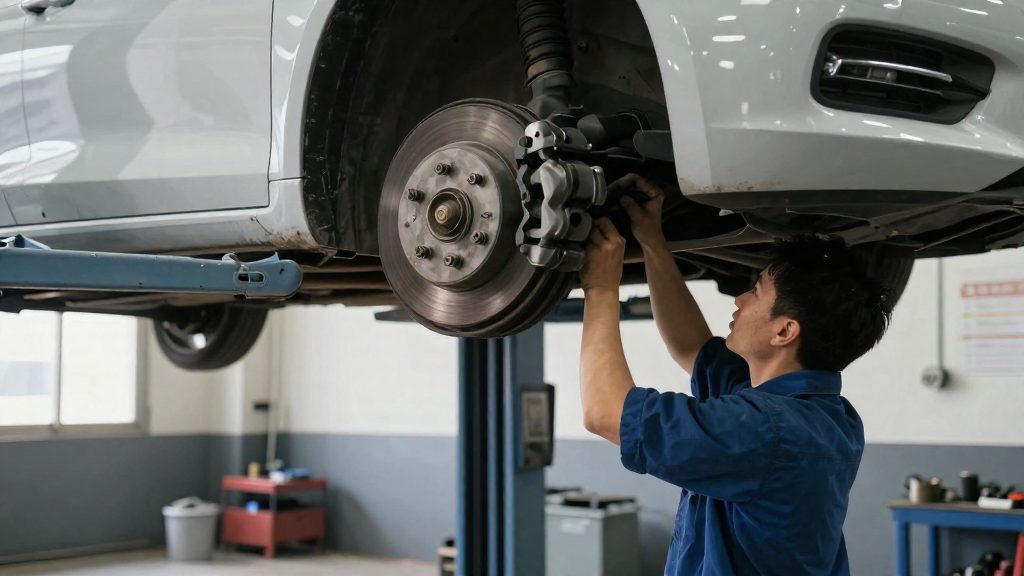
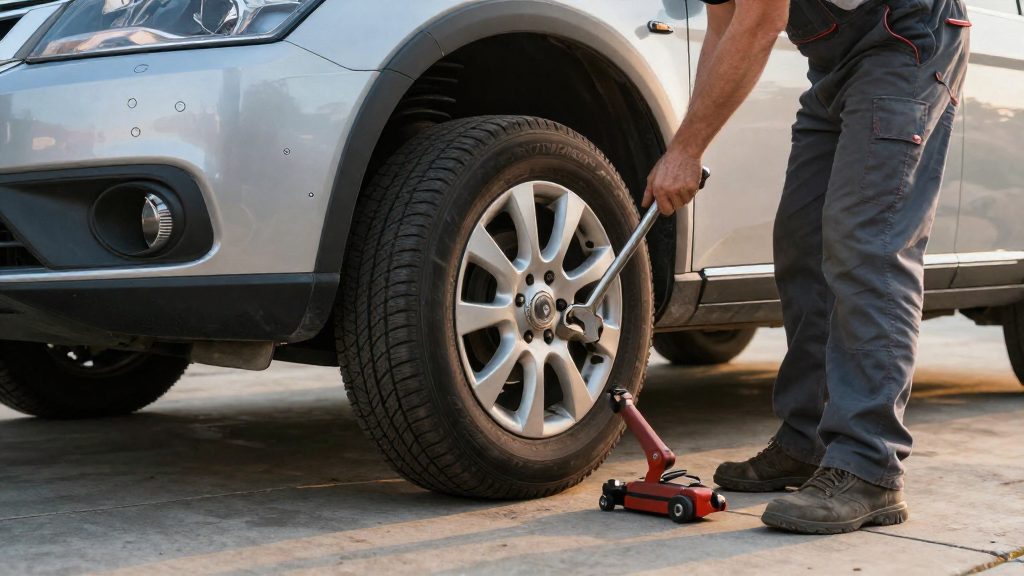
The right pattern depends on the vehicle, its drive layout, and whether the tires are directional. Common patterns include the forward cross, the rearward cross, and the X pattern, but the correct one for your car is the one your manual specifies. Whoever does the work should follow basic safety steps. Park on a level, firm surface, set the parking brake, and block the wheels that are not being lifted. Lift the vehicle only at the points the manual shows, and support it on jack stands before any wheel comes off. A jack alone should never be the only thing holding the car. Tighten the lug nuts in a star pattern to the torque value in the owner’s manual, and recheck them when the manual directs. If you are not equipped to do these steps safely, have a professional rotate the tires.

Why check pressure monthly even with a TPMS?
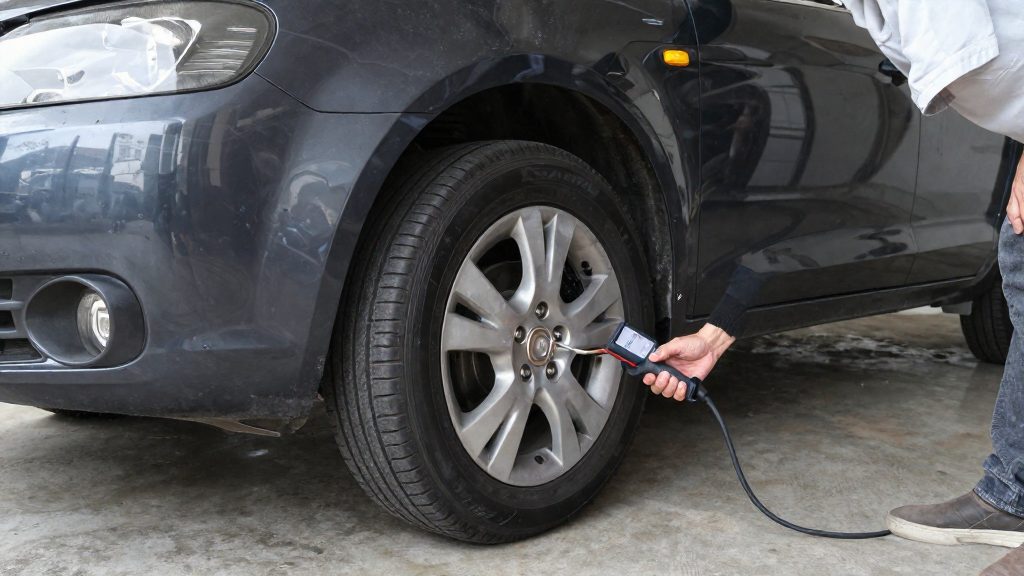
NHTSA says proper inflation pressure is the most important part of tire maintenance. Check all tires, including the spare, at least once a month with an accurate gauge, and do it when the tires are cold, meaning the vehicle has not been driven for at least three hours. Tires lose about 1 psi of pressure each month, and underinflation is very hard to see by eye. Inflate each tire to the pressure on the door-jamb placard, not to the maximum printed on the tire sidewall, which is a safety limit rather than the target for everyday driving. A tire pressure monitoring system, or TPMS, warns only when a tire is significantly underinflated, so it cannot replace your monthly check. On some vehicles the TPMS must be re-registered after tires are rotated, and the owner’s manual says whether yours requires it.
What signs show your tires need attention?
Uneven wear across the tread is the main warning sign, and it means the tires need rotation, alignment, or both. Wear in the center of the tread generally points to overinflation, wear on both edges generally points to underinflation, and wear on one edge often points to an alignment problem. To check tread depth, use the built-in wear bars, which sit at 2/32 of an inch. When the tread is level with them, the tire should be replaced. The penny test is a rough backup: insert a penny into a groove with Lincoln’s head upside down. If the top of his head is visible, the tread is too worn and new tires are needed. Some states set a stricter minimum than the federal reference, so check your state’s rules. Other warning signs include vibration at speed, pulling to one side, bulges, cuts, cracks, and a tire that keeps losing air. If a tire is seriously low or damaged, pull over somewhere safe, avoid high speed, and get help before continuing.
When should a professional inspect your tires?
Book an inspection if you see uneven wear, if the steering wheel or seat vibrates, or if the vehicle pulls to one side. Get the tires checked after a hard impact with a curb, pothole, or road debris, and whenever a tire keeps losing pressure. The same applies if the TPMS warning stays on after you have inflated the tires to the placard pressure. A technician can measure tread across the full width of each tire, check alignment, and balance the wheels. Balancing keeps the vehicle from shaking, and NHTSA recommends it when new tires are installed. Ask the shop to record the rotation pattern and mileage, and to tell you clearly whether a damaged tire can be repaired or must be replaced.
Frequently asked questions
What should I do if I find a nail in a tire?
Do not keep driving on a tire that is losing air quickly. Leave the object in place, because pulling it out can make the leak worse, and have a tire shop decide whether the tire can be repaired based on where the damage is.
Should I keep records of my tire rotations?
Yes. Record the date, mileage, and pattern for each rotation, and keep the receipts. Warranty terms and service history can depend on documented maintenance, so check your vehicle’s warranty booklet for the specific requirements.
Can a temporary spare be included in the rotation?
Usually not, unless the owner’s manual says so. Temporary spares are designed for short-term use at limited speed and distance, so check the manual and the markings on the tire before putting one into the rotation.