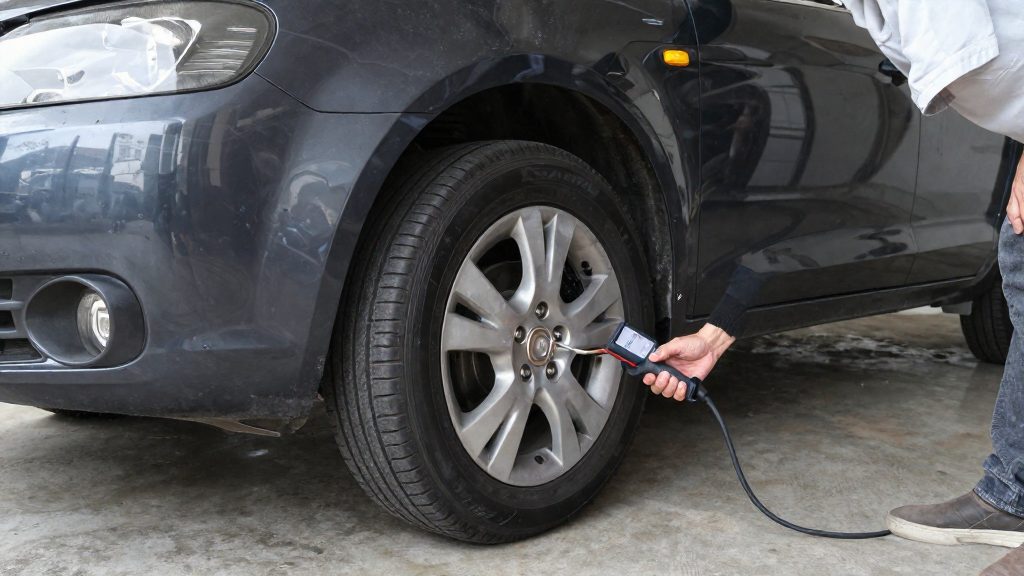
What does the tire pressure warning light mean?
The tire pressure warning light is the signal from your vehicle’s tire pressure monitoring system, usually called TPMS. In the United States, federal rules require this system on most passenger vehicles. The standard, Federal Motor Vehicle Safety Standard No. 138 (49 CFR 571.138), requires a low tire pressure warning to come on when a tire is 25 percent or more below the vehicle manufacturer’s recommended cold inflation pressure.
That threshold matters. The light is designed to warn you of significant underinflation, not gradual air loss. A tire can be noticeably low before the light comes on, so treat the light as a last-resort alert, not an early one. On many vehicles the symbol looks like a tire cross-section with an exclamation mark inside. Your owner’s manual shows the exact symbol for your car and explains whether the tire warning has its own light or shares one with another system.
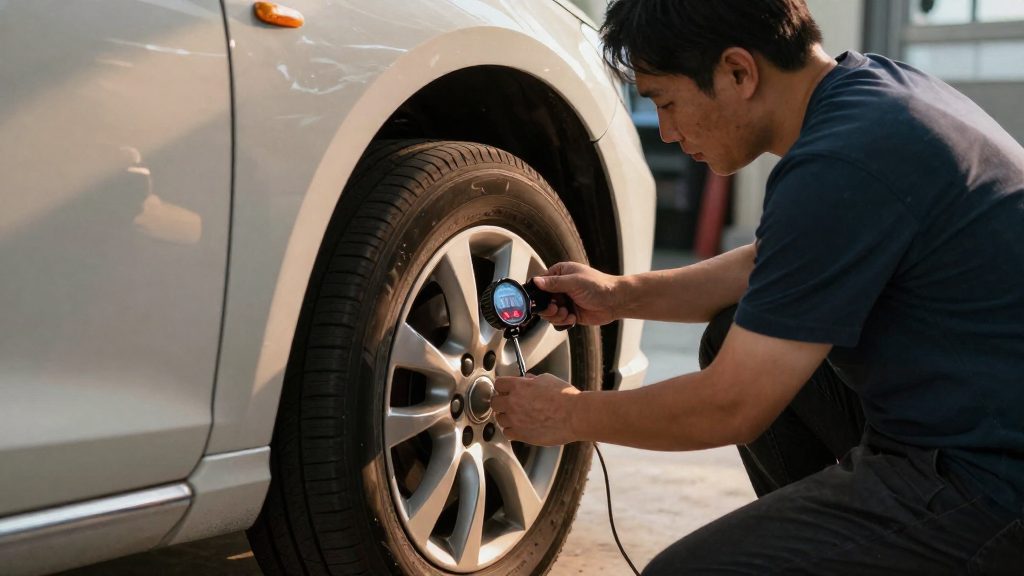
What should you do when the light stays on?
A steady light means at least one tire is significantly underinflated, so act soon rather than waiting for your next fill-up. Find a safe place to stop, away from traffic, and look at all four tires before you drive any farther. Watch for a tire that looks flat or obviously low, a nail or other object in the tread, or visible damage to the sidewall.
If a tire looks flat, or the car pulls, wobbles, or feels unstable, do not keep driving on it. Call roadside assistance or have the tire repaired or replaced. If all four tires look normal, check each one with a pressure gauge while the tires are cold, then add air to any tire below the placard value. Keep the drive short and gentle until the pressure is corrected. Driving far or fast on a seriously underinflated tire can overheat it and damage it.
Why is the light flashing, then staying on?
On vehicles with a combined low-pressure and malfunction light, the federal standard requires the light to flash for at least 60 seconds but no more than 90 seconds when the system detects a malfunction. After that, it stays on for as long as the fault exists. A flashing light followed by a steady light therefore usually points to a system fault, not necessarily to low air. Some vehicles use a dedicated TPMS light that is not required to flash, so check your owner’s manual to see which pattern applies to your car.
A fault can involve a sensor, its receiver, or the wiring. A malfunction means the system can no longer be trusted to report pressure accurately, so the light cannot confirm that your tires are fine. Do not assume the fault is harmless because the tires look normal. Check every tire with a gauge, and have the system inspected by a qualified technician or dealer.
Why does the light come on in cold weather?
Air contracts as it cools, so tire pressure falls when the outside temperature drops. A tire that was within range in mild weather can fall below the warning level on a cold morning. That is why the light often appears on the first cold day of the season. In most cases it means the tire is low at its cold pressure, not that the system is broken.
The opposite effect matters when you check your tires. Driving warms the tires and raises the pressure, so a reading taken after a long drive will be higher than the cold pressure. That reading can make a low tire look acceptable. Likewise, tires left in direct sun for a long time can read high. For an accurate check, measure only when the tires are cold.
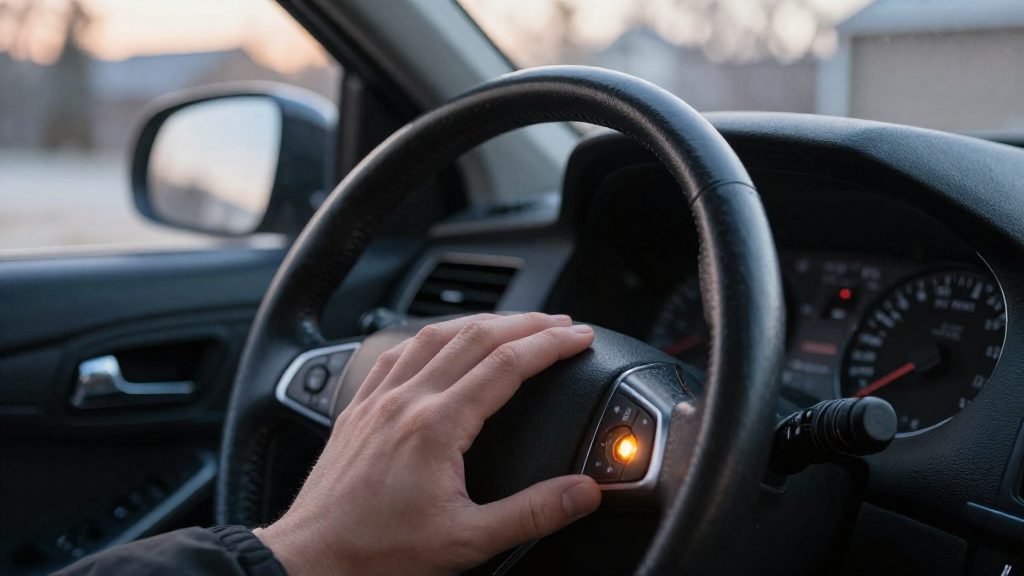
How do you check and inflate your tires?
Start with the placard. It is usually on the driver’s door jamb and lists the recommended cold pressure for the front and rear tires. The owner’s manual shows the same figure, so use that number for your vehicle rather than a number from another source.
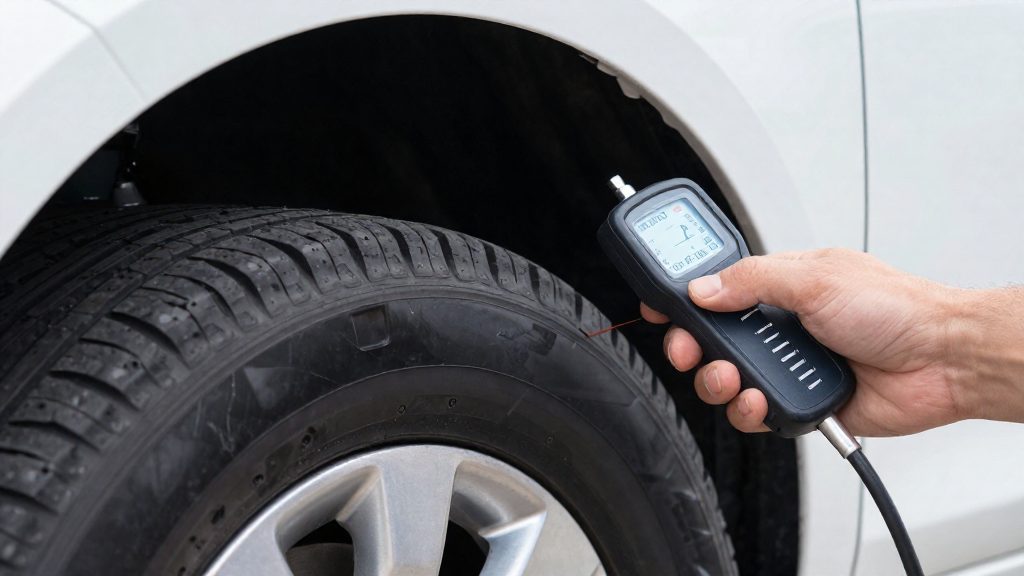
Check when the tires are cold, meaning the car has been parked for several hours. Use a gauge you trust, either digital or dial, and check all four tires. Remove the valve cap, press the gauge firmly onto the valve stem, and read the number. Add air in short bursts at a gas station air pump or a home compressor, checking after each addition, until you reach the placard value. If you overfill, press the small pin in the valve core to release air in short bursts, then check again. Replace the valve caps when you finish, and keep a gauge in the car so you can recheck on the road.
When does the light turn off?
The light should go out once every tire is at the correct pressure, but it may not do so immediately. The federal rule keeps the low-pressure warning on for as long as the low-pressure condition persists. The owner’s manual explains how the system clears after correction. Some vehicles update after you have driven for a while, while others use a reset button or a procedure listed in the manual. Follow the manual rather than guessing.
Do not treat a light that stays on as a sign to keep adding air to the same tire. If it remains on after the tires are at the placard value and you have driven for a while, the system may need a relearn or a repair.
When should you see a technician?
Book an inspection if any of these apply:
- The light stays on after all tires are at the placard pressure and you have driven for a while.
- The light flashes and then stays on.
- One tire keeps losing air. A repeated pattern can point to a slow leak, a valve problem, or a damaged sensor, and a technician can find the source.
- A tire or valve stem is visibly damaged.
When you visit, describe what you saw: when the light came on, whether it flashed, the outside temperature, and the pressures you measured. Check your tires by hand regularly rather than relying on the light alone, and never drive on a tire that appears to be losing air quickly.
Frequently asked questions
Why did the light come on after my tires were replaced or rotated?
After tire service, the system may need to relearn the position or identity of each sensor. Follow the procedure in your owner’s manual. If the light stays on afterward, have a technician check the system.
Is the number printed on the tire sidewall the correct pressure?
No. The sidewall shows the maximum pressure the tire can hold. The recommended pressure for your vehicle is the figure on the placard or in the owner’s manual.
Do I need to check the spare tire too?
Yes, if your vehicle carries one. Its recommended pressure is listed in the owner’s manual, which may differ from the figure for the road tires.