What is a manufacturer recommended maintenance schedule?
Every new vehicle comes with a maintenance schedule written by its manufacturer. It lists the services the engineers expect your car to need, such as oil and filter changes, inspections of brakes, tires and fluids, and replacement of parts such as belts and filters. Each item comes with a mileage or time interval, and the manual usually says whichever comes first applies.
The schedule is a reference, not a legal demand to visit a dealership. It tells you what to do and when, and any competent service provider, including you, can work from it. Following it also gives you a clear record of how the vehicle was cared for.
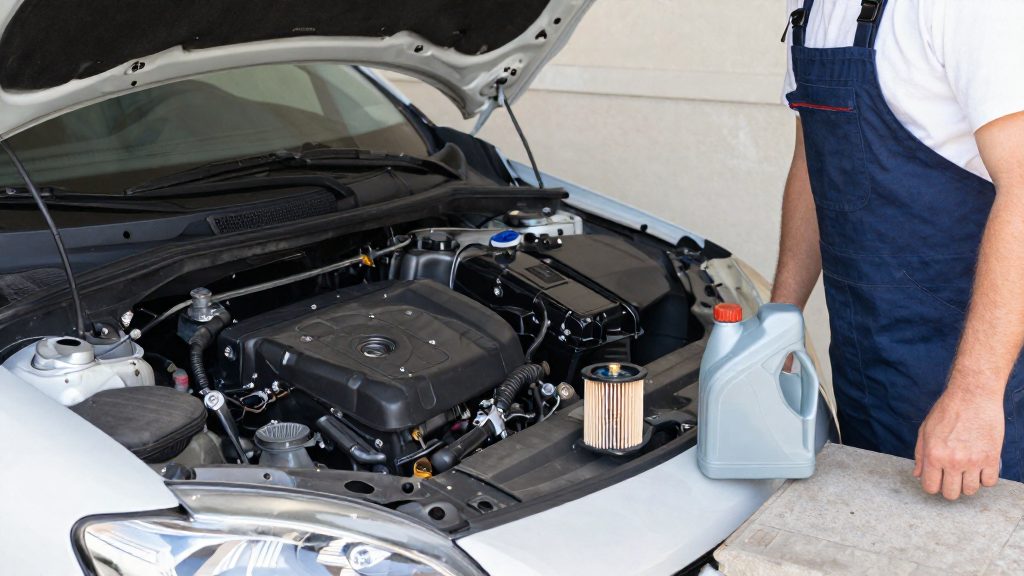
Where do you find your schedule?
Start with the owner’s manual. Look for a section titled maintenance, service or scheduled maintenance. It often has two tables, one for normal conditions and one for severe conditions. Some manufacturers also offer a separate maintenance booklet or a digital version on their owner website. If you no longer have a paper copy, the manufacturer or a dealership can usually provide the correct edition for your vehicle.
Read the table header carefully before you use it. Intervals are often given in both miles and months, and the manual states which one governs. Many newer vehicles also have an oil life monitor or a maintenance reminder. The manual explains how that reminder relates to the printed schedule, so check it before deciding that a service is not yet due.
How do you know whether severe-use conditions apply?
Most manuals list driving conditions that count as severe. These commonly include frequent short trips, extreme heat or freezing weather, dusty, muddy or salted roads, towing or hauling, and heavy stop-and-go traffic. Check the exact list in your manual, because wording differs between models.
When your vehicle regularly operates under one of the listed conditions, the manual generally asks you to follow the severe-use table, which calls for some services more often. If you drive mostly on paved highways in mild weather, the normal table usually applies. Mixed use is common. If you are unsure which table fits, ask a service advisor to review your driving pattern against the manual, and write down which interval you followed.
Does skipping the dealership void your warranty?
Not automatically. The Federal Trade Commission, which enforces the Magnuson-Moss Warranty Act, says you do not have to use a dealer to keep a warranty in effect. An independent mechanic, a chain shop or you yourself can perform routine maintenance and repairs. A company cannot refuse coverage simply because someone outside the dealership did the work, or because you used a part made by another company. It also cannot refuse a covered repair only because you had earlier taken the vehicle to an independent shop.
The exception is damage caused by the work itself or by a defective part. If a faulty repair or a defective replacement part damages a covered component, the manufacturer may refuse coverage for that specific damage. This is why the quality of the work matters, and why records help. A warranty also generally cannot require particular brand-name parts or specified service centers unless the part or service is provided free of charge.

How do you check for open safety recalls?
Use the recall lookup on NHTSA’s website at nhtsa.gov/recalls. Enter your 17-character vehicle identification number, or VIN. You can find it on the dashboard near the windshield, on the label inside the driver’s door frame, and on your registration or insurance card. The lookup shows open recalls, meaning recalls that have not yet been repaired on that vehicle.
A clean result means no open recall is listed for that VIN at the time you check. It does not show every recall ever issued for the model, so check again when you receive a recall notice or after major service work. The same lookup works for a used car, using its VIN.
Recall repairs are performed at authorized dealerships, and NHTSA describes them as free. Coverage for older vehicles can depend on the specific recall, so if the lookup shows a recall and the dealer questions whether it applies, ask the manufacturer to confirm in writing for your VIN.
When should you stop driving after a warning light?
Dashboard symbols vary between manufacturers, so your owner’s manual is the authority on what each one means. A few general patterns still help you decide quickly.
A red warning light usually signals a condition that needs attention before you keep driving. Pull over in a safe place as soon as you can, and check the manual before you continue. Do not keep driving on a red light just to reach home or a shop unless the manual specifically says it is safe to do so.
An oil pressure warning means the engine may not be receiving enough lubrication. Stop as soon as it is safe to do so, check the oil level only as the manual describes, and do not continue driving until the cause is understood. Continuing can cause serious engine damage.
A steady check engine light usually points to a fault that should be diagnosed soon. A flashing light suggests a more urgent problem, so reduce speed, avoid heavy loads and arrange service as soon as it is safe. For a brake warning, confirm that the parking brake is fully released and that the pedal feels normal. If braking feels different, stop in a safe place and get help.
If a light stays on after you have followed the manual, have the vehicle inspected before any long trip.
Why does a maintenance record matter?
A maintenance record is your proof that the schedule was followed. Keep every receipt and invoice, and note the date, mileage, service performed, parts used and who did the work. If you do maintenance yourself, record the same details, including fluid types and the parts you installed. Keep these records with the owner’s manual and the recall notices you receive.
The record also helps when a warranty question arises, because it shows the service was done on time. It helps a future buyer understand the vehicle’s history, and it helps a technician see what was already replaced. A simple logbook or a spreadsheet is enough, as long as the entries are complete and kept consistently.
Frequently asked questions
What if I bought a used car without its service history?
Ask the seller for any records first. If there are none, have a dealership or qualified shop review the manual’s schedule against the vehicle’s VIN, note what is due now, and start a new log from that date.
Who do I contact if a dealership refuses a recall repair?
Contact the manufacturer’s customer service with your VIN and the recall number, keep written records of each request, and you can report the problem to NHTSA.
Does a warning light always mean the car is unsafe to drive?
Not always, but the light alone does not show how serious the fault is. Check the owner’s manual for that symbol and have the vehicle inspected before deciding whether to keep driving.