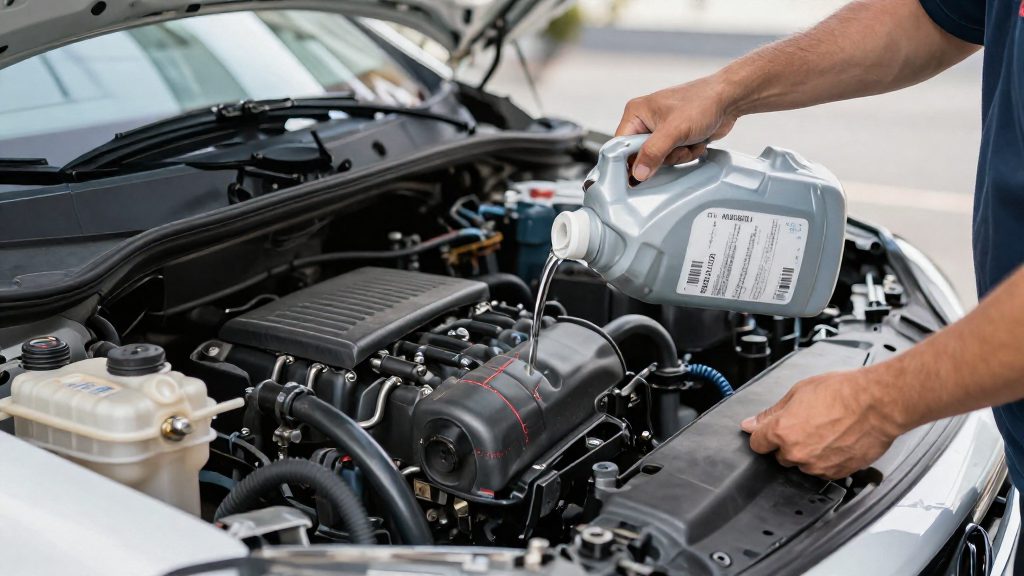
When should you replace engine coolant?
There is no single interval that fits every car. The replacement schedule is set by the vehicle’s manufacturer, so the first place to look is the maintenance schedule in your owner’s manual. Most schedules give two limits, a mileage and a number of months, and you follow whichever comes first.
As an example, one manufacturer’s 2025 US owner’s manual lists a first coolant replacement at 120,000 miles or 120 months, then every 25,000 miles or 24 months after that. That example applies to one model only. Your car may have a shorter interval, and some manuals use one interval for the first change and another for later changes, so read the full row rather than the first number you see.
If you bought the car used, or you cannot find any record of the last change, treat the coolant as unknown until a qualified repair shop has checked it and written down the date. From then on, keep a simple note of each change, with the mileage and the date, so the next one does not depend on memory.
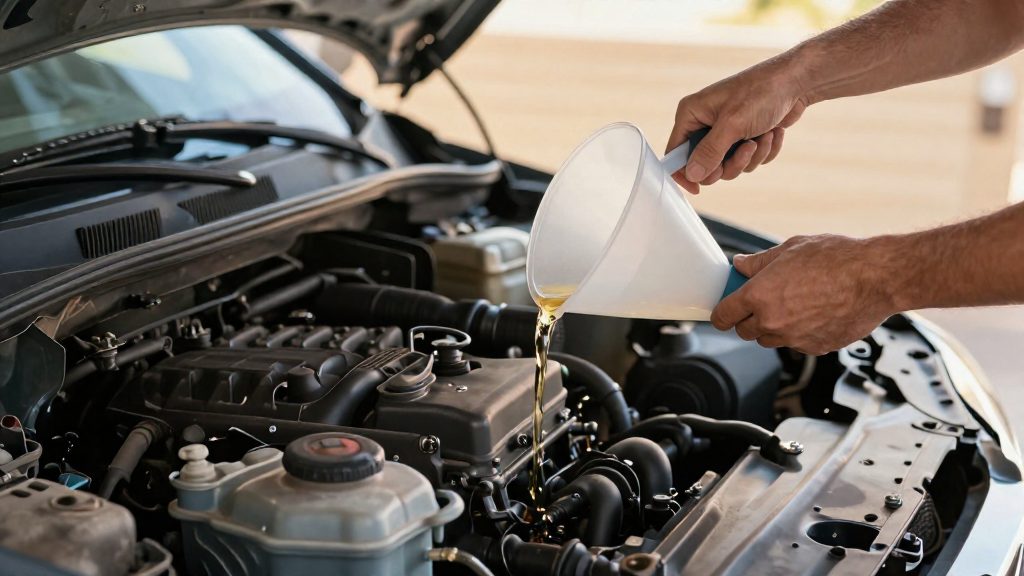
How do you find the right interval for your car?
Open the owner’s manual index and look for ‘engine coolant’ or ‘coolant replacement’ in the maintenance section. Read both the mileage and the time columns. Then check the footnotes or any separate severe-use schedule. Manuals often describe severe use as frequent short trips, towing, very hot climates or very cold climates. If your driving matches one of those conditions, follow the shorter interval printed for it.
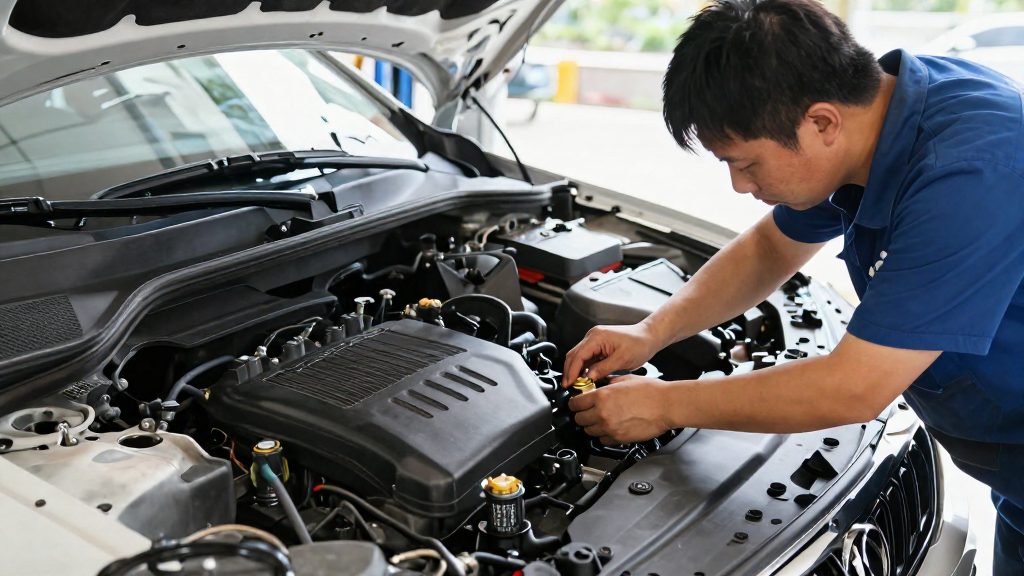
The manual also explains how to check the coolant level and which coolant to use. Do the level check on a cool engine, following the steps your manual gives. Treat the schedule as a baseline, not a deadline to ignore. A leak, a rising temperature reading or a warning light means you should check the system sooner.
What are the signs your coolant needs attention?
Coolant problems usually show up in a few ways. Watch for these signs:
- A temperature gauge that climbs higher than usual, or a coolant or temperature warning light on the dashboard.
- A level that keeps dropping between checks, or puddles of colored fluid under the car.
- Fluid that looks rusty, brown or cloudy, or an oily film in the reservoir.
- A sweet smell after driving, which can point to a leak.
- Weaker heat from the cabin heater.
If the temperature gauge is high or a warning light stays on, stop the car safely as soon as you can and switch the engine off. Do not keep driving to reach a shop. A fresh coolant change does not repair a leak, so the cause needs to be found and fixed.
Why does coolant type matter?
Coolant has to match what the manufacturer specifies, because the cooling system and its metal parts are designed around a particular mixture. Two manufacturer manuals we reviewed give useful guidance that applies in general terms.
For topping up, one manual says to use only deionized or soft water, and never hard water in a mixture that was filled at the factory. It warns that an improper coolant mixture can result in serious malfunction or engine damage. Another manual says to keep the solution between 35 and 60 percent antifreeze. It adds that below 45 percent, a vehicle with a heat pump system may freeze in extremely low temperatures.
Both manuals prohibit alcohol or methanol coolant, and one says not to mix them with the specified coolant. If your manual names a specific coolant type, use that type. Do not mix different coolant chemistries unless your manual allows it.
Is it safe to open a hot radiator cap?
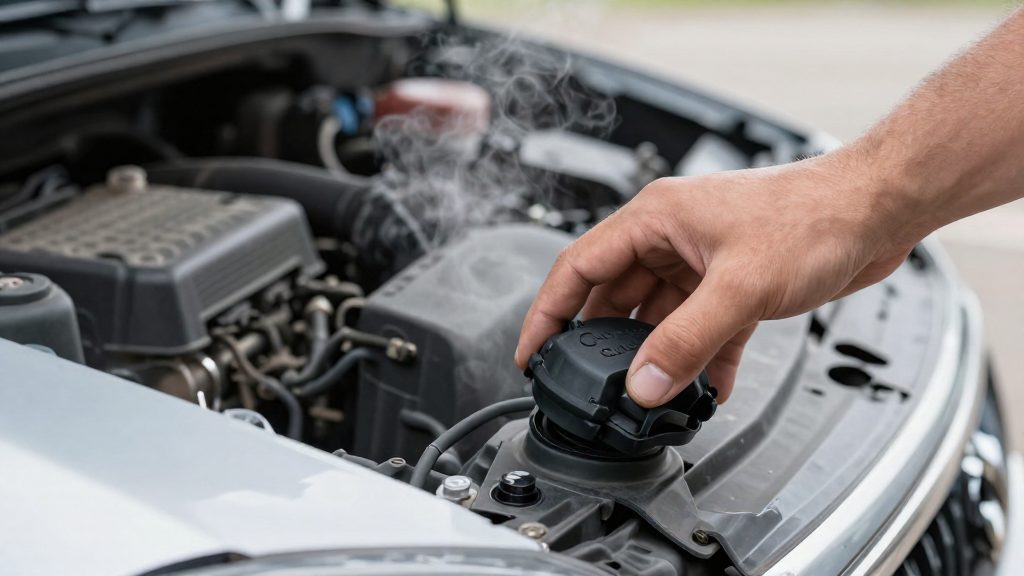
No. Do not remove the radiator cap while the engine or the radiator is hot. The coolant and steam in the system are under pressure and can be hot enough to cause serious scalding injuries.
After a drive, wait until the engine and radiator are completely cool before you check the level. That can take a long time after the engine has been running hard. If steam is coming out from under the hood, stay clear of the engine bay, switch the engine off when it is safe to do so, and wait. Use eye protection and gloves when you handle coolant, and keep children and pets away from the work area.
If you are not sure whether the system is cool enough, leave it alone and call a repair shop.
What happens if you skip a coolant change?
Coolant contains additives that protect the engine and cooling system. Over time, those additives wear down, and the fluid may protect the metal parts less well. The manuals we reviewed warn that an improper mixture can cause serious malfunction or engine damage. In practice, a neglected cooling system can overheat, develop leaks at seals and hoses, or suffer internal corrosion. The exact effect depends on the vehicle, which is why the manual interval is the reference point.
How should you dispose of old coolant?
Old coolant is a waste product. Do not pour it down a drain, onto the ground or into a storm sewer. The US Environmental Protection Agency’s household hazardous waste guidance lists products such as oils and batteries, which contain hazardous ingredients, and it directs people to local collection programs. It also notes that some local businesses, including garages, may accept materials for recycling or proper disposal.
Call your local environmental, health or solid waste agency before you go, because not every program accepts coolant on every collection day. Store drained coolant in a sealed, clearly labeled container, away from children and pets, and never in a food or drink container.
When should you see a mechanic?
Get the cooling system inspected if the level drops between services, you see a leak, the temperature gauge rises, the heater stops working well, or you cannot confirm when the coolant was last changed. A mechanic can pressure-test the system, check the condition of the coolant and confirm the correct type before a change.
If the car has overheated, do not drive it further than you must. Let it cool fully, and ask for help if you are unsure whether it is safe to move. Bring your owner’s manual to the appointment so the technician can work from the same interval and coolant specification.
Frequently asked questions
Can I check the coolant strength at home?
A simple tester can give a rough idea of antifreeze strength. Compare the result with the mixture range in your owner’s manual. For an accurate reading, ask a repair shop to test it.
Do I still need a change if I rarely drive the car?
Often, yes. Coolant ages with time as well as distance, so the months limit in your manual still applies even at low mileage.
Can I buy any coolant at an auto parts store?
Only if it matches the type your manual specifies. Labels can be confusing, so check the specification in the manual or ask a shop before you buy.