What do amber warning lights mean?
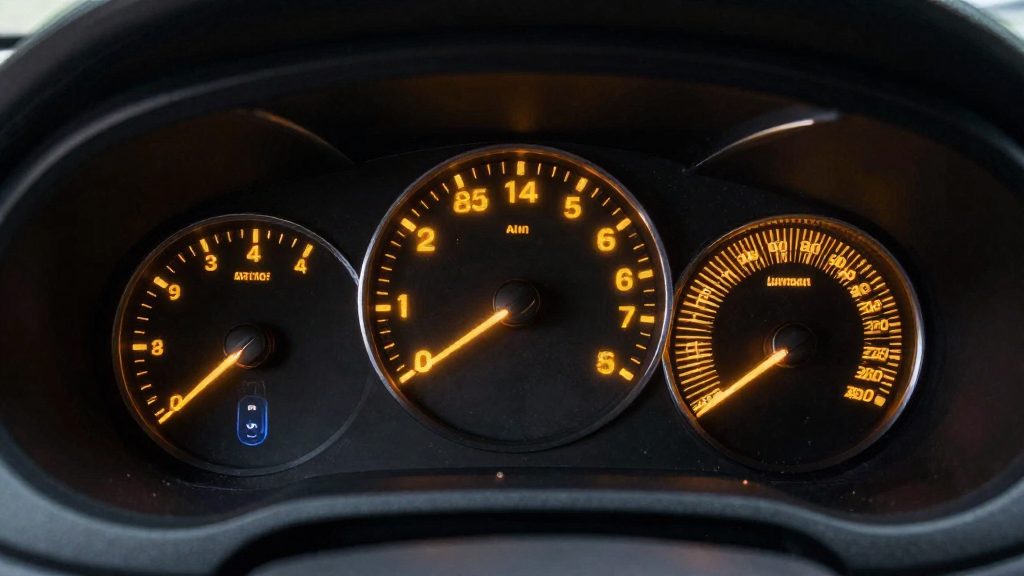
Amber (yellow-orange) warning lights are caution signals. They tell you that a system needs attention, usually soon but not always right away. Symbols are standardized in general, but the exact meaning and the required response can differ by make and model, so your owner’s manual is the reference for your vehicle.
When you turn the ignition on, many lights come on briefly as a self-check. A light that goes out after the engine starts is normal. The lights you need to act on are the ones that stay on after startup or come on while you are driving.
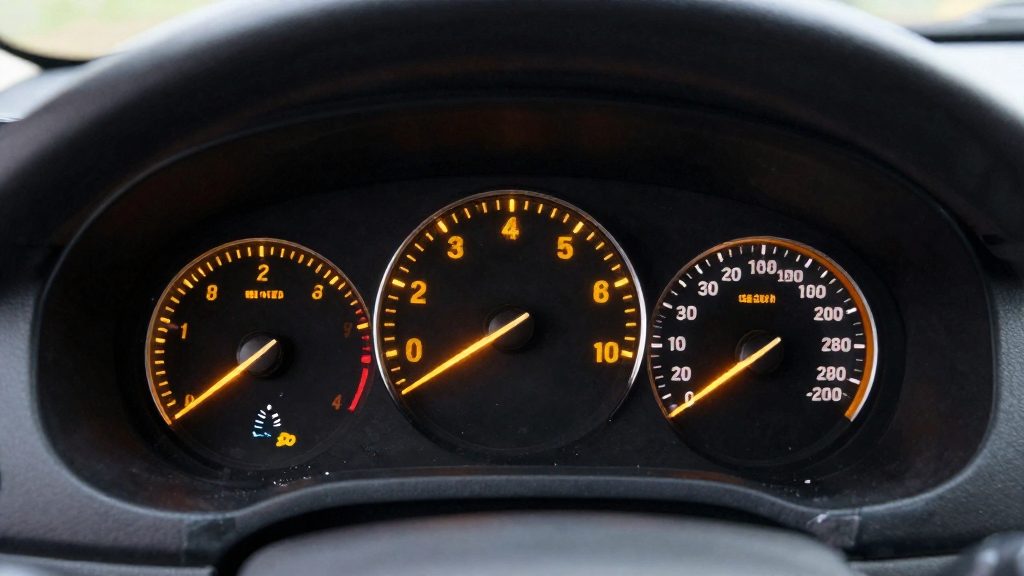
Amber vs. red: how urgent is it?
Red lights generally signal a more serious condition, one that calls for stopping as soon as it is safe to do so. Federal motor vehicle safety rules require the brake system malfunction telltale to be red (49 CFR 571.101). Amber lights generally point to a fault that needs prompt attention. In many cases the vehicle can still be driven carefully while you arrange a check.
Color is only part of the picture. Treat any light as urgent if it comes with other symptoms: a loss of power, a sudden change in steering or braking feel, smoke, a burning smell, overheating, or unusual noises. In those cases, stop in a safe place, turn off the engine, and get help.
What should you do when the check engine light comes on?
The check engine light, sometimes labeled as a malfunction indicator, means the engine or emissions control system has detected a fault. A steady light is not an emergency in itself, but it should not be ignored.
Start with a few simple checks. Note any change you have noticed, such as rough idling, hesitation, a drop in fuel economy, or a new noise. Check the fuel cap: a loose or damaged cap is a common cause. Tighten it until it clicks, and replace it if the seal is cracked. On many vehicles the light turns off by itself after the fault clears, though this can take several driving cycles. Your owner’s manual explains the procedure for your car.
If the light stays on, have the diagnostic trouble code read. Many auto parts stores offer this service, and any mechanic can do it. The code gives a starting point, not a final diagnosis. Do not clear the code yourself to make the light disappear. If the fault is still there, the light will return, and the code information is useful to the technician.
Is a flashing check engine light an emergency?
Yes, treat it as urgent. A flashing check engine light generally indicates an engine misfire that is severe enough to send unburned fuel into the exhaust system, which can quickly damage the catalytic converter. The cost of that damage is far higher than the cost of a prompt diagnosis.
If the light flashes, reduce speed and avoid hard acceleration, heavy loads, towing, and steep grades. Pull over in a safe place as soon as you can. If the engine runs roughly or loses power, turn it off and arrange a tow. Do not keep driving long distances while the light flashes. Have the vehicle inspected as soon as possible.
What does the tire pressure (TPMS) light mean?
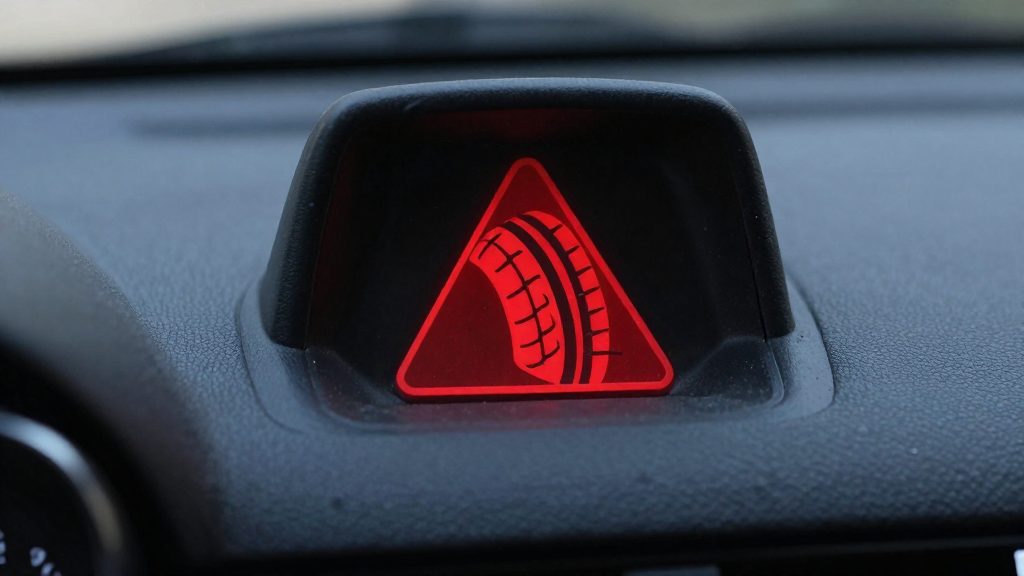
A tire pressure monitoring system (TPMS) warns you when one or more tires are under-inflated. Under the federal standard, the low-pressure warning must come on within 20 minutes after one or more tires reach 25 percent or more below the manufacturer’s recommended cold inflation pressure. The light then stays on while any tire remains at that level, until the system is reset as the manufacturer describes (49 CFR 571.138).
That threshold means a tire can be noticeably low before the light appears. Do not rely on the light alone. Check all four tires with a gauge when they are cold, meaning the car has been parked for a while and has not been driven far. The recommended pressure is listed on the tire information placard, usually on the driver’s door jamb or in the fuel door area, not the maximum pressure printed on the tire sidewall. Temperature changes also affect pressure, so the light can come on during a cold snap.
If the light comes on, check and correct the pressures, then drive a short distance. The light may take some driving to go off, and the owner’s manual covers any reset procedure. If a tire is visibly flat or keeps losing air, do not drive at highway speed. Under-inflated tires flex more and heat up, which raises the risk of tire failure. Use a spare if you have one, or call roadside assistance.
A TPMS light that flashes for a period and then stays on usually means the system itself has a fault. Under the federal standard, a malfunction must also be signaled within 20 minutes, either by a separate TPMS telltale or by a combined telltale that flashes when the system has a problem (49 CFR 571.138). A flashing TPMS light does not tell you the tires are fine. Check pressures by hand and have the system serviced.
Other common amber lights: ABS, airbag and more
The anti-lock braking system (ABS) light means the ABS may not be working. Normal braking usually still works, but the wheels may lock during a hard stop, so you lose the steering control that ABS helps protect. Drive gently, leave extra following distance, and have it checked soon.
The airbag or supplemental restraint system light means the airbag system has a fault. The airbags may not deploy in a crash. Have it inspected promptly, and keep in mind that the seat belt still provides protection.
Other warning lights vary more by vehicle. A battery or charging light can indicate a charging system problem, and the vehicle may run only on battery power for a limited time, so reduce electrical load and get to a repair facility. Lights for oil pressure or coolant temperature are often red and call for stopping safely. Once the engine has cooled, check the oil or coolant level as the owner’s manual describes. Driving with low oil pressure can cause severe engine damage. If a light is unfamiliar, look up its symbol in the owner’s manual before deciding how urgent it is.
How to check your VIN for open recalls
A safety recall means the manufacturer has identified a defect or a noncompliance with federal safety standards and must fix it. Under federal law, the manufacturer must remedy the defect or noncompliance without charge (49 U.S.C. 30120(a)(1)), and it must reimburse dealers who perform that free remedy (49 U.S.C. 30120(f)(1)). The no-charge requirement does not apply to vehicles first purchased more than 15 years before the recall notice is given (49 U.S.C. 30120(g)(1)).
To check your vehicle, find its 17-character vehicle identification number (VIN). It appears on your registration, your insurance card, and on the vehicle itself. Enter it in the recall lookup on the NHTSA website at nhtsa.gov/recalls. Check periodically, and always check after buying a used vehicle, because a recall may have been announced after the previous owner’s last service.
If an open recall appears, contact a franchised dealer for the brand to schedule the free repair. Ask the dealer to confirm the recall is on your VIN and whether the repair is available.
When should you see a mechanic?
Book a service appointment promptly if a red light comes on, if an amber light stays on after you have checked the obvious causes, if the TPMS or ABS light flashes, or if a steady check engine light is accompanied by a change in how the car drives. A flashing check engine light is a reason to stop driving and get help, not to book an appointment for later.
When you call, describe the symbol and its color, when it came on, whether it is steady or flashing, and what you were doing at the time, such as braking, accelerating, cold starting, or driving on the highway. If you have a code, write it down. This information helps the technician reproduce the problem.
An intermittent light that goes off by itself may still signal a fault. Note when it happened and have it checked.
Frequently asked questions
Does disconnecting the battery reset a warning light?
It may turn some lights off temporarily, but it does not fix the cause. It can also erase diagnostic information a technician needs, and it may reset settings such as radio presets. If the fault is still present, the light will come back.
What should I do if a recall repair is not yet available?
Ask the dealer whether parts are available and when the repair is expected. Ask whether the manufacturer has issued interim safety instructions, such as driving limits or temporary precautions, and follow them until the repair is done.
Can I keep driving if an amber light goes off on its own?
Possibly, but the fault may still exist. Note when the light came on and what you were doing, then have the vehicle checked soon, especially if the light returns.