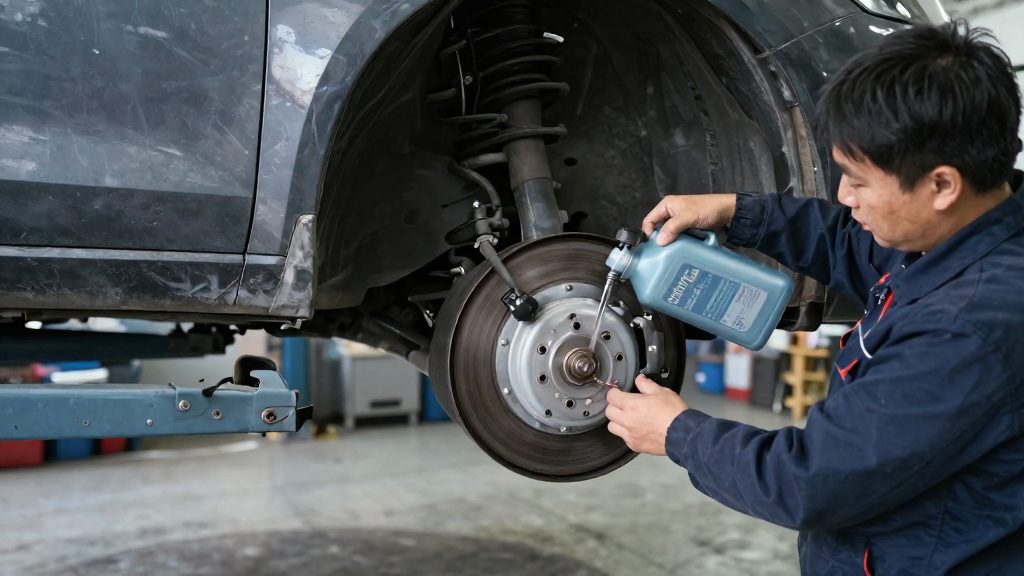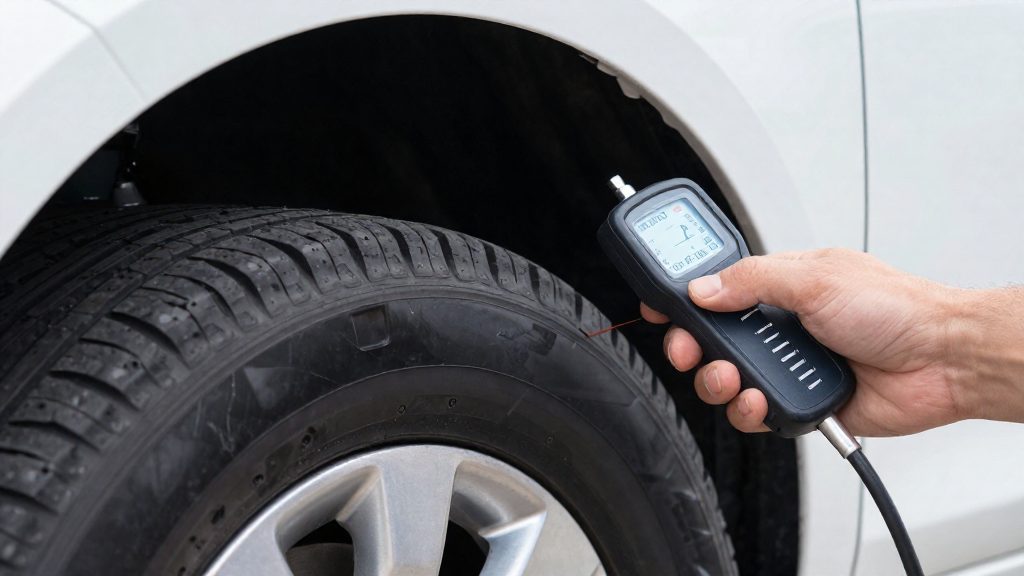
Rotate car tires every 5,000 to 8,000 miles if rotation is recommended by the vehicle manufacturer, and arrange an earlier inspection if uneven wear appears. That is the conditional guidance from the National Highway Traffic Safety Administration (NHTSA). Your vehicle’s specified interval and approved rotation pattern take priority: some tire configurations restrict rotation, and some vehicles should not have their tires rotated.
How do you find the right rotation schedule?
Open the owner’s manual and maintenance schedule for your vehicle’s model year and equipment. Look under tire maintenance, wheels and tires, or scheduled maintenance. Identify the rotation interval, any applicable operating conditions, and the diagram showing where each tire should go. The NHTSA new-tire maintenance checklist directs owners to their manual for rotation guidance.
If the schedule includes a calendar deadline as well as mileage, follow its instructions for deciding when service is due. For a low-mileage car, check the calendar requirement rather than assuming that an approaching mileage milestone is the only trigger.
An oil-change appointment can be a convenient opportunity to arrange tire service, but compare the maintenance requirements before combining them. Book rotation separately if its deadline arrives first. Likewise, for an electric vehicle or an all-wheel-drive vehicle, use the schedule for that exact vehicle rather than shortening or extending the interval based only on its powertrain.
If your tires or wheels have been changed from the original configuration, ask the service provider to confirm which instructions apply to the equipment now installed.
Why does changing tire positions help?
A tire’s position affects the work it does. Front tires handle steering, and on a front-wheel-drive vehicle they also transmit driving force. The Tire Industry Association explains that these different demands contribute to different wear rates at the front and rear.
Rotation moves the tire-and-wheel assemblies among approved positions so that wear is distributed more evenly over their service life. It is preventive maintenance for serviceable tires; it cannot put rubber back onto tread that has already worn away.
The association also describes rotation as an opportunity for a technician to measure tread depth, check inflation, and inspect for hazards. Ask for those findings with the service record. Actual measurements are more useful for tracking tire condition than a simple statement that the tires look fine.
Which rotation pattern fits your tires?
Confirm tire sizes and tread restrictions before choosing a diagram. A generic pattern based on front-wheel drive, rear-wheel drive, or all-wheel drive is not sufficient when the tire installation has special requirements.
Directional tires are designed to roll in a specified direction. NHTSA’s Tire Safety: Everything Rides on It explains that these tires should move between front and rear positions on the same side of the vehicle. Switching complete assemblies across the car would reverse their rolling direction.
A staggered setup has different front and rear tire sizes. Front-to-rear rotation may therefore be prohibited. Whether another movement is allowed depends on the vehicle and tires; have the shop confirm the permitted arrangement before removing wheels.
Tell the technician about replacement wheels, mixed tire sizes, or a previous tire replacement. If you cannot identify the installation confidently, have it checked rather than experimenting with a pattern that happens to fit the bolt holes.
When should you request an inspection instead of routine rotation?
Treat a developing wear problem as a diagnosis request. Note which tire is affected and whether the wear appears along an edge, across the center, or in irregular patches. Describe any recent pothole impact, curb strike, pulling, or change in ride quality when making the appointment.
The U.S. Tire Manufacturers Association (USTMA) advises correcting mechanical problems, misalignment, or imbalance before rotation when tires show uneven wear. Moving a tire without addressing the cause can allow the underlying problem to continue.
Cuts, cracks, bulges, punctures, and other visible damage need professional assessment, according to NHTSA’s Summer Driving Tips. A rotation booking should not delay that assessment.
If a sudden vibration develops while driving, gradually slow down and pull off the road when safe. Avoid abrupt braking or steering, as USTMA advises. If damage or a flat tire is suspected, arrange appropriate roadside help before continuing.
How are rotation, balancing, and alignment different?
These services address different conditions. Understanding the distinction helps you explain a symptom and assess what the shop recommends.
Rotation changes tire positions. It changes which location each tire serves without adjusting the vehicle’s suspension geometry.
Balancing corrects weight imbalance in a tire-and-wheel assembly. A technician uses balancing equipment and wheel weights to address heavy spots that can cause shaking or vibration.
Alignment adjusts wheel angles. It addresses how the wheels sit relative to the vehicle and can help prevent veering on a straight, level road.
NHTSA explains balancing and alignment in Tire Safety: Everything Rides on It, including the need for qualified technicians and specialized equipment. Ask the shop to explain which finding supports an additional service. For example, a request to investigate steering-wheel shake is more useful than assuming that a scheduled rotation will resolve it.
What should you check between rotation appointments?
Inspect tires at least monthly and before long road trips. NHTSA’s Summer Driving Tips recommends checking both tread and sidewalls for damage. Park safely before looking, and arrange professional help if you cannot examine a suspect area without lifting the vehicle.
During your monthly check, measure inflation with a pressure gauge, including the spare, when tires are cold: the vehicle should not have been driven for at least three hours. Use the pressure on the vehicle’s tire-information label or in its owner’s manual, rather than the maximum pressure printed on the tire. These are NHTSA’s inflation instructions, rather than a pressure value to guess from appearance.
Check tread depth during the same inspection. According to NHTSA’s TireWise guidance, replace tires when tread wears down to 2/32 inch. Built-in wear bars become level with the surrounding tread at the replacement point. Check across the tread so an apparently deeper area does not hide a worn section. NHTSA tire-maintenance guidance.
Keep the replacement decision separate from the rotation schedule. A tire that has reached the replacement point needs replacement even if its next scheduled rotation is still some distance away.

How should you arrange safe tire service?
For most owners, a tire-service appointment provides access to the equipment needed to lift the vehicle and reinstall its wheels correctly. When booking, provide the vehicle details and explain whether you want scheduled maintenance or investigation of a symptom.
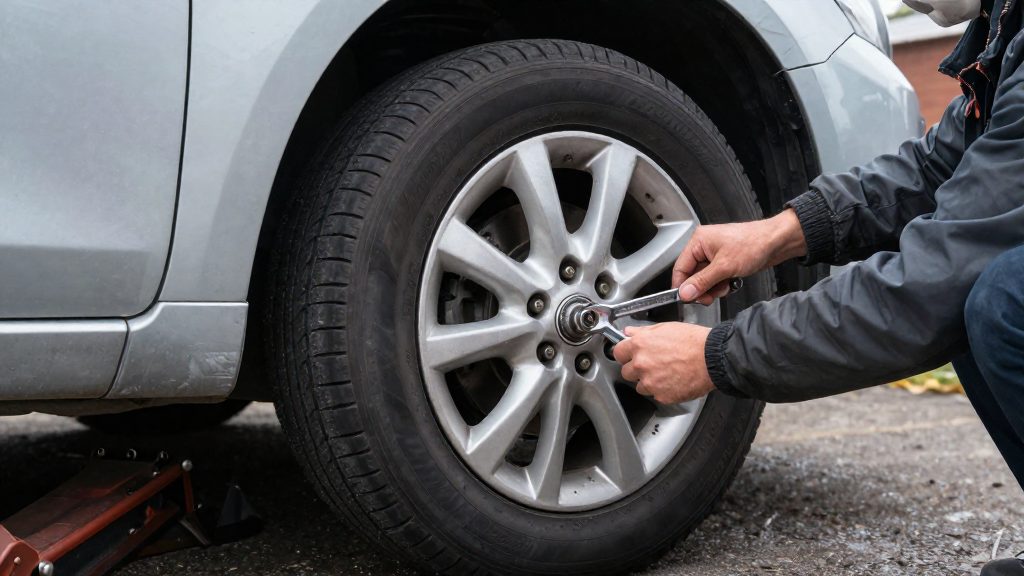
If you plan to do the work yourself, first obtain the vehicle’s lifting, support, wheel-removal, and installation instructions. Confirm that your equipment is suitable and that you can follow the complete procedure. Never work under a vehicle supported only by a jack. The Washington State Department of Labor and Industries’ jack-safety guidance (2021) calls for suitable support stands, sufficient equipment capacity, and a firm, level surface.
Wheel fasteners need the manufacturer’s specified tightening torque, with a torque wrench used for final tightening. USTMA’s service guidance also calls for adjusting inflation after rotation. When required front and rear pressures differ, each tire’s pressure must suit its new position.
Ask whether your vehicle requires a later fastener-torque check and follow its own instructions for timing.
What should be completed before the service is considered finished?
Check whether the tire pressure monitoring system, or TPMS, needs a reset or relearn after the wheels change positions. NHTSA’s technical discussion of TPMS explains that some systems need to learn the sensors’ new locations. Have the shop follow the vehicle-specific procedure rather than assuming every system updates in the same way.
Before leaving, ask about any dashboard warning and make sure you understand the explanation and required action. A warning should not simply be dismissed as an expected result of rotation.
Record the service date and odometer reading, then set the next reminder from the applicable maintenance schedule. Save the invoice with the tread measurements, pattern used, and any recommended follow-up work. Keep these details together so that the next technician can see the tire-service history. If you have no reliable record of the last service, arrange an assessment now instead of guessing how much mileage remains.
Frequently asked questions
Can a temporary spare tire be included in regular rotation?
No. USTMA excludes temporary-use spare tires from regular rotation patterns. If you have a matching full-size spare, check the vehicle’s instructions before including it. See the USTMA tire-service guide.
Does regular rotation eliminate the need to replace tires because of age?
No. Follow the vehicle and tire manufacturers’ service-life recommendations even when tread remains. The NHTSA new-tire checklist recommends recording the manufacture date and checking the applicable service-life guidance.
How can I receive safety recall notices for my tires?
Ask the retailer whether your tires were registered with their manufacturer, and sign up for NHTSA tire-recall alerts. Keep the Tire Identification Number with your records, as recommended in the NHTSA new-tire checklist.