What does 5W-30 actually mean?
Engine oil is sold by viscosity grade, a code such as 5W-30. Viscosity is how easily a liquid flows. The “W” stands for winter. The number before the W describes how well the oil flows when the engine is cold, which matters most at start-up, when oil has to reach the parts that need it first. The number after the dash describes how thick the oil stays once the engine reaches normal operating temperature. An oil with a multi-grade code such as 5W-30 is built to handle both conditions.
A higher number is not automatically better. Each engine is designed around a specific grade, and the right choice is the one your vehicle’s manufacturer specifies.
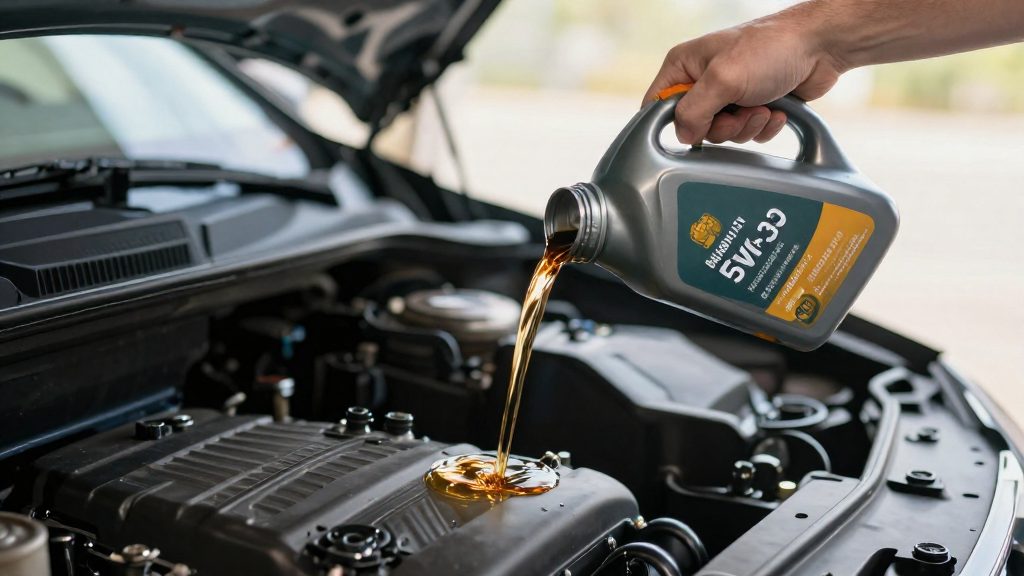
Where do you find the grade your engine needs?
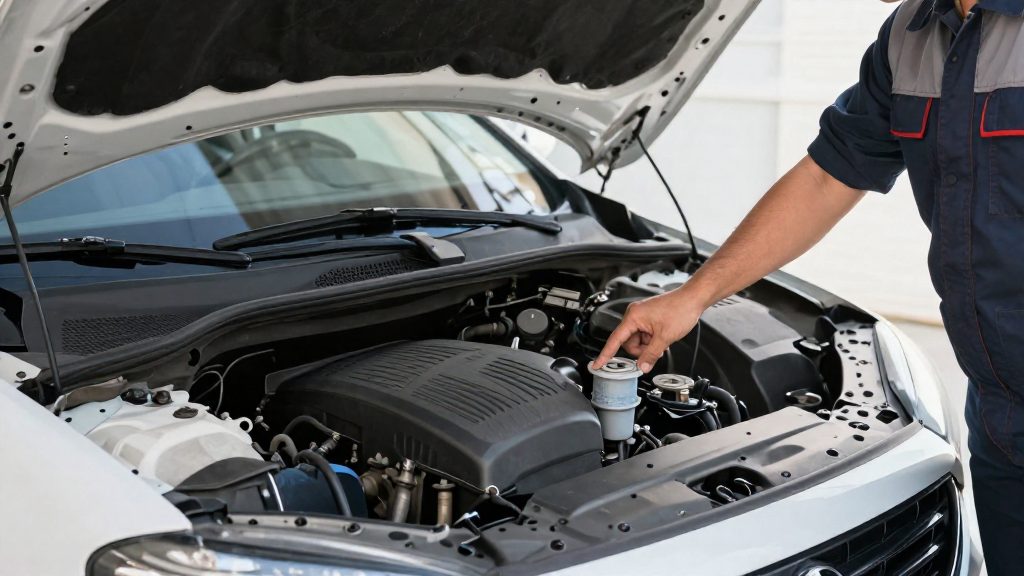
Start with the owner’s manual. The grade is normally listed in the maintenance or specifications section, sometimes with a required performance category as well. Some vehicles also show the grade on a label under the hood or on the oil filler cap. If you no longer have the paper manual, the manufacturer’s website or an authorized dealer can usually provide the information for your exact vehicle.
Write the grade down and keep it with your maintenance records. When you buy oil or ask a shop for an oil change, you then have a reference that does not depend on memory.
How do you read the API donut on a bottle?
Most oil containers in the United States carry the American Petroleum Institute (API) Service Symbol, often called the donut. The upper half shows the service category. API SP can be licensed for that position starting May 1, 2020. The lower half may show “Resource Conserving” when the oil also meets that set of requirements. The viscosity grade appears on the label, so check that the grade matches your manual as well as the category.
The starburst is a separate mark. Since May 1, 2021, the API says the ILSAC GF-6A standard is the only basis for using the starburst, and GF-5 oils are no longer eligible to display it. A bottle can therefore show a donut, a starburst, or both, and each mark answers a different question. The donut tells you the service category. The starburst tells you the oil meets a specific ILSAC standard. Neither replaces the grade in your manual.
Why does the right grade matter for gas mileage?
The Department of Energy and the Environmental Protection Agency, through the fueleconomy.gov site, state that using the manufacturer’s recommended grade can improve gas mileage by 1%–2%. The same page gives examples. Using 10W-30 in an engine designed for 5W-30 can lower gas mileage by 1%–2%. Using 5W-30 in an engine designed for 5W-20 can lower it by 1%–1.5%. The page cites a 2001 study for its oil estimates, so treat these as typical ranges, not guarantees for your vehicle. Actual results depend on driving habits, climate, and vehicle condition.
The same page advises looking for the “Energy Conserving” wording on the API symbol. Current labels use the newer categories described above, so the practical step is to match the category your manual names.
Can you use a different grade than the manual says?
In general, no. If your manual lists a range of grades, you can choose one within that range for your climate, provided it also meets the category the manual requires. If it lists only one grade, do not switch to another without guidance from the manufacturer or a qualified technician. Switching grades also changes the fuel economy results described above.
A different grade is not a fix for noise, leaks, or low oil pressure. If your engine behaves differently after an oil change, ask the shop to check what was installed and to diagnose the symptom.
When should you act on an oil warning light?
The oil pressure light and the low oil level light mean different things, and some vehicles combine them into one indicator. Your owner’s manual explains which one your vehicle uses. When the oil pressure light comes on while you are driving, the usual steps in a manufacturer’s manual are these:
- Pull over onto level ground, out of the traffic lane.
- Turn off the engine and wait about five minutes so the oil can drain back into the pan.
- Check the dipstick. If the level is low, add the grade your manual specifies, and do not overfill.
- Restart the engine and check whether the light goes out.
If the light stays on even with a normal oil level, or after you add oil, stop the engine and have the vehicle towed to a qualified repair shop. Do not keep driving. The manufacturer’s warning is that running with low oil pressure or a low oil level can cause extensive engine damage. Do not treat the warning as a question of oil grade. A grade change will not solve a pressure or level problem.
How do you check recalls before your next oil change?
Before you change oil or take the car in for service, check whether the vehicle has an unrepaired safety recall. The National Highway Traffic Safety Administration (NHTSA) provides a free lookup at nhtsa.gov/recalls. Enter the 17-character VIN, which you can find on the lower left of the windshield, on your registration card, or on the label inside the driver’s door frame.
The lookup shows only unrepaired recalls. If the result reads zero unrepaired recalls, the vehicle has none on record at that time. NHTSA recommends checking at least twice a year, for example when daylight saving time begins and ends. The lookup does not cover recalls more than 15 years old, recalls from small manufacturers, or customer service campaigns, so ask your dealer about any service bulletins that apply to your vehicle. Recall repairs are free at an authorized dealership. The free SaferCar app and NHTSA email alerts can notify you when a new recall is issued for your VIN.
Frequently asked questions
What should I do if I am out of the recommended oil grade and the level is low?
Check your owner’s manual for any guidance on topping off. Do not run the engine with a low oil level. Once you can, return to the grade your manual specifies at the next oil change.
Does the donut on a bottle prove the oil meets my manual’s requirements?
No. The donut shows the API service category. Compare that category and the viscosity grade with what your manual requires before you buy.
Do I still need a recall check if I changed the oil recently?
Yes. An oil change does not show whether a safety recall is open on your vehicle. Use the NHTSA lookup with your VIN.
Where can I get the oil specification if I lost my owner’s manual?
Contact an authorized dealer or the manufacturer, who can provide the grade and performance category for your exact vehicle.