In Canada, no federal rule sets how often a cabin air filter must be replaced, and the official sources consulted do not give a national interval. The practical answer is the schedule in your owner’s manual, which is written for your exact model. As a benchmark, one manufacturer’s Canadian support page gives a range of 25,000 to 35,000 km, depending on the model. Replace the filter sooner if you drive in dust, polluted air or wildfire smoke, or if someone in the car has allergies or respiratory problems.
What does the cabin air filter do?
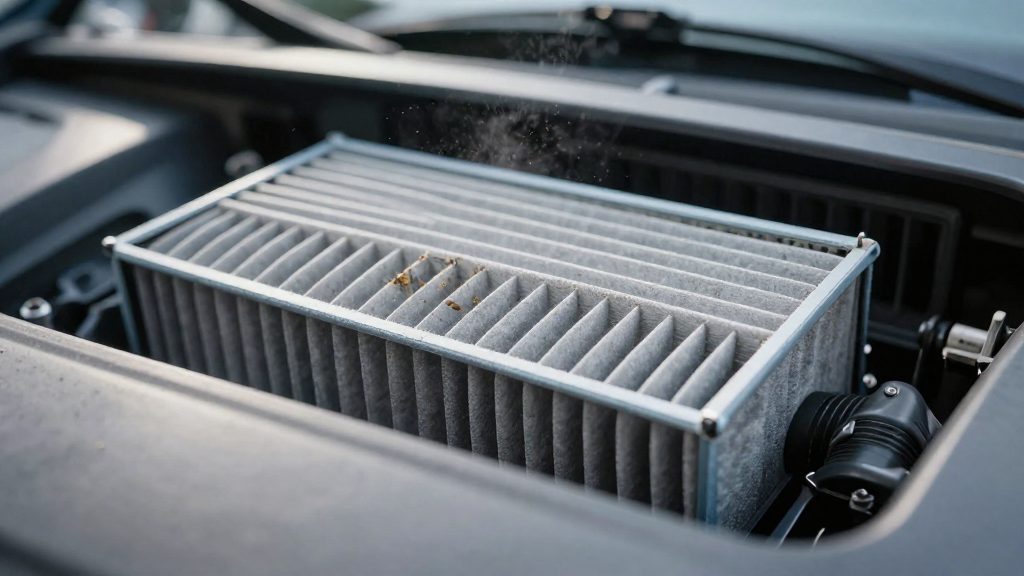
The filter sits in the climate control system and cleans the air that enters the cabin through the vents. When the system draws in outside air, the filter traps dust, pollen and other particles before they reach the passengers. In recirculation mode, it treats the air already inside the car. Filter packaging often advertises how much dust or pollen a product captures, but those performance claims come from the filter makers, and the official sources consulted do not compare them. What matters for your schedule is that a loaded filter restricts airflow, so it has to be replaced before it stops doing its job.
Why does the schedule differ from one vehicle to another?
Filter size, housing design and the layout of the climate system vary between models, so each manufacturer sets its own interval. The Canadian support page cited above tells owners to replace the filter every 25,000 to 35,000 kilometres depending on the vehicle model, and to refer to the owner’s manual for the exact schedule and the filter’s location. Another manufacturer’s Canadian parts site makes the same point: periodic replacement is listed in the Maintenance section of the owner’s manual, and dusty driving may call for more frequent changes. Where a vehicle has an on-board maintenance reminder, follow its prompts together with the manual, not an interval you remember from a different car.
When should you replace it sooner?
The manufacturer’s support page lists three situations that justify more frequent changes: allergies or other respiratory problems in you or a frequent passenger, driving on dirt roads or in very dusty conditions, and driving in heavily polluted areas. If one of these describes your normal use, check the filter at every routine service and replace it before the standard interval when it looks loaded with dirt.
During wildfire smoke, Health Canada advises keeping the vehicle’s windows closed and setting the ventilation system to recirculation mode. It also advises changing the cabin air filter regularly, according to the manufacturer’s instructions, so that it keeps working against smoke, according to Health Canada (2026). Recirculation should not run without a break: Health Canada suggests switching it off from time to time, depending on conditions and the number of passengers, to avoid carbon dioxide build-up. Use recirculation during smoke events, then return to fresh air when conditions improve.
Does winter driving change the schedule?
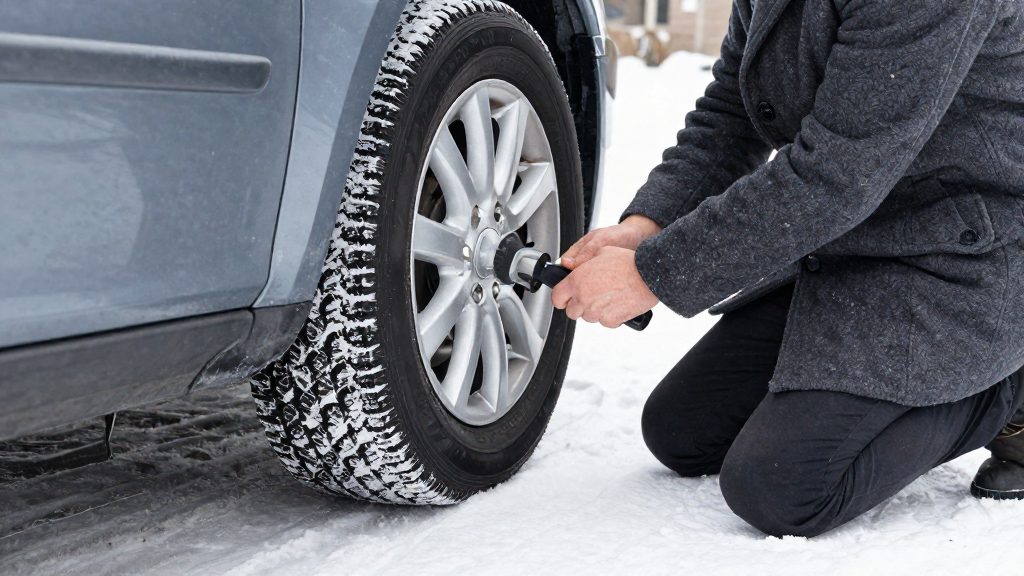
The official sources consulted do not say that winter driving counts as severe service for the cabin filter, and the manufacturer page consulted contains no winter-specific interval. Winter is still a useful moment to check the filter. Defrosting and heating depend on air moving through the cabin filter, so weaker airflow to the windshield is a reason to inspect the filter, whatever the kilometre count. Do not assume that a filter with kilometres left is clean. A filter loaded with dust or pollen can still restrict airflow, and in cold weather that restriction is most noticeable when you need the windshield cleared quickly.
What are the signs of a clogged filter?
Common signs include weaker airflow from the vents, a persistent musty odour when the fan runs, and windows that fog up and take longer to clear. None of these proves the filter is the cause. A blocked air intake, a failing blower motor or a climate control fault can produce similar symptoms. If the symptoms persist after you fit a new filter, have the heating, ventilation and air conditioning system inspected by a qualified technician. The official sources consulted do not publish a complete list of symptoms, so treat these signs as prompts to check, not as proof.
How do you find and replace the filter safely?
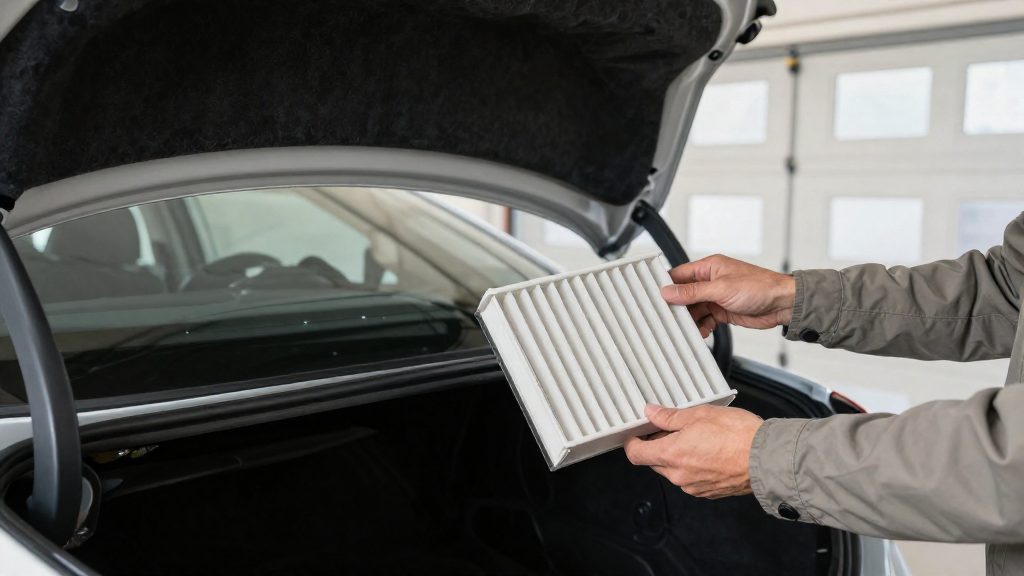
Start with the owner’s manual, which shows where the filter is and how to remove its cover. In many vehicles the access panel sits behind the glove compartment, but layouts differ, so do not force a cover that does not come off easily. Before you start, park on level ground, switch the engine off, and remove the key from the ignition if you will work near the fan or wiring.
Check the airflow arrow or direction mark on the old filter and fit the new one the same way. Use a filter specified for your model, and close the housing fully so that unfiltered air does not bypass the filter. If the housing is cracked, or the filter will not seat properly, stop and have a qualified technician inspect the system rather than forcing the cover back on.
Frequently asked questions
Can I keep driving with a clogged cabin air filter?
The official sources consulted do not address this directly. A blocked filter mainly reduces airflow to the vents. If the windshield is slow to defrost, have the system checked promptly before you drive in poor visibility.
Is the cabin air filter the same as the engine air filter?
No. The engine air filter cleans the air going to the engine, while the cabin filter cleans the air going to the passengers. Each has its own interval, so check the manual for both.
Should I clean the filter and reuse it?
The sources consulted describe replacement, not cleaning. Unless your owner’s manual says otherwise, fit a new filter of the type specified for your model.
Which filter type should I buy?
Choose the type specified in your owner’s manual or in the manufacturer’s parts information for your model. The official sources consulted do not rank filter types against each other.