If the oil pressure warning light comes on while you are driving, the engine is not getting enough oil pressure to lubricate its moving parts. Pull over as soon as you can do so safely, switch off the engine and let the oil settle before you check it. Do not keep driving to your destination. If the light stays on after the oil level is confirmed correct, stop the engine and arrange a tow to a qualified repairer.
Why does the oil pressure light come on?
The light is a warning, not a gauge. It tells you that pressure in the lubrication system has dropped too low, but it does not tell you how much oil is left in the engine. Depending on the vehicle, a low oil level may have its own light or message, or it may share the same warning. Your owner’s manual shows which system your vehicle uses, and it is worth reading that section now, before you need it.
A low oil level is the one cause you can check yourself at the roadside. The official sources consulted do not list the other possible causes in detail, so a level check on its own cannot show that the underlying problem is gone. That is why the steps below end with a professional diagnosis if the light persists.
How do you respond safely when it lights up?
Stay calm and avoid sudden braking or steering. Signal, then move onto the shoulder and stop where the vehicle is clear of the travelled lane, preferably on level ground and away from a hill or a bend. Turn on your hazard lights. If you cannot leave the lane safely, keep the vehicle moving only as far as needed to get clear, and do not stop in a live lane to check the oil.
Switch off the engine. The manufacturer’s owner’s manual is direct on this point: do not run the engine when oil pressure is low, because doing so “could result in extensive engine damage.” Continuing for a short distance is exactly the risk you are trying to avoid, even when the engine sounds normal.
Wait before you check anything. In the owner’s manual of one compact crossover, the instruction is to wait five minutes so the oil drains back into the sump. Your vehicle may specify a different time, so follow your own manual rather than this example.
How do you check the oil level safely?
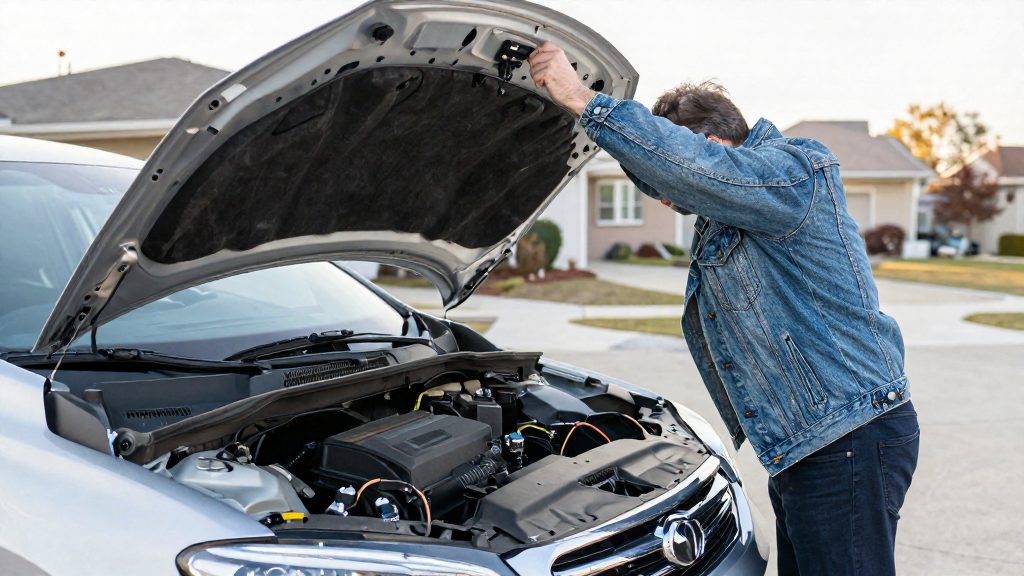
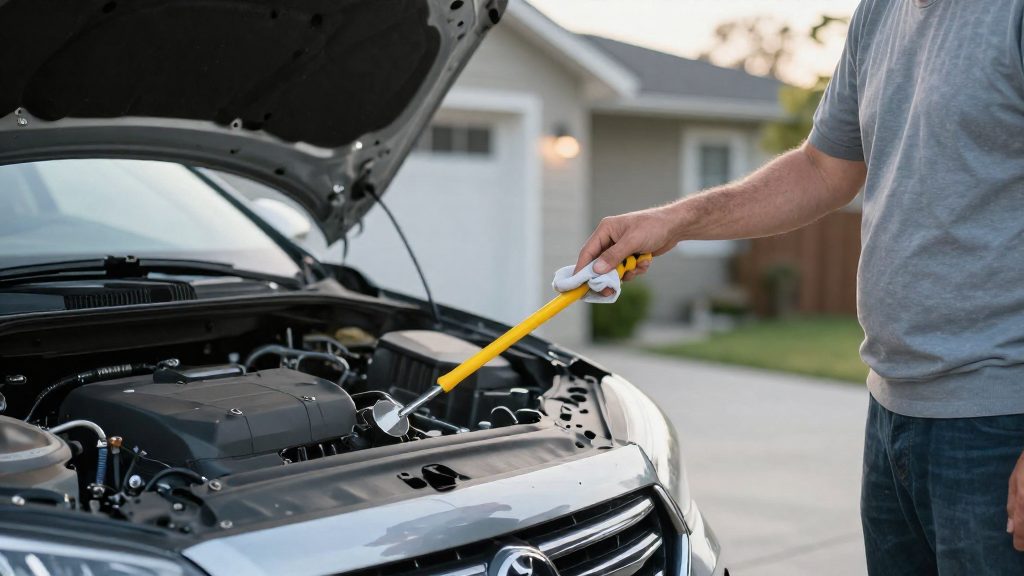
Once the engine has rested, open the hood and locate the dipstick. Let the engine and exhaust cool if they are still hot, and keep your hands and clothing clear of the fan and drive belts. Pull out the dipstick, wipe it with a clean cloth, push it back in fully, pull it out again and read the level against the marks.
If the level is low, add the grade of oil named in your owner’s manual, a small amount at a time, and recheck after each addition. The manual warns against overfilling, so stop as soon as the level reaches the proper range. Do not mix in a different specification unless the manual allows it. If you cannot find the oil grade or the level marks, do not guess; arrange a tow or a service visit instead.
Ontario’s Ministry of Transportation (2025), in its advice on checks for longer trips, recommends looking at oil and coolant levels when the engine is cold. A routine check should follow the same pattern: engine off, cold, on level ground.
When should you stop the engine and call for help?
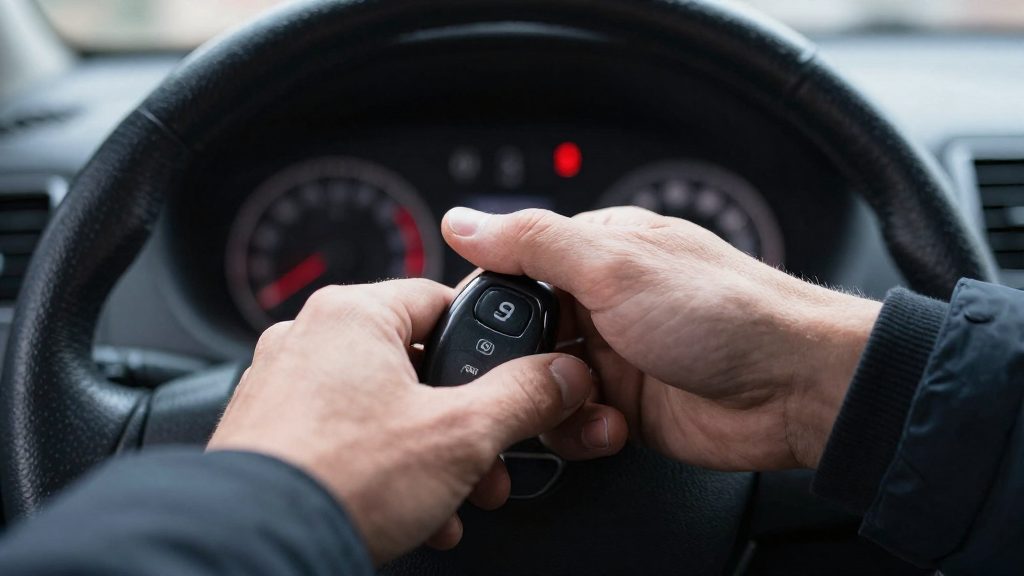
Restart the engine only after the level is confirmed and any top-up is complete, then watch the warning light. If it stays on, stop the engine immediately and do not drive the vehicle further. Arrange a tow to a qualified repairer rather than a longer drive to a shop, and do not attempt repeated restarts to see whether the light goes out.
Transport Canada (2014) advises that warning lights be checked promptly, and states that ignoring them could contribute to injury or death for you and your passengers. The same guidance says that a light staying on while driving calls for checking the owner’s manual and following its instructions.
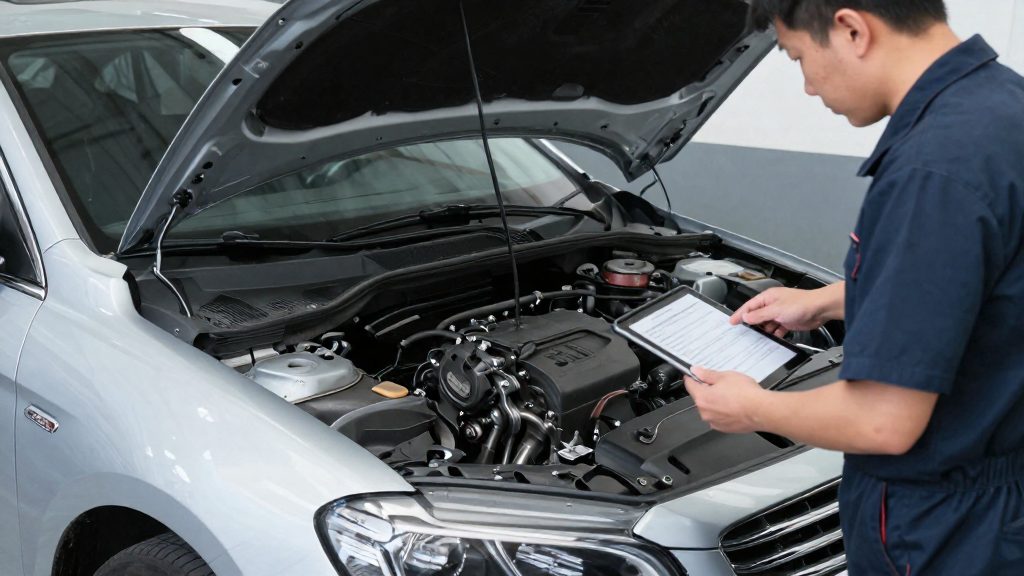
When you call the repairer, describe what happened: the light came on while driving, how long you waited, what level you found on the dipstick, whether you added oil and how much, and whether the light went off after restarting. That information helps the technician narrow down the cause and saves time.
Is it safe to keep driving with the light on?
No, not as a general rule. Once the light has come on, lubrication of the engine is in question, and the manufacturer’s instruction is not to run the engine in that condition. Even if the light goes off after you add oil, the cause may still be there, and the light may return under load or at a later time. Book an inspection before any long trip.
Ontario’s Ministry of Transportation (2025) says that identified concerns should lead to further investigation or action, including inspection and repair by a qualified mechanic. Treat a light that went out after a top-up as a symptom to be diagnosed, not as a repair that is finished.
How can you reduce the risk of it happening again?
Follow the oil and filter change interval in your owner’s manual. Ontario’s handbook lists oil and filter changes among regular maintenance, and the interval for your vehicle is set by the manufacturer, not by a general rule. Between services, check the oil level with the engine cold, for example at each fuel stop, and keep a simple note of the date and any amount you added.
Repeated top-ups mean oil is leaving the engine somewhere, whether through a leak or another loss. Have a repairer find where it is going rather than adding oil each time the light appears. A small, steady loss is still a loss, and it is far cheaper to find the cause early than after the engine has run low on oil.
Frequently asked questions
Does the oil pressure light always mean the engine is damaged?
No. The light means pressure is low, not that damage has already happened. The risk of damage rises the longer the engine runs in that condition, which is why the owner’s manual says not to run it.
What should I tell the mechanic when I arrive?
Describe when the light came on, how long you waited before checking, the oil level you found, how much you added and whether the light went off after restarting.
Does the light show how much oil is left in the engine?
No. The light reacts to pressure, not quantity. Only the dipstick check tells you the level, which is why the level check is part of the procedure.