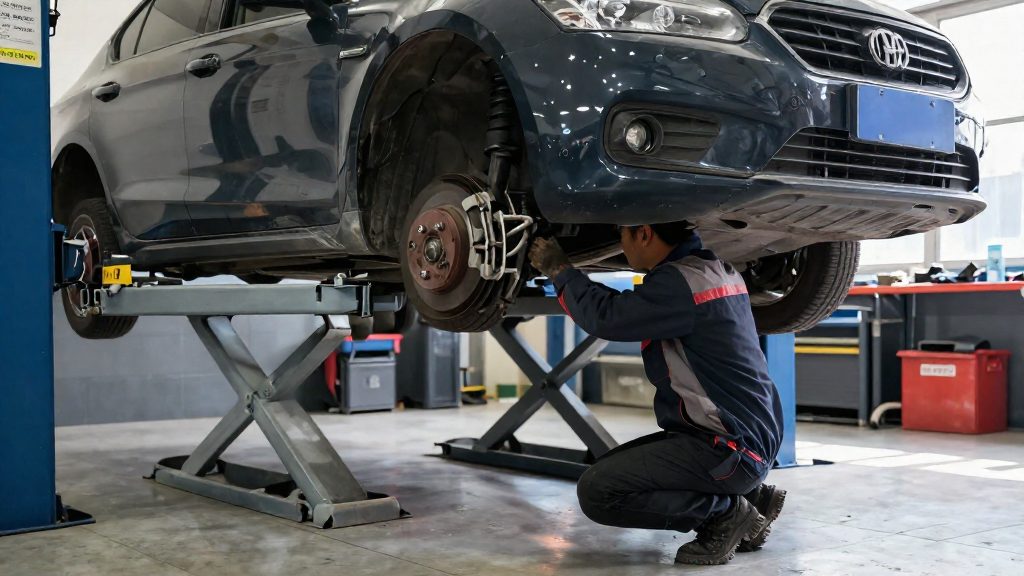
What “free” actually covers
The phrase “free vehicle safety inspection” is used loosely. Three different things often get lumped together: a free federal recall lookup, a state inspection that some states require, and a free check-up offered by a repair shop. Only the first is a government service you can use anywhere. The other two depend on where you live and who performs the check. Knowing which is which tells you what you can do today at no cost and what you still need to schedule.
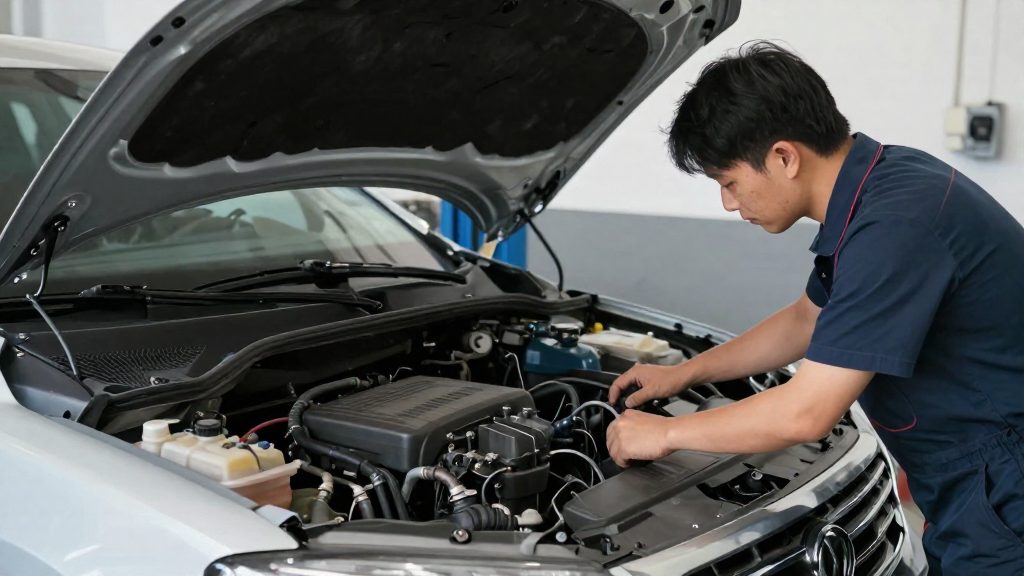
Start with a free recall check
The most useful free check is the open-recall lookup run by the National Highway Traffic Safety Administration (NHTSA). Go to NHTSA.gov/recalls and enter your 17-character vehicle identification number (VIN). The VIN is printed on the lower left of the windshield and on the label inside the driver’s door jamb. The result shows whether your vehicle has an open safety recall.
The lookup covers unrepaired safety recalls from roughly the last 15 calendar years. It does not list completed repairs or customer service campaigns, and it excludes some small manufacturers and vehicles sold outside the United States. The same tool also covers car seats, tires, and other vehicle equipment, so it is worth checking those too.
A clean result means no open recall was found. It does not mean the vehicle has never been recalled, and it is not a mechanical inspection. Save the result with your maintenance records, and check again whenever you change ownership.
Are recall repairs really free?
Yes. If a recall applies to your vehicle, the repair costs you nothing. NHTSA advises calling a dealer for your vehicle’s brand to arrange the work. Manufacturers are required to fix recalled defects by repairing the problem, replacing the part, or offering a refund.
When you call, give the dealer your VIN and the recall number shown on the lookup. Ask how long the repair usually takes, whether you should book a drop-off or a time window, and whether a loaner vehicle or ride is available. Do not pay a third party to perform a recall repair; the manufacturer’s dealer is the route NHTSA points owners to.
Set up recall alerts
NHTSA advises checking for open recalls at least twice a year, in March and November, because those are the months the clocks change. Put both dates in your calendar.
For automatic alerts, download NHTSA’s free SaferCar app for Android or iOS. Add your vehicle and equipment, and the app will notify you when a safety recall is issued for them. The alert and the lookup are both free, so using both costs you nothing but a few minutes.
Is a state safety inspection required?
Not everywhere. Whether you must pass a periodic safety inspection is decided state by state, so there is no single national rule that applies to every driver. Your state’s DMV or motor vehicle agency publishes the current requirement, including how often it applies and which vehicles are exempt. Check it before assuming you are covered or not covered, and do not rely on a neighbor’s experience from another state.
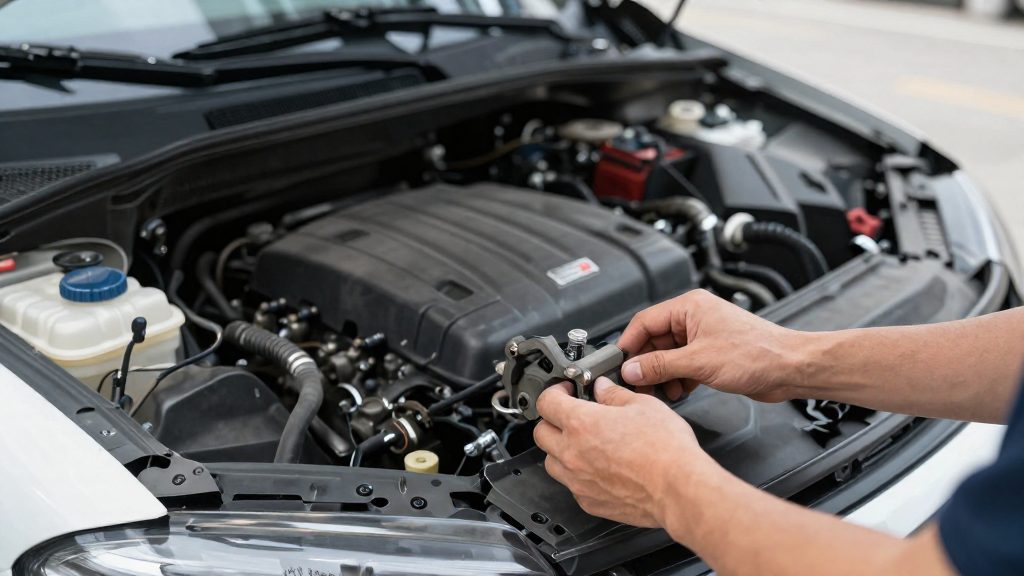
What a required inspection looks like
New York shows how an official program works. The state DMV says most vehicles must be inspected every 12 months and again when ownership is transferred. Inspections must be performed at a licensed station by a certified motor vehicle inspector, and licensed stations display an official sign. An inspection expires on the last day of the month punched on the sticker. Emissions testing is handled separately, although it is normally done during the same visit.
Expired stickers can lead to fines, so schedule the inspection before the month printed on the sticker ends. Some vehicles follow different rules. The DMV lists exclusions such as electric-powered vehicles and vehicles with historical plates, and motorcycles and trailers have their own requirements. Even when a state program applies to you, ask the station for its fee before you go, so you are not surprised at the counter.
Is a shop’s free inspection the same thing?
Repair shops and tire centers often offer free check-ups. These can help you spot worn tires, leaking fluids, or failing lights, and they are a reasonable way to get a second opinion. However, a shop check is not a state inspection unless the business is a licensed official station and issues the state’s inspection record. Confirm that before you assume a free check satisfies a legal requirement.
When a shop recommends repairs, ask which items affect safety now and which can wait. Request a written estimate and approve only the work you understand. If the shop reports a brake or steering problem, do not drive the vehicle far until it has been checked and repaired.
What to check yourself between inspections
A short walk-around once a month, and before any long trip, catches many problems early.
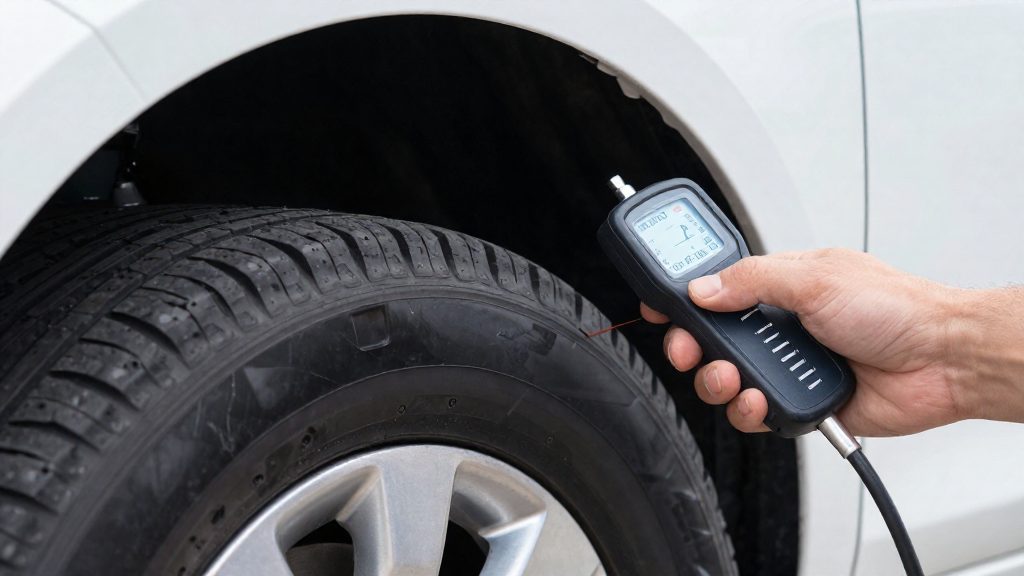
- Tires: Check the pressure when the tires are cold, using the placard on the driver’s door jamb or the owner’s manual. Look for uneven wear, cuts, bulges, and tread that looks low. Use a tread-depth gauge if you have one.
- Lights: Test headlights, high beams, brake lights, turn signals, hazard flashers, and reverse lights. A helper behind the vehicle makes this easier, or you can check the reflection in a garage door.
- Wipers and washer fluid: Replace blades that streak or skip, and keep the washer reservoir filled.
- Warning lights: A light that stays on, flashes, or comes on with a new noise, vibration, or pull needs prompt attention. The owner’s manual explains each symbol for your vehicle. If the brake warning comes on with a soft or sinking pedal, pull over safely and arrange a tow instead of driving on.
Keep these checks simple and repeatable. They do not replace a licensed inspection where one is required, and they do not replace the service intervals in your owner’s manual.
Before you buy a used car
Run the VIN through the NHTSA lookup before you pay. If an open recall appears, ask the seller to have the repair completed before you take delivery, and ask for written proof from a dealer that the work was done. A used vehicle with an open recall is still covered by the same free repair at a dealer, so the cost falls on the seller only if you negotiate it.
Frequently asked questions
Can a free shop check-up replace a required state inspection?
Only if the shop is a licensed official inspection station and issues the state’s inspection record. Confirm with your state DMV before you assume a shop check counts.
Is it safe to keep driving with an open recall?
Read the recall notice first, because some notices give specific instructions about driving or parking. If the notice is unclear or you notice symptoms, call the dealer before driving far.
What if the dealer has no parts for my recall yet?
Ask the dealer when parts are expected and whether they can record your contact details to call you when the repair is ready. Also ask whether the recall notice gives interim steps.