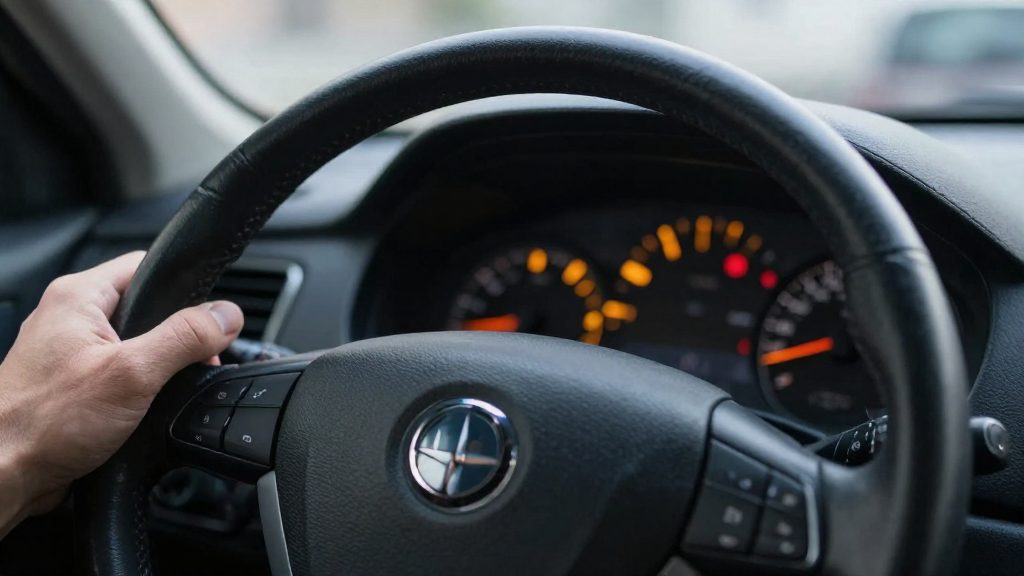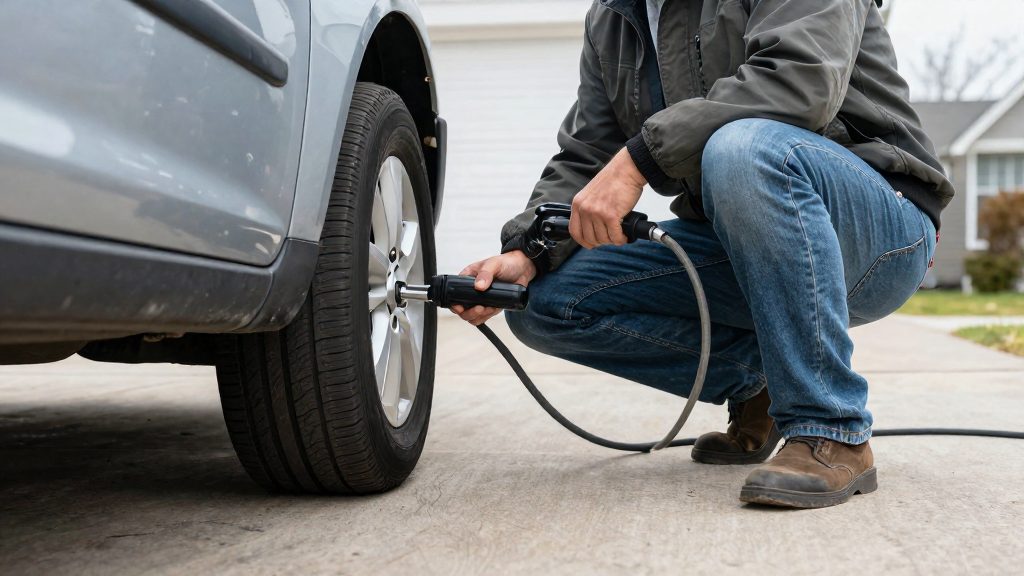
A tyre pressure warning light that flashes and then stays on usually points to a fault in the tyre pressure monitoring system (TPMS), rather than a simple loss of air. The first step is to check every tyre by hand with a gauge while the tyres are cold, because the light alone cannot tell you whether the pressures are right. If they are correct, book a garage check of the system as soon as you can, and do not ignore a tyre that looks low.
Why does the light flash and then stay on?
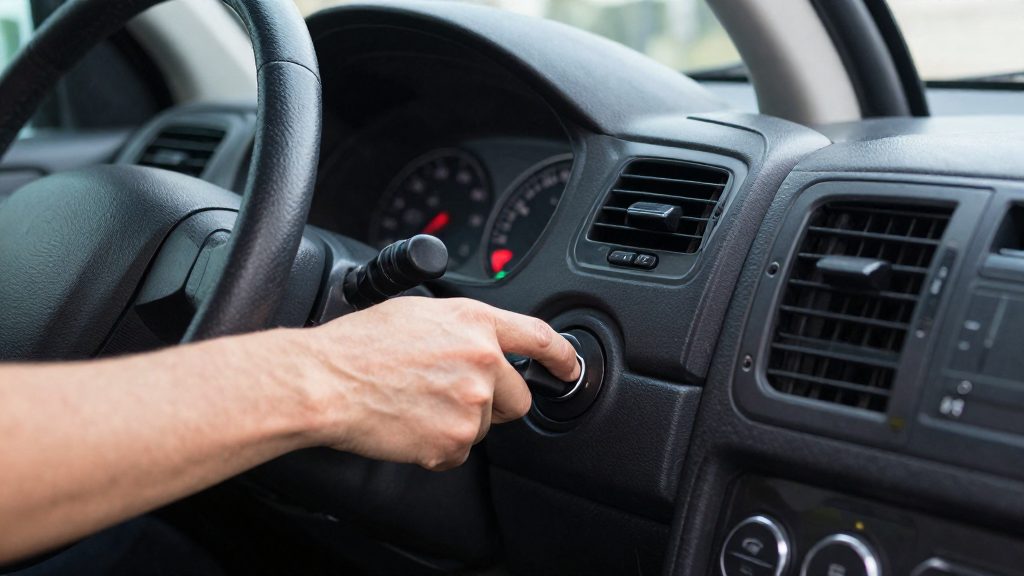
The tyre pressure light normally comes on when the ignition is switched on and then goes out. According to the DVSA’s MOT inspection manual on GOV.UK, when the system malfunctions the lamp may flash a number of times and then remain on. The flashing-then-solid pattern therefore points towards the system itself, although the handbook for your car is the reference for what each light pattern means, because behaviour differs between makes.
Two main designs are fitted. Direct systems use a battery-powered sensor in each wheel’s valve, which measures the pressure inside the tyre and sends it wirelessly to the car. Indirect systems use the wheel speed sensors of the anti-lock braking system to detect differences in rotation that suggest a tyre is losing pressure. A tyre manufacturer’s guidance says that when the light flashes at start-up and then stays on, it usually means one of the TPMS sensors is faulty rather than the tyres being low.
A steady light can also mean something different. If the system has already recorded a pressure loss, the lamp remains lit, and that alone does not prove the system is faulty. This is why the light’s history matters less than what the tyres show when you measure them.
How do you check the tyres before anything else?
Check all four tyres, and the spare if you carry one, with a pressure gauge. The Highway Code on GOV.UK asks drivers to check tyre pressures weekly, before a journey, when the tyres are cold, because warm or hot tyres may give a misleading reading. Do not check straight after a long motorway run, and do not let the air out to match the reading of another tyre.
The correct figure is the manufacturer’s pressure for the load you are carrying. The Highway Code directs you to the vehicle handbook or data for this. The figure is usually given in the handbook or on a label in the driver’s door frame or fuel flap. Use that figure rather than the maximum pressure printed on the tyre sidewall, which is a limit for the tyre, not the setting for your car.
If one tyre is clearly low, or the readings are unequal, inflate it to the handbook figure and look for obvious damage such as a nail, a cut or a bulge. The Highway Code warns that under-inflated or over-inflated tyres will adversely affect your brakes and steering, so an incorrect pressure is never a minor matter. If you cannot inflate a tyre to the correct figure, or it loses air again within a short time, treat it as a fault to be repaired.
When should you see a garage?
If the pressures are correct and the car drives normally, book a check at a garage as soon as you reasonably can. A garage can read the sensors with diagnostic equipment, which a driver cannot do with a gauge. Ask whether a fault sensor needs replacing and whether a replacement needs programming to the car, and ask for the manufacturer’s procedure in writing if you have any doubt.
Stop and do not carry on if a tyre is visibly flat, the car pulls to one side, or the steering or braking feels different. Pull over somewhere safe, away from traffic. Then use the spare, a repair kit, or call for roadside assistance, as the handbook describes. Avoid driving on a flat tyre, since it can damage the tyre and wheel and make the car harder to control.
Can you keep driving with the light on?
Whether it is sensible to keep driving depends on what you find when you check. If the pressures are correct by hand and the tyres look sound, a short and careful drive to a garage is a reasonable choice. The light, however, can no longer be relied on to warn you of real low pressure, so check the pressures by hand more often until the system has been repaired. Keep journeys gentle, avoid overloading the car, and be ready to stop if the handling changes.
If you cannot confirm the pressures, or a tyre looks low, do not rely on the light and do not make a long journey. Arrange recovery instead. Nothing in this article replaces the handbook’s instructions for warning lights in your particular car.
Will a TPMS fault fail an MOT?
In the MOT, the DVSA treats a tyre pressure monitoring system that is malfunctioning or obviously not working as a major defect, and it lists no minor defect for the system. A major defect means the vehicle fails the test. If the tester cannot tell whether the lamp is showing a system malfunction or low pressure, they add advisory information to the test result instead of recording a defect, according to GOV.UK.
Which cars does the MOT TPMS check cover?
The DVSA inspection of the tyre pressure monitoring system applies to M1 vehicles first used on or after 1 January 2012. It does not apply to motor caravans, or to ambulances and hearses approved as M1 with a gross vehicle weight above 2,500 kg. This describes the MOT in Great Britain, where the DVSA sets the test standard. If your car is older than the date above, the check is not part of its MOT, but a warning light still matters for safety and should be investigated.
Why do TPMS sensors fail?
On direct systems, sensors often fail because the battery sealed inside them has run down. The battery cannot be replaced, so the faulty sensor usually has to be swapped for a new one. One manufacturer’s guidance says its sensor batteries have a life expectancy of around ten years, which gives a rough idea of when a sensor may fail, although the real life depends on use and on that make’s design. Check the handbook for your car’s figure rather than relying on a general rule.
What happens after you re-inflate a tyre or replace a sensor?
If a tyre looks deflated but has no visible damage, the manufacturer’s guidance says to try to re-inflate it to the correct pressure and then reset the system. The reset method varies by model. On some cars it is a menu in the dashboard display, and on others it is a physical button that you press and hold with the ignition on. Look in the handbook before pressing anything.
Reset only after the pressures are correct. A reset clears the lamp, but if a tyre is low or a sensor is faulty, the problem is still there and the warning may come back. Resetting the system on its own is therefore never a fix.
Frequently asked questions
Why does the light come on only on cold mornings?
Air contracts as temperature falls, so a tyre that was correct in warm weather can read low on a cold morning. Inflate to the handbook figure and see whether the light goes out once the car has been driven.
Can I replace one faulty sensor and leave the others?
Ask the garage. Whether one sensor can be replaced alone, whether a new sensor needs programming, and whether the others should be renewed depends on the car, so check the handbook or ask for the manufacturer’s procedure.