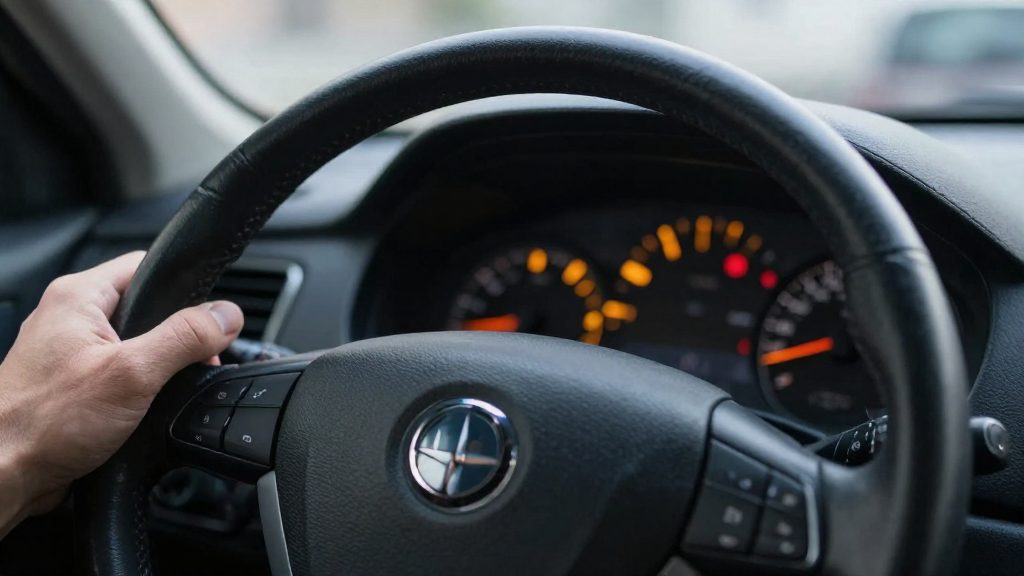
Yes, but only for the lights the test names. The MOT tester checks a defined list of dashboard warning lights, and each one is judged against DVSA criteria. A lit light is not automatically a fail: the tester looks at whether the lamp shows a genuine fault in the system it monitors. The clearest case is the engine management light, where an illuminated lamp is a Major defect and the car fails.
Which dashboard warning lights does the MOT check?
According to GOV.UK (DVSA), the tester checks the warning lights linked to several systems. Under seatbelts, the airbag, seatbelt pretensioner and seatbelt load limiter lights are checked. Under brakes, the ABS light, the electronic stability control (ESC) light, the electronic parking brake light and the brake fluid light are checked. The tyre pressure monitoring system light is checked on vehicles first used on or after 1 January 2012. Under steering and suspension, the electronic power steering and steering lock lights are checked. The main beam warning light is checked under lights. The engine management light is checked under emissions.
Defects are graded in three categories, and the grade decides the result. A Dangerous defect is a direct and immediate risk to road safety. A Major defect may prejudice the safety of the vehicle or affect the environment. A Minor defect has no significant effect on safety or the environment. A vehicle with only Minor defects passes and receives a test certificate. A vehicle with any Major or Dangerous defect must be failed, and the tester issues a refusal notice.
How does the MOT treat the engine management light?
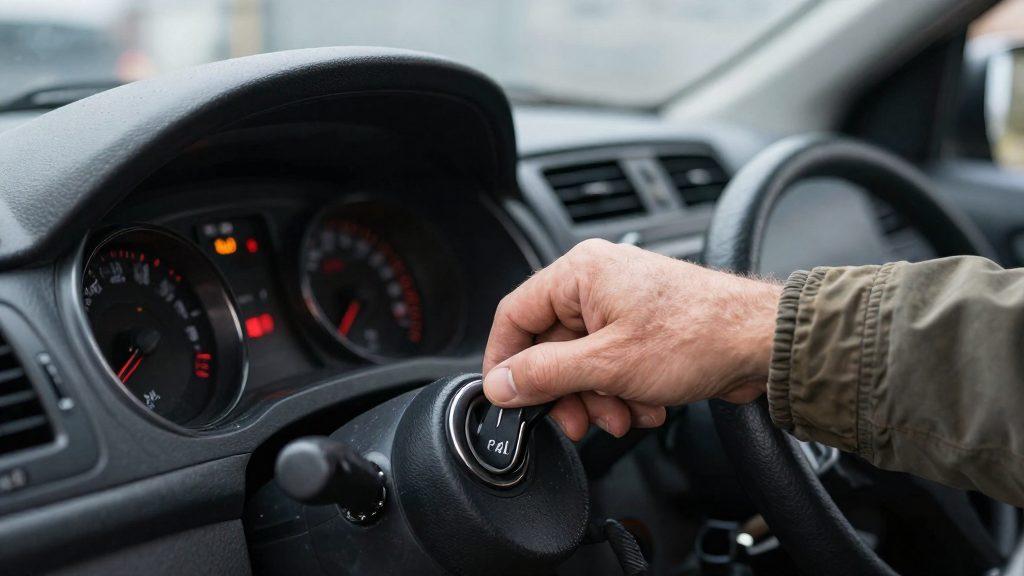
The engine management light, also called the malfunction indicator lamp (MIL), is checked on petrol, hybrid, gas and bi-fuel vehicles, and on diesel vehicles, depending on age and seating. Kit cars, amateur-built vehicles and American pickups are exempt. The tester turns the ignition on and checks that the lamp lights and then goes out. On some vehicles the engine has to be started before the lamp goes out.
An engine MIL that is inoperative or indicating a malfunction is a Major defect on both petrol and diesel vehicles. A steady engine light at the test therefore means a fail. Emission control equipment that is missing, obviously modified or obviously defective is also a Major defect. Because the test cannot be passed with a lit engine light, book a diagnostic check with a qualified garage before the test rather than hoping the light clears on its own. The garage can read the stored fault code and tell you whether the fault affects emissions, performance or both.
Why does a lit airbag light not always fail the test?
The airbag light, shown as an SRS warning, is failed only when it indicates a system malfunction. Being illuminated is not enough by itself. DVSA guidance states that a lamp lit to show the passenger airbag is disabled is not a defect. This is the light that appears when a passenger airbag has been deliberately switched off, typically for a rear-facing child seat in the front. Dashboard warning messages are not a defect in their own right, but they can help the tester decide whether the lamp is lit because a malfunction exists.
An airbag fitted as original equipment that is obviously missing is a Major defect, and so is an airbag that is obviously inoperative. A lit airbag light that points to a real fault may mean the restraint system will not work as intended in a crash. If the light stays on, have the system checked promptly, and do not treat a pass at the test as confirmation that it is working.
When can a brake or ABS warning light cause a fail?
The brake-related lights are graded differently, so it helps to know which applies. For ABS, a warning device that is not working or shows a system malfunction is a Major defect. Wheel speed sensors, wiring or other ABS components that are missing or damaged are also Major. For electronic stability control, an ESC lamp that indicates a system malfunction is a Major defect, but DVSA tells testers to fail a vehicle only when they are certain the lamp indicates an ESC fault. For the electronic parking brake, a parking brake control that is missing, defective or inoperative is Major, and so is an electronic parking brake MIL that indicates a malfunction.
The brake fluid warning light is treated more lightly. A brake fluid warning light that is illuminated or defective is a Minor defect, as is a brake fluid level warning device that does not function correctly. The low-pressure warning on vehicles with full power hydraulic brakes is a defect only in some cases: a light that stays on after the engine starts is a defect, while one that lights only when the ignition is switched on is not. Remember that a Minor grade describes the test outcome, not how urgent the fault is for you. A brake warning should be investigated before you drive further.
What about tyre pressure, steering and main beam lights?
The tyre pressure monitoring light is checked on vehicles first used on or after 1 January 2012, to confirm that the system warning works. The electronic power steering warning light and the steering lock warning light are checked under steering and suspension. The main beam warning light is checked under the lights section, so a fault with that lamp can show up at the test. For each of these items, the DVSA manual is the reference for the exact grade of any defect, and you should check it before assuming how a particular lamp will be treated.
When is your MOT due?
According to GOV.UK (DVSA), a vehicle’s first MOT must be obtained by the third anniversary of its registration. After that, you can book the renewal test up to a month minus a day before the current MOT runs out, and the new certificate keeps the same renewal date. Booking early is useful if a warning light needs a repair, since the test will fail for a lit engine light or other Major defect, and a repair takes time to arrange.
What does the MOT not cover?
The MOT is not a service. According to GOV.UK (DVSA), it does not check the general mechanical condition of the vehicle, and it does not check the condition of the engine, clutch or gearbox. A pass therefore means the items on the test met the standard on the day, not that the car is free of faults. The lamps named above are the ones with specific checks. Other warning lights on your dashboard are not part of that list, so the vehicle handbook or manufacturer’s documentation is the reference for what they mean.
What should you do if a warning light comes on?
Start by identifying the lamp and its colour. The handbook or manufacturer’s documentation explains what each symbol means and whether it is urgent. If a lamp is marked as urgent, or if braking, steering or engine performance changes, stop in a safe place as soon as you can and do not continue on a long journey.
For a steady engine management light, arrange a diagnostic check before the MOT, because the test will fail with the lamp illuminated. For an airbag light, have the system checked promptly. For a brake, ABS or electronic parking brake light, get the braking system inspected before using the car normally. Keep any repair report or invoice, because it helps the garage and the tester see what has been done. Then book the MOT once the lamp is out and the fault is repaired, rather than relying on the test to find the problem.
Frequently asked questions
Can a flashing engine light be treated differently from a steady one at the MOT?
The DVSA inspection manual does not set a separate rule for a flashing engine light. The test asks whether the lamp is inoperative or indicating a malfunction, so get a flashing light diagnosed promptly rather than waiting for the test.
What should I do if I cannot tell which warning light is on?
Use the symbol chart in your vehicle handbook or the manufacturer’s guidance to match the lamp’s shape and colour. If you still cannot identify it, take the car to a qualified garage before booking the MOT.
Does the MOT check the battery, oil pressure or coolant warning lights?
These lamps are not named in the DVSA list of warning lights checked at the test. Their meaning is explained in your handbook. If an oil pressure or coolant lamp comes on, stop the engine as soon as it is safe to do so and check the level or consult a garage.