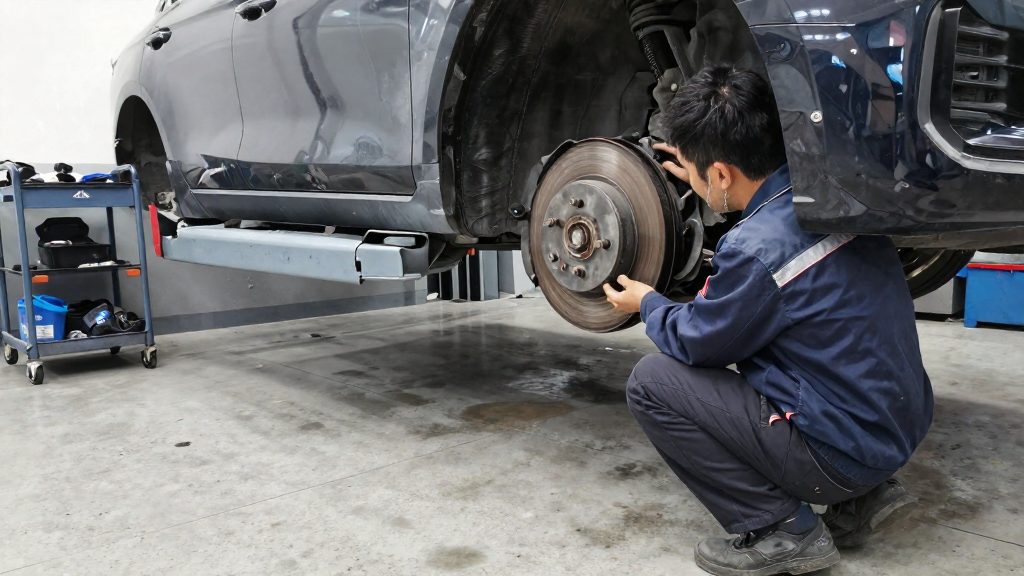
An MOT test checks that the important parts of your vehicle meet legal standards, according to GOV.UK (DVSA/DfT). The tester looks at the body, fuel system, exhaust, seatbelts, doors, mirrors, brakes, steering, suspension, tyres, wheels, lights, windscreen, wipers, horn, registration plates, the VIN and the visible wiring and battery. The test does not cover the condition of the engine, clutch or gearbox, and it is not a service, so a pass does not mean the car is in good mechanical order.
How are the body, fuel system and exhaust checked?
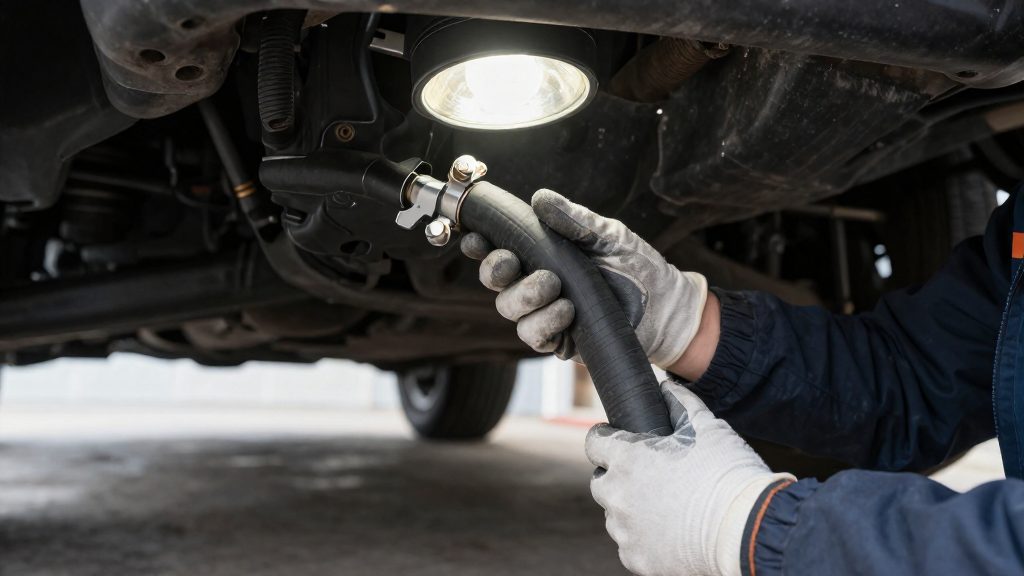
The body and structure are checked for excessive corrosion or damage in specific areas, and for sharp edges that could injure someone. In the fuel system, the tester looks for leaks, the condition of pipes and hoses, and whether the fuel cap fastens and seals securely. A fuel smell or a loose cap should be looked at before the test, because a leak is a safety problem rather than a cosmetic one.
The exhaust is checked for security, completeness and serious leaks, and for noise. Where a catalyst was fitted as standard, it must not be missing. Exhaust emissions are tested against limits that depend on the vehicle’s age and fuel type, and diesel cars also receive a smoke test, according to GOV.UK (DVSA). If your exhaust is rattling, blowing or has a visible hole, have it repaired before you book, as these faults are easy to spot and easy to fix early.
Which safety items inside the car are checked?
Seatbelts are checked for presence where required, suitability, condition, operation and secure attachment. The tester also checks the warning lamps for airbags, and for seatbelt pretensioners and load limiters. Pull each belt out fully and let it retract at home, so you know it runs freely before the test.
Doors must latch securely in the closed position, open from both inside and outside, and have sound hinges and catches. Mirrors are checked for the minimum number required, for their condition and for their security, including indirect vision devices. A cracked or loose mirror is easy to overlook, so check each one by hand before you go.
How are brakes, steering, suspension and tyres checked?
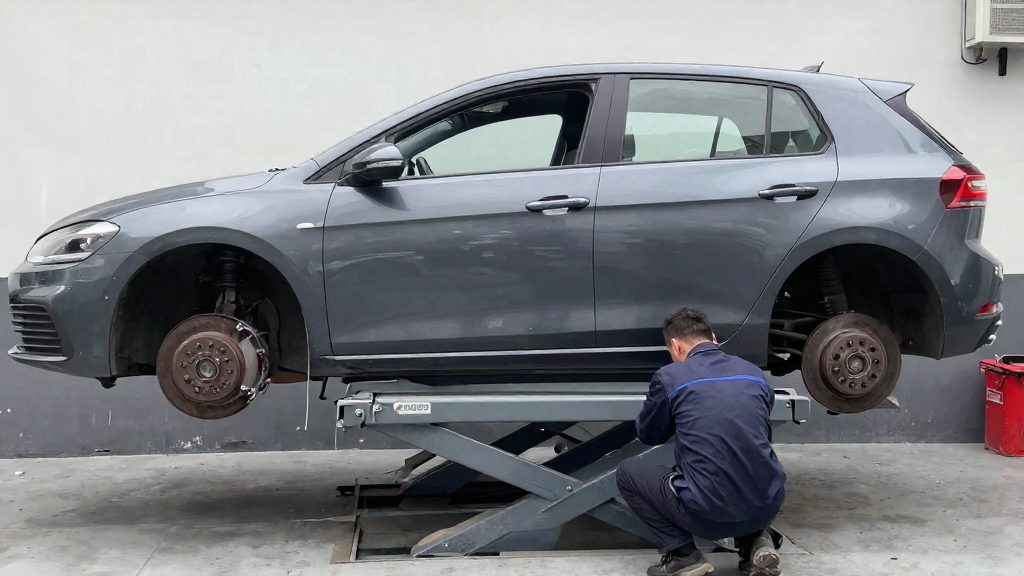
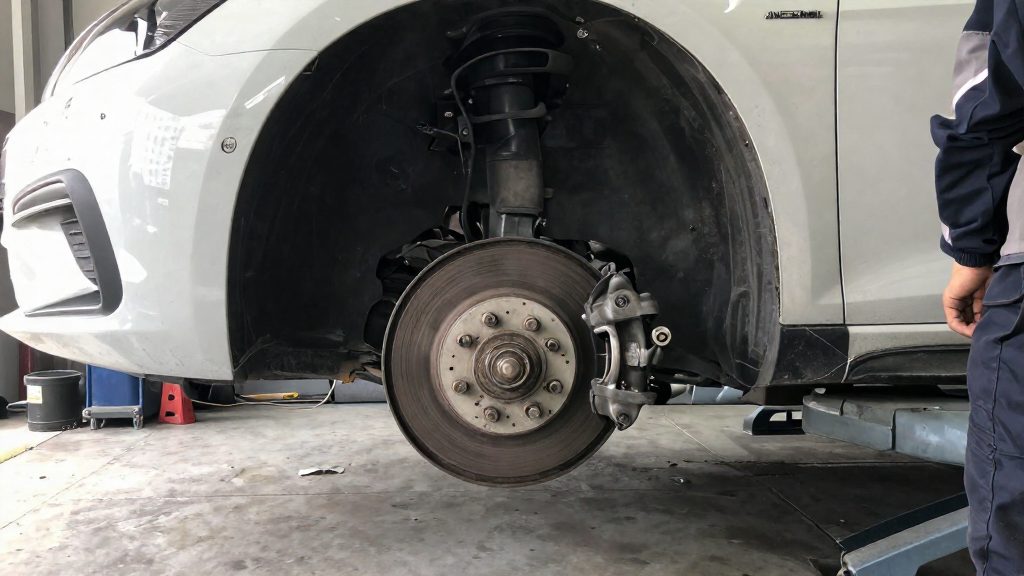
Brakes are checked for condition, operation and performance. Where fitted, ABS and electronic stability control (ESC) are checked as well. Steering is checked for condition, operation and the steering oil level, including the power steering pipes and hoses, and the steering lock must work properly. Steering and suspension are also checked for modifications.
Tyres and wheels are checked for condition, security, size and type, and for tread depth. Spare wheels and tyres are not checked at the MOT. On vehicles first used on or after 1 January 2012, the tyre pressure monitoring warning lamp is also checked. Before booking, look at each tyre for cuts, bulges and uneven wear, and check the tread with a gauge. If a tyre is damaged or worn, replace it before driving the car to the test centre.
How are lights, the windscreen and other items checked?
Lights are checked for condition and operation, including HID and LED units. Headlamp cleaning, self-levelling, security and aim are also checked, and the main beam warning lamp must work. Test each light at home, including brake lights and indicators, and ask someone to confirm they work, since a single dead bulb is a common and avoidable reason for a fail.
The windscreen is checked for condition and for the driver’s view of the road, so a crack or chip in the driver’s line of sight matters. Wipers and washers must work properly so the driver can see clearly. The horn must work properly and be suitable for the vehicle. A single VIN must be displayed, except on multistage build vehicles, and registration plates are checked for condition and attachment.
Why do dashboard warning lights matter at an MOT?
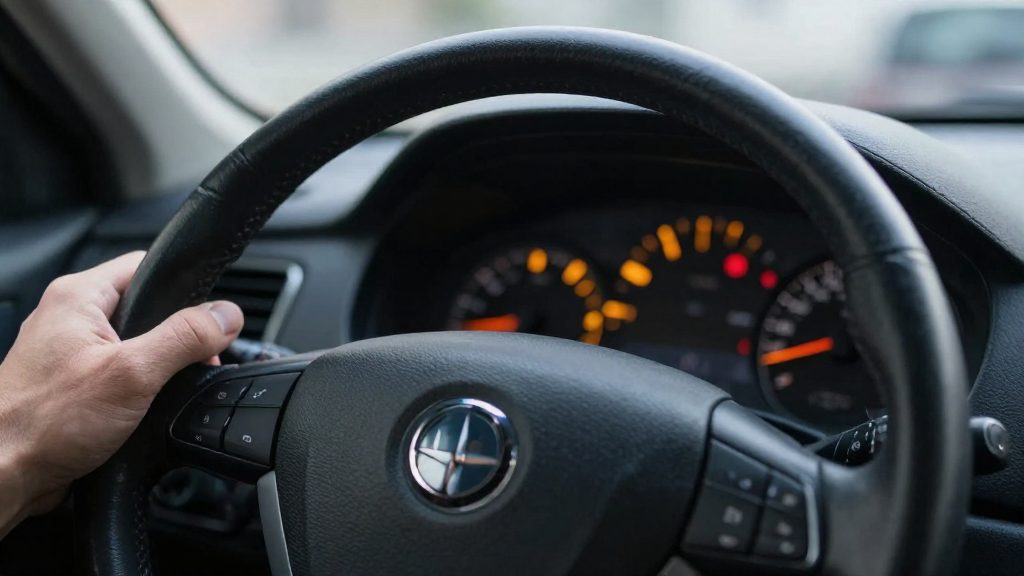
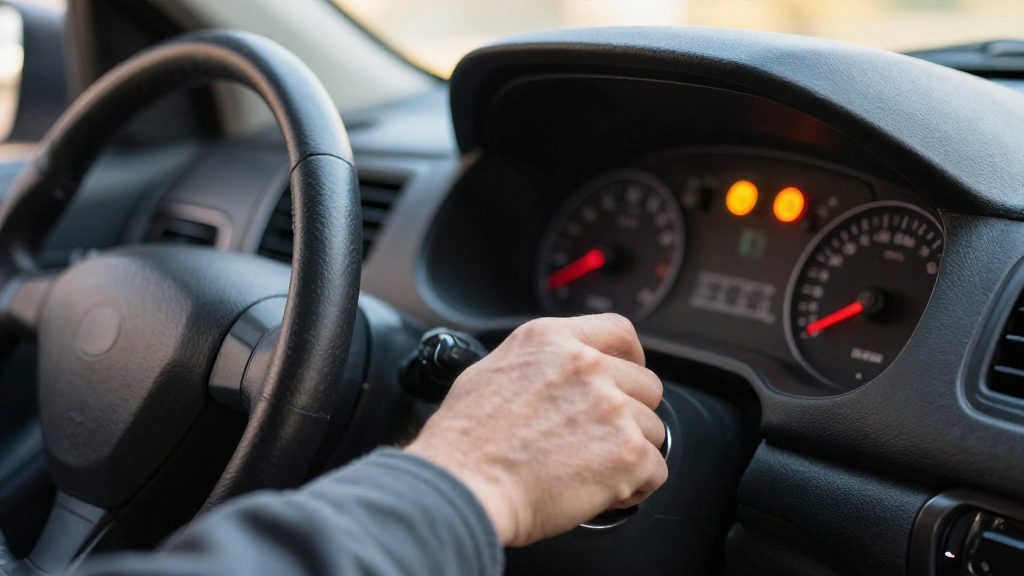
The tester checks several warning lamps. These include the airbag and seatbelt systems, ABS, ESC, the electronic park brake, brake fluid, tyre pressure monitoring and, where fitted, electronic power steering and steering lock. A lamp that stays lit after the engine starts points to a fault that needs diagnosing, and it should not be ignored before the test.
Whether a particular lamp fault leads to a fail depends on how it is graded in the DVSA inspection manual, so check that document or ask the test centre for the reason behind any failure. Your handbook explains what each symbol means, and the manufacturer’s documentation for your model gives the detail. Do not disconnect a bulb, cover a lamp or reset a system just to make the light go out. The fault is still there, and the test will find it.
What is not checked during an MOT?
The test does not cover the condition of the engine, clutch or gearbox, and it does not check general mechanical condition. Spare wheels and tyres are not inspected. Because the MOT is not a service, routine servicing and general wear are separate matters. The manufacturer’s handbook for your car sets out the servicing schedule, and it is the right place to check when oil, filters and other items are due.
A car can pass its MOT and still need repairs soon after, which is why the test should not be treated as a full check of your car’s health.
What happens when a car fails?
The test result lists each defect as dangerous, major, minor or advisory. Dangerous and major defects cause a fail. Minor and advisory items do not cause a fail, but they may be listed for you to monitor or fix in the future. Knowing the category of each item helps you decide how urgent each repair is.
After a fail, you may drive the vehicle away only if your current MOT is still valid and no dangerous problems were listed. Otherwise, it must be repaired before you drive it. Even when you are allowed to drive it away, the vehicle must still meet the minimum standards of roadworthiness at all times. Driving a vehicle that has failed because of a dangerous problem can bring a fine of up to £2,500, a driving ban and 3 penalty points, according to GOV.UK (DVSA). If a dangerous defect is listed, arrange for the car to be recovered to a repairer rather than driving it there. Once the repair is done, GOV.UK’s guidance on retesting after a repair explains the next steps.
When should you check the car before booking?
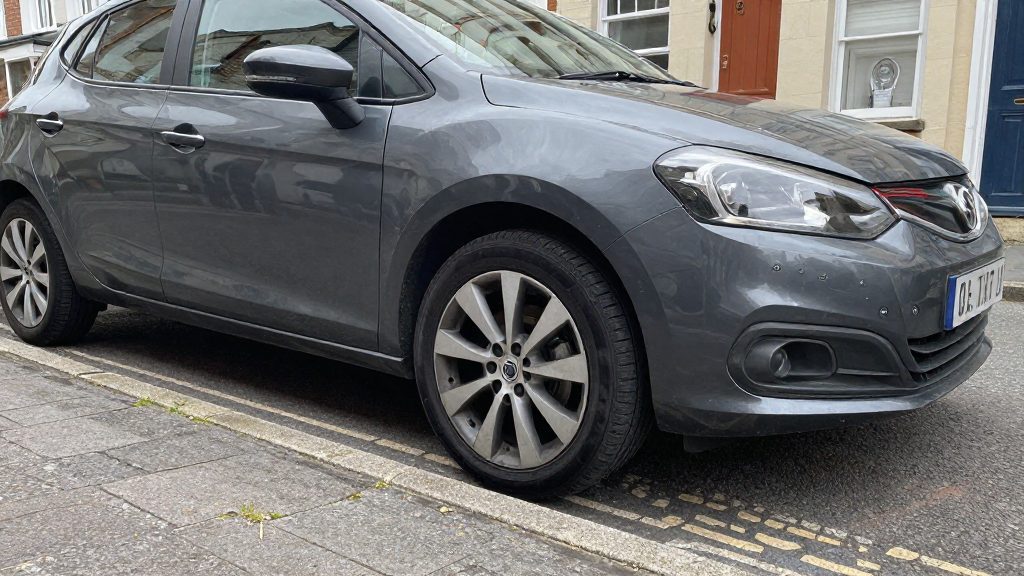
It is sensible to walk round the car before you book, working through the points above: lights, tyres, wipers, washers, horn, mirrors, number plate, seatbelts and the dashboard warning lamps. Fix obvious faults first, because a fail means a retest once the car is repaired. Keep the MOT certificate and any advisory notes with your vehicle documents, so you can compare them with what the tester finds next time.
If you know the car has a dangerous fault, do not drive it to the test centre. Arrange recovery instead, and tell the repairer or tester what you know about the problem.
Frequently asked questions
Where can I check my car’s MOT history?
You can check it online through MOT history on GOV.UK, which shows the recorded results for the vehicle. If you need a printed certificate after a pass, ask the test centre for one.
Can I appeal an MOT fail?
Yes, if you think the result is wrong, you can appeal it. Mistakes on the MOT record are handled through a different process, so check GOV.UK for the route that applies to your case.
Does a pass mean my car will not need repairs before the next test?
No. A pass means the vehicle met the legal standards on the day of the test. It does not guarantee that every part will last until the next test, and the car must still be roadworthy at all times.