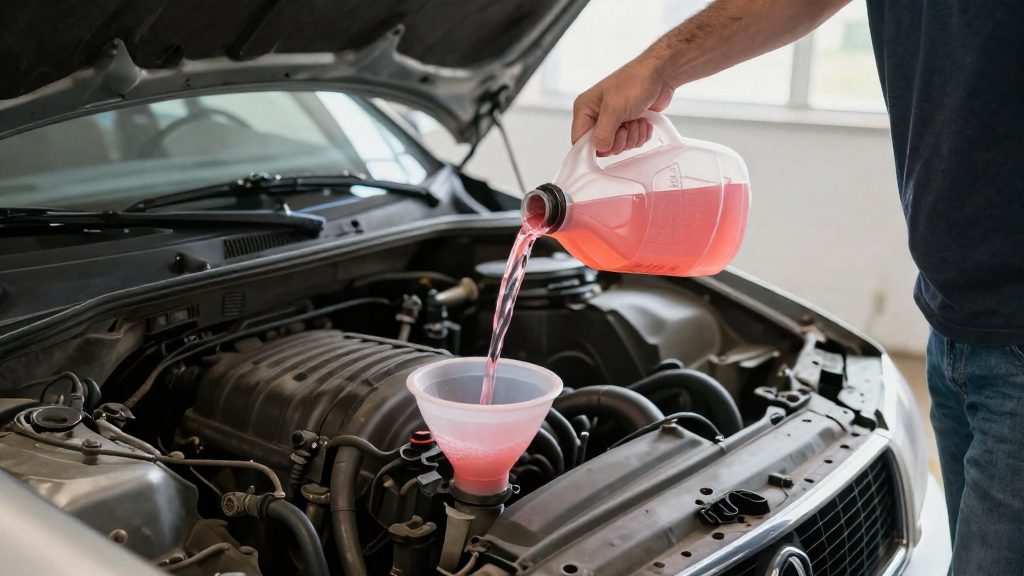
There is no single replacement interval for coolant in the UK. Neither GOV.UK nor DVSA sets one, so the figure for your car is in its owner’s handbook, which gives the interval for the coolant type the manufacturer specifies. The interval depends on the coolant formula, the engine and whether the car is petrol, diesel, hybrid or electric. If you cannot find the figure, check the manufacturer’s service schedule or ask a franchised dealer or independent garage to confirm it from your registration and chassis numbers.
Why is there no single coolant replacement interval?
Coolant is a mix of glycol-based antifreeze and water. It contains corrosion inhibitors that gradually lose effectiveness, and how quickly they do so depends on the formula the manufacturer chose and the materials used in the cooling system. A system built around a traditional coolant may need changing more often than one designed for a long-life formula. Because the chemistry and the engine design vary, a general rule cannot be applied safely to every car.
UK motoring publications often quote broad ranges for coolant changes. These are general guidance, not an official standard, and they should never override the handbook for your vehicle.
Which coolant types affect the interval?
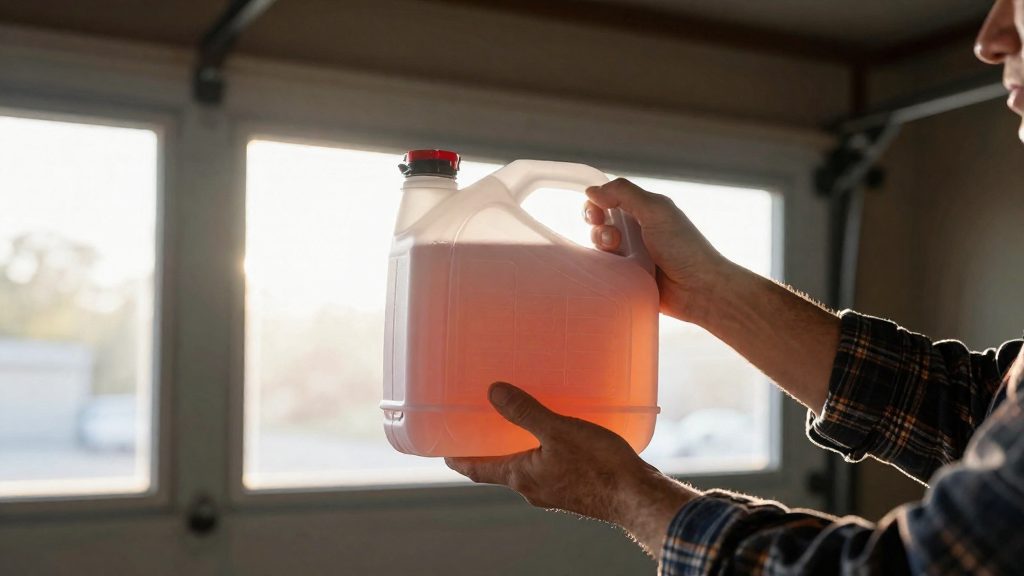
Coolant is usually identified by a specification code in the handbook and sometimes by colour on the reservoir cap or label. Do not rely on colour alone. Colours are not standardised across manufacturers, and two coolants of the same colour can be different products. Use only the type the manufacturer specifies. If the handbook gives a longer interval for a particular coolant, that interval applies only while the system contains that coolant. Topping up with a different type can change its chemistry and make the handbook interval unreliable.
When should you replace coolant earlier than the handbook says?
The handbook interval is a maximum for normal use, not a target to reach regardless of condition. Consider changing the coolant sooner, or having the system inspected, if you notice any of the following:
- the coolant looks rusty, cloudy, oily or has visible deposits or sludge
- there is a sweet smell around the engine bay or the car after driving
- the level falls repeatedly between checks, which points to a leak or a fault in the system
- the temperature gauge or warning light has come on, even briefly
- a different coolant has been added to the system, or repair work has been carried out on the cooling system
Do not keep topping up a level that keeps falling. A repeated loss of coolant needs diagnosis by a garage, because the cause may be a leaking hose, a faulty cap or a more serious engine problem.
How do you check coolant safely?
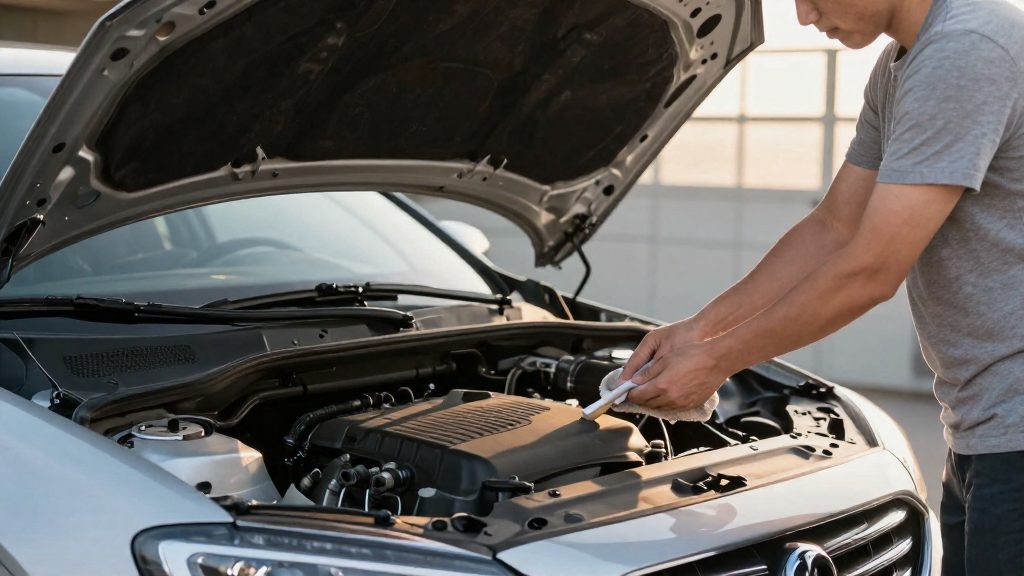
Check the coolant only when the engine is cold. The level should sit between the minimum and maximum marks on the expansion tank or reservoir. Never open the pressure cap on a hot engine, because the coolant is under pressure and can spray and scald. If you need to remove the cap, wrap a cloth or wear a glove over it and turn it slowly until the pressure has released.
Top up only with the coolant type the manufacturer specifies, and never mix different colours or formulas. If the reservoir needs filling often, have the car checked rather than adding more. Check the level before a long journey and whenever you notice a change in the temperature reading, as well as at the intervals in your handbook.
What should you do if the temperature warning light comes on?
GOV.UK’s Highway Code guidance says not to ignore warning signs, because they may indicate a dangerous fault developing. If a warning light comes on while you are driving, stop and investigate the problem.
If the engine temperature light comes on, pull over safely as soon as you can and switch the engine off. Do not continue the journey in the hope that the car will cope, because overheating can cause serious and expensive engine damage. Let the engine cool naturally. GOV.UK advises waiting until the engine has cooled before opening anything. Only after that should you remove the coolant filler cap and add coolant or water, as the handbook describes. Topping up is a temporary measure. The car should then be checked by a garage before it is driven far, because the level dropped for a reason that has not yet been found.
Does the MOT check coolant leaks?
The DVSA’s MOT inspection manual deals with fluid leaks in section 8.4.1. The general rule in that section is that a vehicle should fail if a fluid leak creates a pool on the floor within five minutes that is more than 75mm in diameter. Several leaks that together release fluid at the same rate are also treated as one problem. The section mentions engine coolant by name, so read the full wording on the GOV.UK page before drawing conclusions about your own car. An MOT test is not a substitute for checking your coolant level yourself.
Are hybrid and electric cars different?
Many hybrid and electric vehicles have more than one cooling circuit, for example one for the engine and another for the battery or power electronics. These circuits may use different coolants, and they may not share the same service interval. Do not interchange coolants between circuits. The manufacturer sets the interval for each circuit, and it may be expressed in time, distance or both. If your handbook does not make the interval clear for each circuit, ask a franchised dealer or a specialist garage to confirm it before carrying out any work.
How should you handle and dispose of used coolant?
Ethylene glycol, the main ingredient in most coolants, is toxic to people and animals. Keep coolant in its original, clearly labelled container with the cap firmly closed, and store it out of reach of children and pets. Wipe up spills straight away, avoid contact with skin and eyes, and wash your hands after handling it. Do not pour used coolant down a drain, into a watercourse or onto the ground.
Used coolant should not go in your household rubbish bin. Store it in a sealed container and check with your local council whether its household waste recycling centre accepts it, and in what quantity, before you travel. Some sites require you to tell staff on arrival and to use a designated container for hazardous waste. If you are not confident about draining the system, catching the old coolant safely or bleeding the air out afterwards, a garage can carry out the change and dispose of the old fluid for you.
Frequently asked questions
Does a low coolant warning always mean the coolant level is low?
Not always. Some systems also warn about a fault in a sensor or circuit. Check the level when the engine is cold. If the warning stays on after topping up correctly, have a garage diagnose it.
Is coolant that still looks clear safe to keep past the handbook interval?
No. Colour and clarity do not show whether the anti-corrosion protection is still effective, so the handbook interval should be followed even if the fluid looks fine.
Can I replace the coolant myself?
Some owners do it, but it requires the correct coolant type, a correct procedure for refilling and removing air from the system, and safe disposal of the old fluid. If any of these is unclear, use a garage.