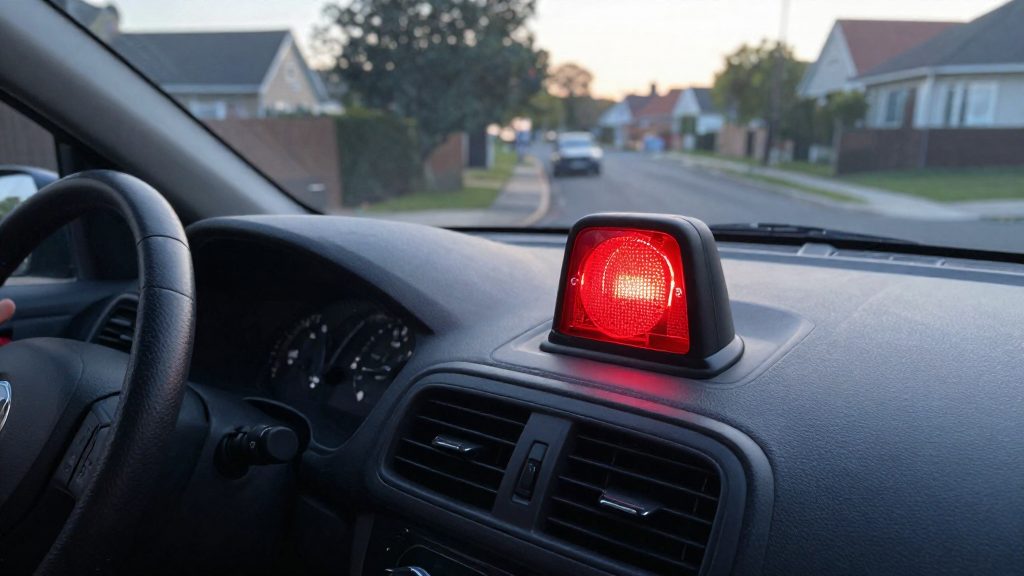
A red battery warning light means that the car’s charging system is not charging the battery properly. While the engine runs, the alternator should keep the battery charged and supply power to the lights, ignition and electronics. When the light stays on, the car is drawing on stored battery power, which will run down. Stop as soon as it is safe to do so, switch off electrical equipment you do not need, and have the charging system checked before you drive further.
What does the red battery symbol tell you?
The light is a warning about charging, not a general sign that something is wrong. According to nidirect, if the charge warning light comes on while you are driving, it may mean that the battery isn’t charging, and this must also be checked as soon as possible to avoid loss of power to lights and other electrical systems. That last point is the practical reason not to ignore it: a charging fault leaves the car running on its battery alone, and when that charge is gone the electrics stop working.
Some warning lights are meant to show briefly. According to nidirect, warning lights illuminate when you turn the ignition key and go out when the engine starts, with the handbrake warning light as the exception. A battery light that stays on once the engine is running, or that appears during a journey, is the signal to act.
Symbols and their exact wording vary between makes and models, so your handbook is the reference for what your car’s symbol means. National Highways also advises that you do not begin a journey with a red warning light showing, so if the light is on before you set off, have the car checked before you drive it.
How should you respond when the light comes on?
First, stop the car when it is safe to do so. Manufacturer guidance for a UK commercial vehicle states that the driver should stop the vehicle as soon as it is safe and not drive on. Choose a layby, a car park or a quiet side road rather than a busy junction, and turn on your hazard warning lights while you pull over.
If you are on a motorway, National Highways advises against stopping in a live lane unless it is absolutely necessary. Keep up your speed in a steady way, signal, and move to the hard shoulder or an emergency area as soon as you can do so safely. If you cannot leave the carriageway at all, move into the left-hand lane and keep the hazard warning lights on.
Once the car is stopped, switch off electrical equipment that is not required. Manufacturer guidance says this directly. In practice that means the heated rear screen, seat heaters, the stereo, the air conditioning and any accessories you can manage without. Keep the headlights on if you need them to see the road or to be seen, because visibility matters more than saving a little battery.
Next, get help. The same manufacturer guidance lists roadside assistance and an authorised repairer as the two routes to take. If you hold breakdown cover, call your provider, and tell them the battery light came on while you were driving. Do not attempt to drive a long distance, or to a repairer far away, on the strength of a hope that the light will clear.
When you speak to the repairer, describe the sequence of events. Note whether the light came on while you were driving or at the ignition, whether it stayed on once the engine was running, whether the car was using heavy electrics such as the heater or the rear screen, and whether any other warning lights showed at the same time. That information helps the technician test the electrical system efficiently.
Why does the charging system fail?
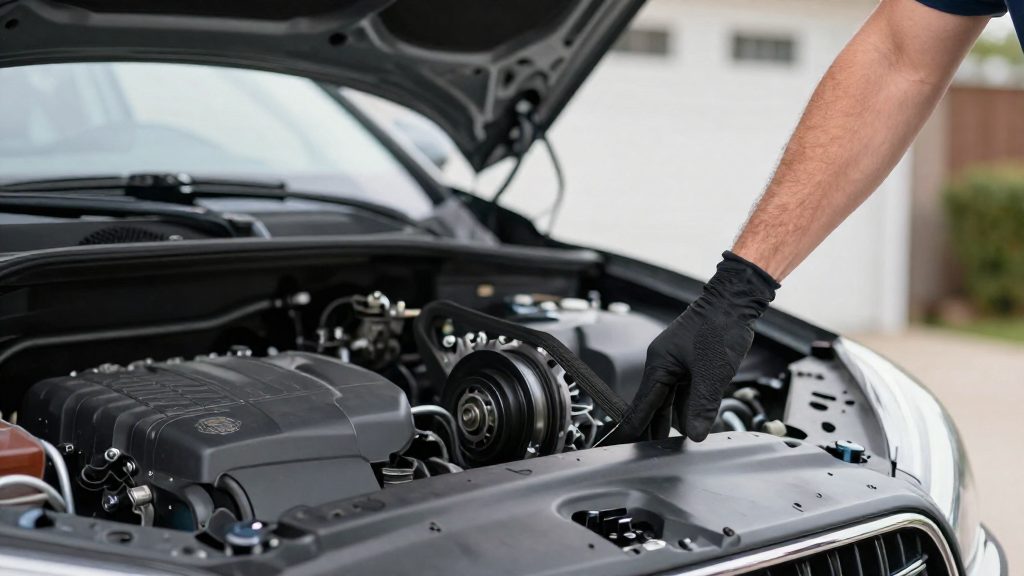
The alternator generates electricity while the engine runs and keeps the battery charged. Charging faults usually lie in one of four places: the alternator itself, the drive belt that turns it, the wiring and connections between them, or the battery and its terminals. Typical faults include a failing alternator, a slipping or broken drive belt, a loose or corroded battery terminal, a damaged cable, or a battery that can no longer hold its charge.
Only a proper test can tell these apart, so treat the light as a symptom rather than a diagnosis. Replacing a battery without checking the alternator and belt can leave the fault in place.
The drive belt on many engines also turns other components, such as the coolant pump and the power steering. If the belt fails, you can lose more than charging. Check your handbook to see which parts your belt drives. If the temperature gauge climbs, or the steering suddenly becomes much heavier, stop as soon as it is safe and call for help rather than pressing on. Keep hands, hair and loose clothing well away from the engine bay, because the belt and fan can move without warning.

When should you have the light checked before an MOT?
According to GOV.UK, the first MOT is due by the third anniversary of the vehicle’s registration. Where the vehicle is over three years old, later tests are due by the anniversary of the last MOT. An MOT lasts for a year, and you can take it up to a month minus a day before it runs out and keep the same renewal date. Some vehicle types have different timing, so check the GOV.UK guidance for yours.
The battery and wiring are checked as part of the test, under the lamps, reflectors and electrical equipment section of the MOT inspection manual. A battery that is insecure but not likely to fall from its carrier is a minor defect, while one that is likely to fall or cause a short circuit is major. A leaking battery is a major defect. For wiring, damaged or deteriorated insulation is minor, heavily deteriorated insulation is major, and insulation in such a condition that there is an imminent risk of fire or sparks is dangerous. Wiring likely to cause a short circuit is major. Battery inspection applies to electric and hybrid vehicles as well.
Whether a charging warning light on its own is recorded as a defect depends on what the tester finds, so ask the test station before your appointment if the light is on. Do not drive to a test with the light showing. Have the charging system checked first, because the light means the battery is not being charged and a test may find the car is not running safely.
Frequently asked questions
Does a red battery light always mean the battery must be replaced?
Not always. The light points to a charging fault, which can lie in the alternator, the drive belt or the wiring as well as in the battery. Ask a qualified repairer to test the charging system before you buy a new battery, because the fault may be elsewhere.
Is a red warning light more serious than an amber one?
According to National Highways, a red warning light can indicate a possible serious fault, so treat it as urgent. For an amber light, check your handbook for the symbol and the advice that goes with it.