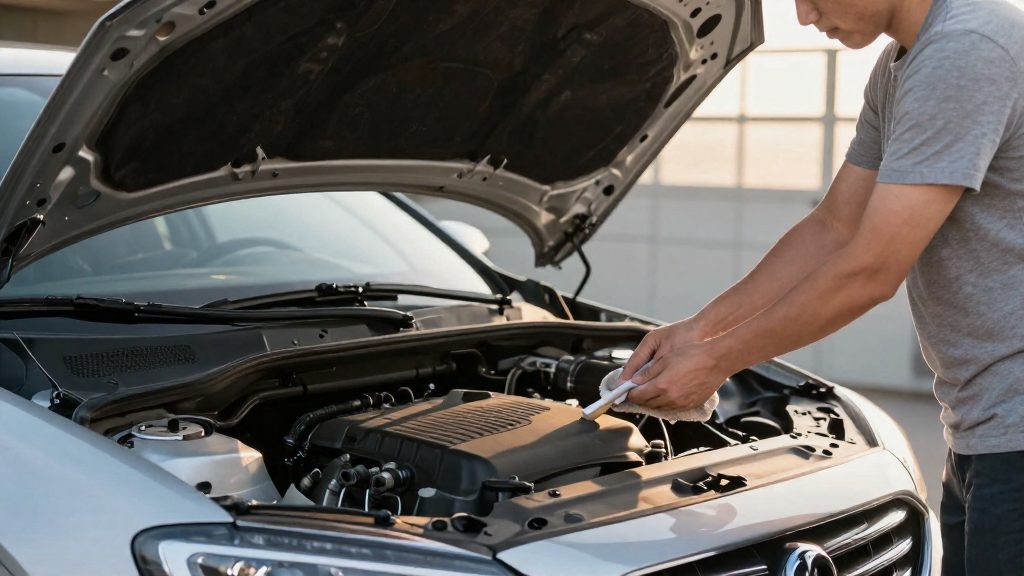
There is no single engine oil change interval in the UK that suits every car. The interval is set by the vehicle manufacturer and appears in the handbook or service schedule, where it is usually given in miles, in months, or both. Whatever interval applies to your car, check the oil level at least once a week, follow the manufacturer’s schedule rather than a guess, and change the oil sooner if you use your car in demanding conditions.
How do I find my car’s oil change interval?
Start with the handbook. The Highway Code tells drivers to refer to the vehicle’s handbook or data, and the servicing section of that handbook is the reference for how often the oil should be changed. Look for the routine maintenance or servicing pages. They should state the interval, whether it applies in miles or months, and whether there is a separate schedule for severe use.
If you keep a service book, record the date and mileage of each oil change. Comparing those entries with the manufacturer’s schedule shows when the next change is due, which is more reliable than memory.
Do not rely on a generic figure from a website, a sticker you remember from a previous car, or what a friend does with a different model. Engines, oil specifications and manufacturers’ schedules differ, so the figure for your own car is the one that counts.

Why do mileage and time both matter?
Engine oil ages in two ways. Mileage matters because the engine runs longer and harder the more you drive, and the oil collects combustion by-products and wear particles. Time matters because oil degrades even when the car is parked for long periods, so a car with low mileage can still be due an oil change.
For this reason many schedules set both a mileage figure and a time limit. Where a schedule gives both, check the handbook to confirm whether the first limit reached is the one to follow. A car that covers few miles a year should not wait for the mileage figure to be reached if the time limit has already passed.
When should I change my oil sooner?
Manufacturers often describe a separate, shorter schedule for severe use. Conditions that frequently fall into this category include mainly short journeys, where the engine does not reach full operating temperature for long enough; frequent stop-start driving in traffic; towing or carrying heavy loads; sustained high-speed or high-load driving; and driving in dusty conditions. Read the severe-use section of your handbook and compare it with how you actually use the car. If several of these conditions apply, follow the shorter schedule.
Change the oil sooner, or have the car checked, if you notice that the level drops between services, that you can see oil on the ground under the car, or that the oil looks very dark or smells strongly of fuel. These signs point to a possible fault, and waiting for the scheduled change may allow damage to develop.
How do I check the oil level safely?
The Highway Code says to check the fluid levels in your vehicle at least weekly. For engine oil, National Highways advises that the engine should be switched off for at least five minutes and the vehicle parked on an even surface. This allows the oil to drain back into the sump, so the reading is accurate.
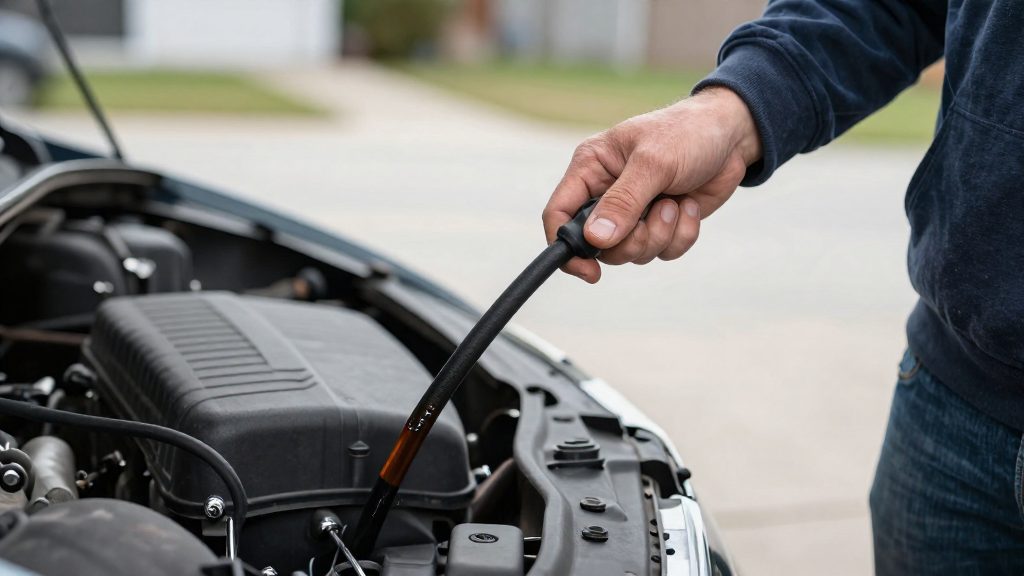
Open the bonnet and find the dipstick, using your handbook if you are unsure which one it is. Pull it out fully and wipe it clean with a paper towel. Push it fully back in, then pull it out again and read the level. The dipstick has minimum and maximum marks near the bottom, and the oil residue should sit between them.
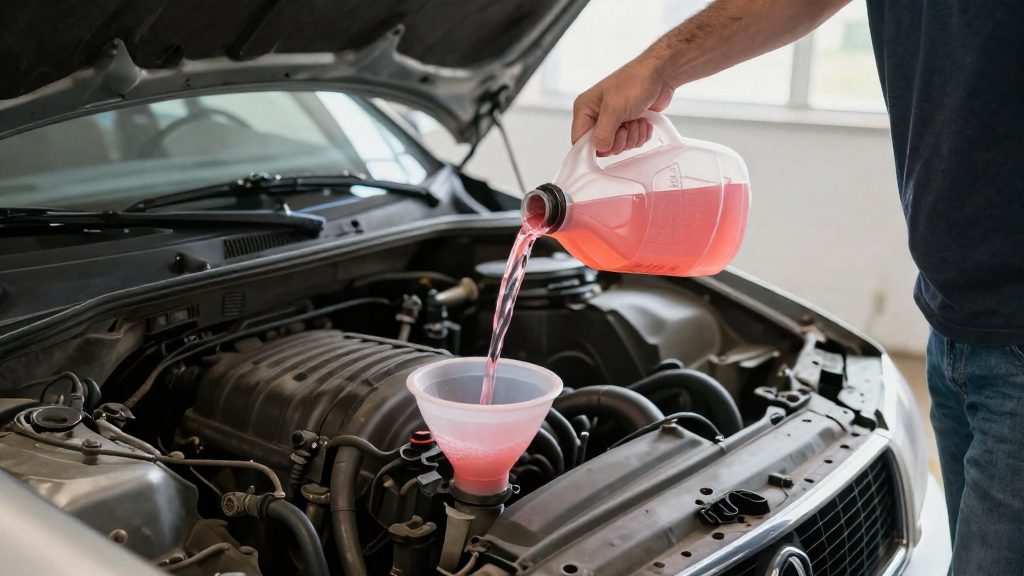
If the residue is below the minimum mark, top up using the grade of oil named in your handbook. Add small amounts, wait a few minutes for the oil to settle, and check again. Stop when the level sits between the marks, because overfilling can also cause problems. Some newer cars have no dipstick and instead show the oil level through a dashboard check system, so follow the handbook for those.
Take care when working near the engine. Parts can stay hot after running, so keep your hands, hair and loose clothing clear of the fan and drive belts, and wipe up any spilt oil from the driveway.
What should I do if the oil warning light comes on?
The Highway Code says you should understand the meaning of all warning displays on the instrument panel, and that you should not ignore warning signs because they could indicate a dangerous fault developing. An oil warning light can mean either a low oil level or a fault with oil pressure. The two need different responses, so check the handbook to confirm which symbol your car uses.
Pull over safely as soon as it is safe to do so and switch off the engine. Wait at least five minutes, then check the level as described above. If the level is below the minimum mark, top up with the correct grade and check again.
If the level is correct, or the light stays on after you have topped up, do not keep driving. Continuing with a suspected oil pressure fault risks serious engine damage. Arrange for the car to be recovered or taken to a garage for inspection.
Does an oil change affect my MOT?
The MOT is a safety and emissions test, and the DVSA’s MOT inspection manual on GOV.UK sets out how testers assess items such as fluid leaks and warning lights. Rather than relying on a summary from another website, read the current version of that manual to see exactly how leaks and dashboard warning lights are assessed.
In practice, the most useful preparation is simple. Keep the oil at the correct level between checks, look under the car regularly for fresh drips, and make sure every warning light works as your handbook describes. Keep the service record with the car so you can show when the oil was last changed.
Frequently asked questions
What should I do if I have lost my car’s handbook?
Contact a franchised dealer for your make or the manufacturer’s UK customer service, giving your registration number or vehicle identification number. Many manufacturers also publish digital owner’s handbooks. Make sure the document matches your exact model and year.
Should the oil filter be changed at the same time as the oil?
Many service schedules change the filter with the oil, but this varies. Check the servicing section of your handbook, or ask a garage to confirm what your model requires.
How should I get rid of used engine oil?
Do not pour it down a drain or onto the ground. Store it in a sealed container and take it to a household waste recycling centre or a garage that accepts used oil. Your local council can confirm the local arrangements.