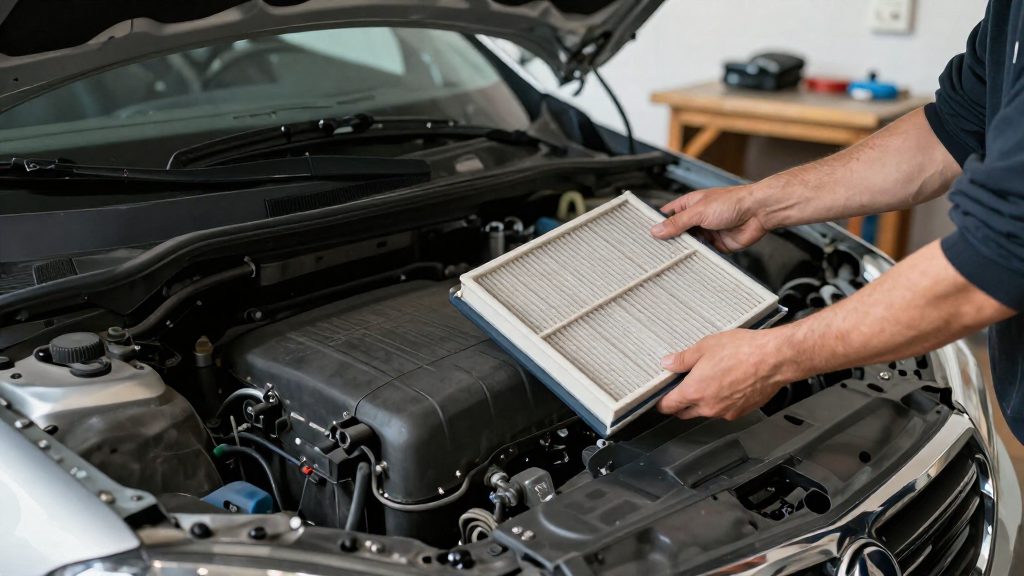
In the UK, the replacement interval for an engine air filter is set by the car’s manufacturer rather than by a road-safety rule, so the service schedule in your handbook is the reference point. As a general guide, Kwik-Fit, a car servicing specialist, says most manufacturers recommend changing the filter every 12,000 to 15,000 miles, which works out at roughly once a year for a frequent driver. Dusty roads, heavy traffic and high-pollution areas can justify changing it sooner.
How often should an engine air filter be changed?
Start with the handbook or the manufacturer’s service schedule for your exact model and engine. It gives the replacement interval and usually identifies the correct filter. If you no longer have the handbook, a franchised dealer or a qualified garage can confirm the interval from your car’s VIN, the vehicle identification number shown on your registration documents.
Guides outside the manufacturer’s literature give figures that differ slightly. Haynes, the workshop manual publisher, gives 10k–12k or 12-month intervals for most air filters. Use these figures to plan inspections rather than to override the schedule, and check the filter at every service whatever the mileage.
Do not confuse the engine air filter with the cabin filter, which cleans the air entering the passenger compartment. Its replacement interval is also set by the manufacturer, so look for it in the same schedule rather than assuming it matches the engine filter.
When should you change the air filter sooner?
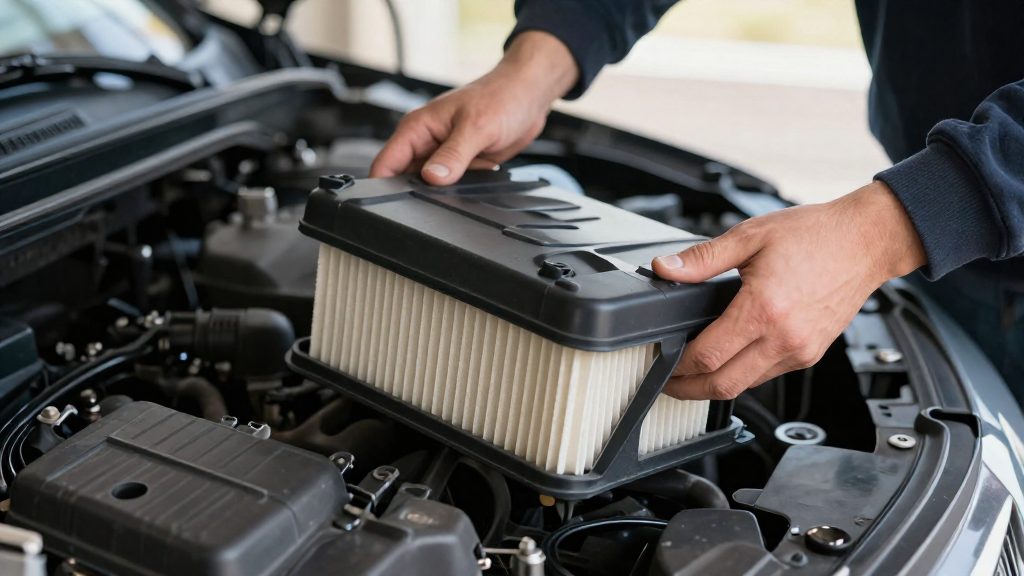
The schedule assumes typical use. Kwik-Fit says the filter may need replacing more often if you regularly drive on dusty roads or in heavy traffic, or if you live in a high-pollution area, and it lists climate as a factor alongside how often you drive. Haynes adds that regular driving in dirty, dusty conditions, such as building sites or dirt tracks, can justify more frequent changes.
Farm tracks, gravel lanes, unsurfaced car parks and building sites all push more dust towards the air box. If your driving includes these, inspect the filter more often than the schedule suggests and replace it as soon as it looks clogged. A filter that is dark with dust all over needs replacing even if the mileage is low, because the schedule is a starting point rather than a fixed limit.
How can you tell if the air filter is clogged?
A clogged filter restricts the air reaching the engine. Kwik-Fit lists poorer fuel economy, sluggish acceleration and unusual engine noises as possible signs, and notes that an illuminated engine management light can have many causes. Treat these symptoms as prompts to check rather than proof, because a clogged filter is only one possibility.
The engine management light needs a proper diagnosis. A garage can read the fault code from the car’s diagnostic socket, which points to the cause without guesswork. If the light stays on, do not assume the air filter is the problem, and do not clear the light and carry on without finding out why it came on.
What does the MOT check about the air intake?
The MOT is carried out to the DVSA’s inspection manual for cars and passenger vehicles, which covers the intake system through the emissions section. An induction or exhaust leak that could affect emissions levels is a major defect. So is emission control equipment fitted by the manufacturer that is missing, obviously modified or obviously defective. An engine management light that is inoperative or showing a malfunction is also a major defect.
For the test itself, keep the engine running cleanly, have any warning light diagnosed before you book, and keep to your service schedule.
When is the MOT due?
A car needs its first MOT by the third anniversary of registration, and then every year after that. Some vehicle types need their first test at one year old, so check GOV.UK for your vehicle. You can take the test up to a month minus a day before the current MOT runs out and keep the same renewal date, which makes early booking useful if a service falls due at the same time. Driving without a valid MOT can bring a fine of up to £1,000, but there are exceptions: you may drive to or from a place to be repaired, or to a pre-arranged MOT test.
How can you change an air filter safely?
Many owners can change a standard air filter with basic tools, but the layout varies between models. Follow these steps:
- Work with the engine off and cool, and keep hands, hair and loose clothing clear of the fan and belts.
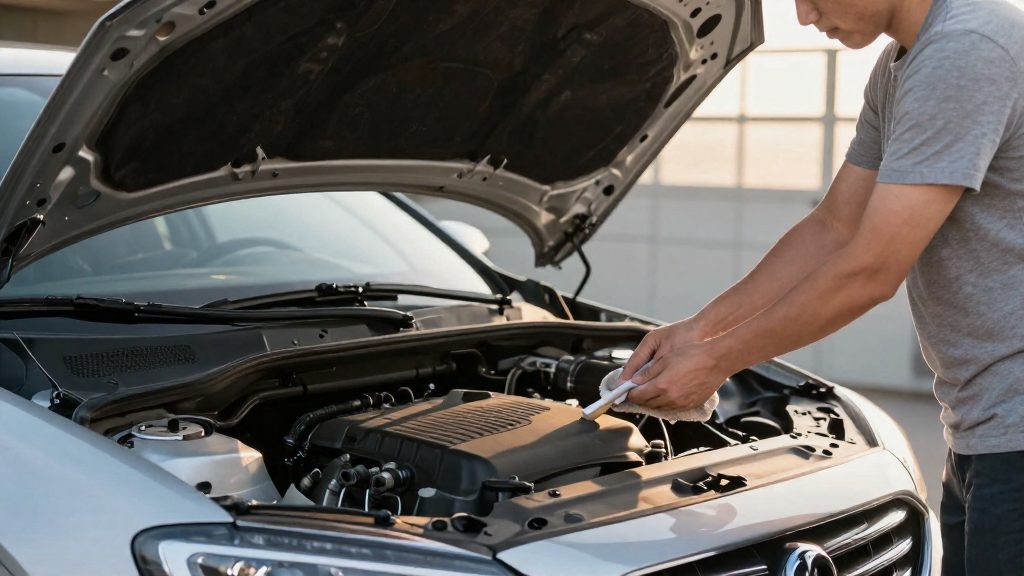
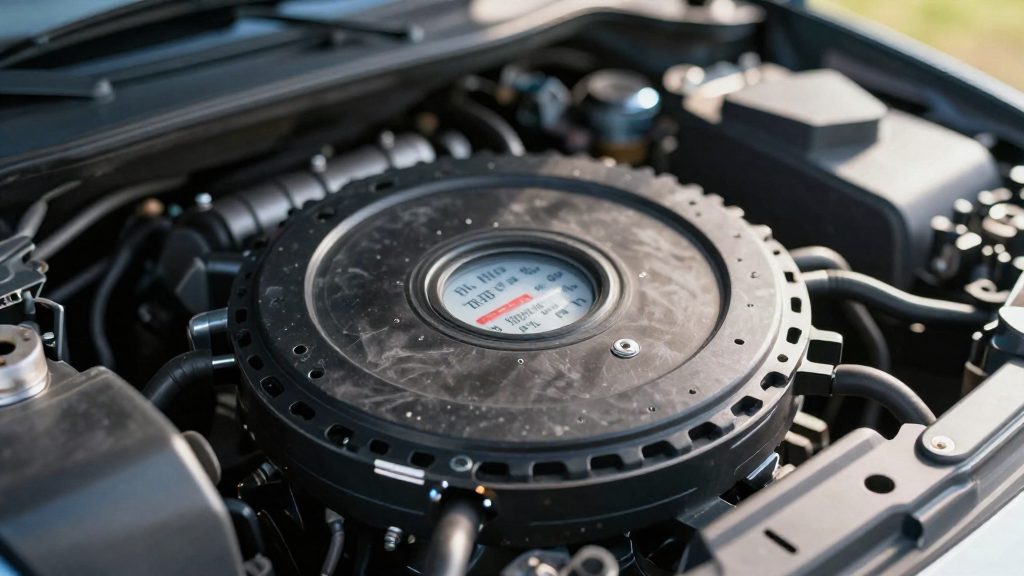
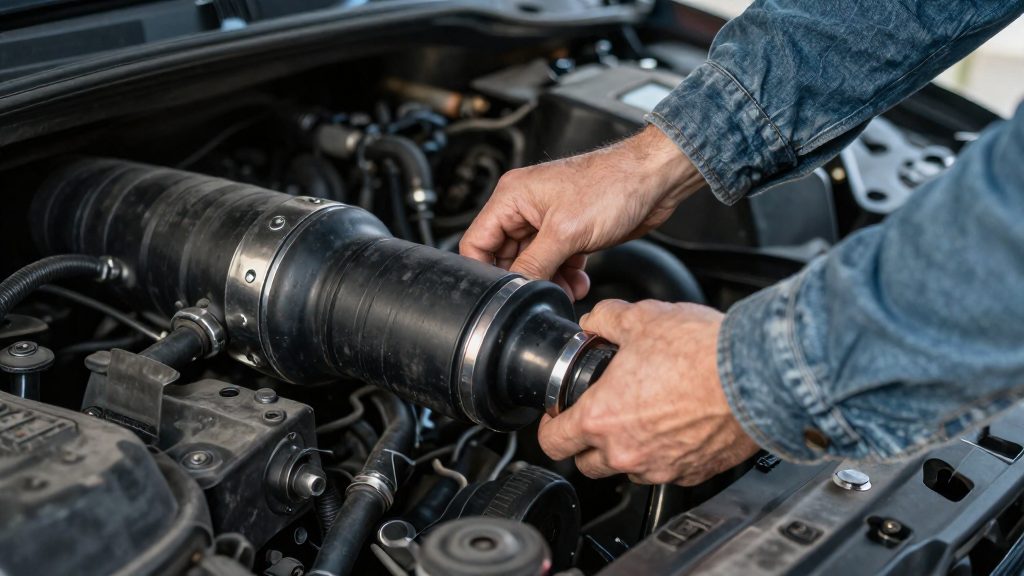
- Find the air box using the handbook. It is usually a plastic housing held by clips or screws, close to the engine.
- Buy the filter that matches the part number in the handbook or the parts catalogue, and compare it with the old one before fitting.
- Wipe the inside of the box with a clean, dry cloth and keep debris out of the intake opening, since dirt that gets past the filter can damage the engine.
- Seat the new filter exactly as the old one sat, close the box and refit the clips or screws firmly so that air cannot bypass the filter.
- Never run the engine with the filter removed.
- Take the old filter to your garage or local recycling centre for disposal.
If any clip, housing or seal is cracked or missing, or if you are not confident, have a garage do the job at your next service.
Frequently asked questions
Can I clean and reuse a paper air filter?
Usually not. Most paper filters are designed to be replaced rather than cleaned, so check your handbook first and replace the filter if you are unsure.
Do I need to change the air filter at every service?
Not by default. It depends on your schedule, and many services include it, so ask the garage to show you the filter and confirm when it is due.
Is a flashing engine management light a sign of a dirty air filter?
Not in itself. A flashing light often signals a misfire, which is a serious fault, so ease off, avoid heavy loads and get the car checked as soon as possible.