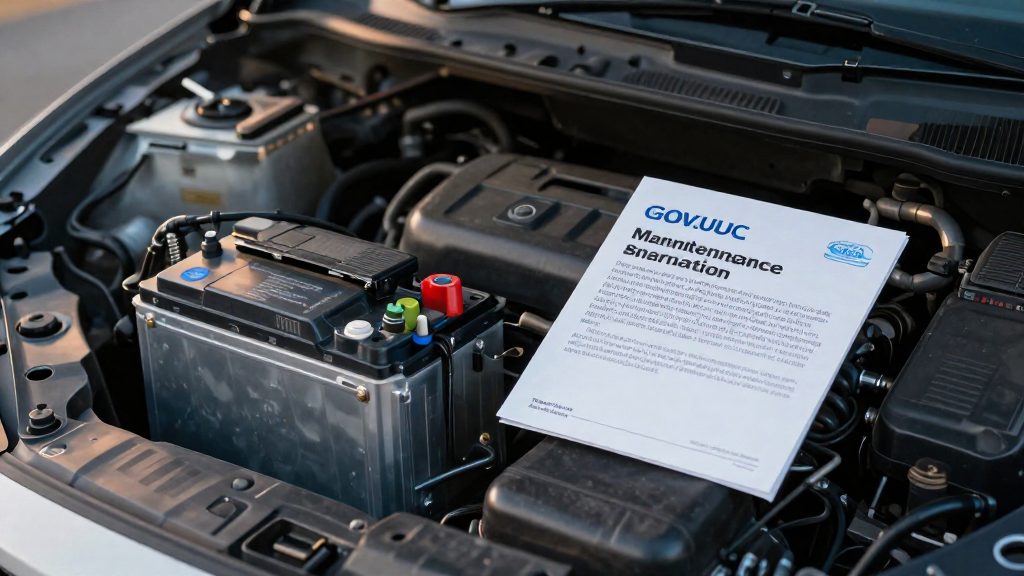
UK law does not set a fixed interval for checking a car battery, and no official body publishes one. A practical routine is to have the battery checked at least once a year, ideally before and after winter, and sooner if the car mostly makes short journeys. Act straight away if you notice dim lights, slow starting or a battery or charging warning light. The MOT looks at whether the battery is secure and not leaking, which is not the same as testing how much charge it holds.
How often should a car battery be checked in the UK?
No official UK source sets a battery-check interval, so treat the timing below as good practice rather than a legal requirement. A car service network run by a parts manufacturer recommends a battery check at least once a year, with extra checks before or after winter, or if the car is mainly used for short trips. Those triggers make sense because cold weather and short journeys both put more strain on a battery.
The Highway Code’s vehicle maintenance annex also advises drivers to make sure the battery is well maintained before winter. Your car’s handbook will show where the battery is, what care it needs and any maintenance schedule the manufacturer recommends. If a general interval and the manufacturer’s documentation differ, follow the manufacturer.
What does the MOT check on a battery?
According to DVSA’s MOT inspection manual on GOV.UK, the tester must inspect the battery on all cars, including electric and hybrid cars. The check concentrates on security and leaks, and the manual sets out these defect categories:
- A battery that is insecure but not likely to fall from its carrier is a minor defect.
- A battery that is insecure and likely to fall from its carrier, or to cause a short circuit, is a major defect.
- A leaking battery is a major defect.
A battery that passes the MOT has therefore been found secure and not leaking on that day. It does not mean the battery is in good condition for the winter ahead, and the certificate is no substitute for a battery test if you have any of the warning signs described below.
What are the signs that a battery is getting weak?
The car service network mentioned above lists three common warning signs:
- dim or flickering headlights
- slow or hesitant starting
- electrical weakness when the heating or air conditioning is running
If you notice any of these, have the battery tested by a garage or a qualified technician rather than waiting for the next annual check. Similar symptoms can also come from the starter or the charging system, so ask the technician to test the whole electrical system, not only the battery itself.
When you book a test, ask what was measured and what the result means for the battery’s remaining life. A written result lets you compare it with the next check and gives you a clear record if the battery is replaced.
How long does a car battery usually last?
According to the same service network, batteries typically weaken after about three to five years, and a battery older than roughly four years deserves a closer look. Age is only a guide. Heat, cold, short journeys, frequent use of heated seats or air conditioning and the number of electrical devices fitted all change how quickly a battery wears.
Many batteries carry a date code on the label. If you are unsure how old yours is, ask the garage that fitted it or the technician who tests it, and keep a note of the date of any replacement in your service record.
Why do winter and short journeys matter?
Low temperatures reduce how much power a battery can deliver, which is why starting is often harder on a cold morning. The chemical reactions inside the battery slow down, so the same engine takes more effort to turn over. This is the main reason the Highway Code’s advice about preparing for winter focuses on the battery.
Short journeys in stop-start traffic are the other common problem. Each start draws charge out of the battery, and a short trip may not give the alternator enough time to put that charge back. Over time the battery can end up only partly charged, even when the car seems to run normally. If your car mostly makes short trips, a battery check at a regular interval is worth more than a check that is simply left to the annual service.
When should you act on a warning light?
The Highway Code’s vehicle maintenance annex says that dashboard warning lights should go out when the engine starts, except the handbrake warning light. If they do not, or if they come on while you are driving, you should stop and investigate the problem, because they could indicate a dangerous fault developing.
For the charging or battery warning light specifically, the Highway Code says that it may mean the battery isn’t charging. It should be checked as soon as possible to avoid losing power to the lights and other electrical systems. In practice, if the light comes on while you are driving, find a safe place to stop when it is safe to do so, keep the journey as short as you can, and arrange for a garage or your breakdown provider to check the car. Do not try to repair the charging system yourself.
What simple checks can you do between MOTs?
DVSA encourages drivers to carry out regular, simple checks, such as making sure the lights work, so they do not wait for the annual test to reveal a problem, according to DVSA (2017). The Highway Code also advises checking tyre pressures and fluid levels at least weekly. For the battery itself, a quick visual check is useful:
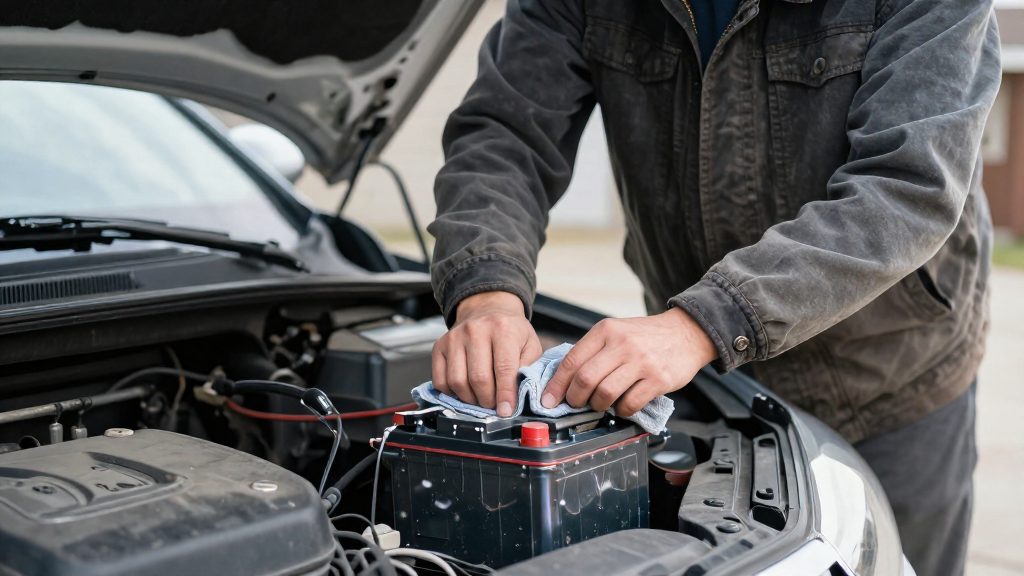
- Check that the battery is secure in its holder. It should not move when you gently try it.
- Look at the terminals and cable connections. They should be tight and free of heavy white or green corrosion.
- Look for cracks, swelling of the case or any sign of leaking.
- Check that the headlights and interior lights work normally.
Do not open covers or disconnect leads unless your handbook says it is safe to do so. Do not use a voltage meter unless you know how to read it, and if you are unsure about a reading, ask a garage to interpret it.
How do you handle a battery safely?
Car batteries contain acid and can release flammable hydrogen gas, especially while they are charging. Wear eye protection and gloves, keep sparks and naked flames away, and work in a well-ventilated area. If you see a leak, or notice a strong rotten-egg smell, avoid contact with the liquid, do not try to charge or jump-start the car, and have it inspected before you drive it again. Wash any skin contact with plenty of clean water and seek medical advice if irritation persists.
Are electric and hybrid car batteries checked differently?
Yes, in the MOT. The DVSA manual says that the high-voltage propulsion battery is unlikely to be accessible, and where it is accessible it should be assessed visually only. A tester should refuse to test a vehicle whose propulsion battery is leaking, and the manual warns that damaged high-voltage components and cabling may be capable of delivering a fatal electric shock.
Many electric and hybrid cars also have a conventional 12-volt battery that runs lights and electronics, and it needs the same security and leak checks as any car battery. Do not open high-voltage covers or touch orange cabling, and leave any work on high-voltage components to trained technicians with the correct equipment, following the manufacturer’s documentation.
Frequently asked questions
What should I do if the car will not start and I am stranded?
Call your breakdown provider or roadside assistance. Only attempt a jump-start if your handbook gives clear steps for your car, and stop if either battery looks leaking, swollen or damaged.
Does a battery warning light always mean the battery is failing?
Not necessarily. The light relates to the charging system, so a fault elsewhere, such as the drive belt or the alternator, can also trigger it. Get the car checked promptly either way.
Can I charge a flat car battery at home?
Only with a charger designed for car batteries, used exactly as the charger’s instructions and your handbook describe. Stop if the battery is leaking, swollen or hot, and ask a garage if you are unsure.