Brake fluid should normally be changed about every two years, or sooner if your owner’s manual says so. The RAC advises changing it every two years or every 24,000 miles, whichever comes first, but the right interval depends on the make and model of your car and on how you drive. The manufacturer’s handbook sets the schedule and the fluid type for your vehicle, so check it before relying on any general rule. No UK government body sets a brake fluid change interval. The MOT checks the condition of the fluid and the braking system, not how old the fluid is.
Why does brake fluid wear out?
Brake fluid is hygroscopic, which means it absorbs moisture from the air over time. According to the RAC (2026), this moisture reduces the fluid’s braking effectiveness. If the fluid is left unchanged for a long time, other parts of the braking system can also be damaged, and the repairs cost much more than a fluid change. Moisture builds up gradually and you cannot judge it by eye, so fluid that looks clear can still be past its best. The RAC notes that the interval varies with the quality of the fluid and with driving style, which is why a fixed date is only a guide.
How do I know which fluid my car needs?
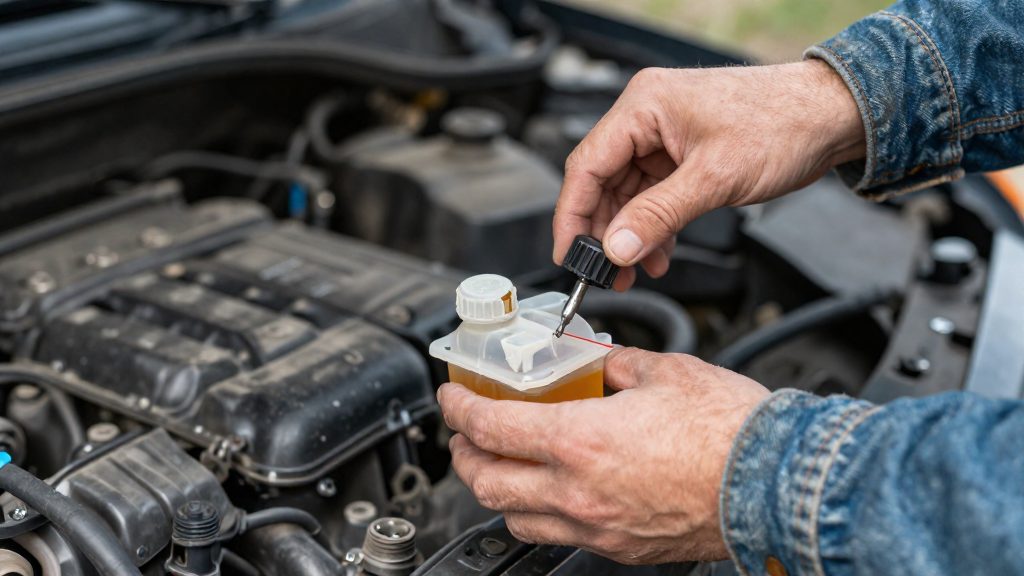
The owner’s manual states the fluid type your car requires and how often it should be replaced. Use only that type, and do not guess from the colour of the fluid in the reservoir. If the handbook is missing, a franchised dealer or an independent garage can confirm the correct specification from your vehicle’s details. Keep the cap on the reservoir closed when you are not checking the level, because the fluid absorbs moisture from the air once it is open. Fresh fluid should come from a sealed container and should be used promptly once opened.
When should I change it sooner?
The two-year guidance is a maximum for most cars rather than a target to wait for. The RAC says some vehicles need a yearly change, so the manual and your service history matter more than the calendar. Arrange an earlier check if the fluid looks dark or murky, if the pedal feels softer or spongier than usual, or if the car has been used for frequent heavy braking, such as towing or long mountain descents. Any of these may mean the fluid has taken on moisture or contamination, and a garage can test it before you decide whether a full change is needed.
What does the MOT check on brake fluid?
According to GOV.UK (2026), the DVSA’s MOT inspection manual sets out the following defects for brake fluid and the braking system. A Minor defect is recorded but does not cause a fail. A Major or Dangerous defect causes a fail. Brake fluid below the minimum mark is Minor. Fluid significantly below the minimum mark is Major. Fluid that is not visible in the reservoir is Dangerous. A missing reservoir cap is Major. Testers should not remove reservoir caps, and they only check the level where the reservoir is transparent or has an indicator fitted. Contaminated brake fluid is Major, but testers should fail it only if the contamination is clearly visible.
The brake fluid warning lamp is also checked. An illuminated or defective lamp is Minor. The lamp may be shared with other warnings, such as worn brake pads or an applied parking brake, and vehicles in class 3 are not checked for it. Leaks are treated more seriously. A leaking master cylinder, a leaking rigid brake pipe or a leaking flexible brake hose is Dangerous. A leaking caliper or wheel cylinder is Major, or Dangerous if braking performance is affected.
What should I do if the brake warning light comes on?
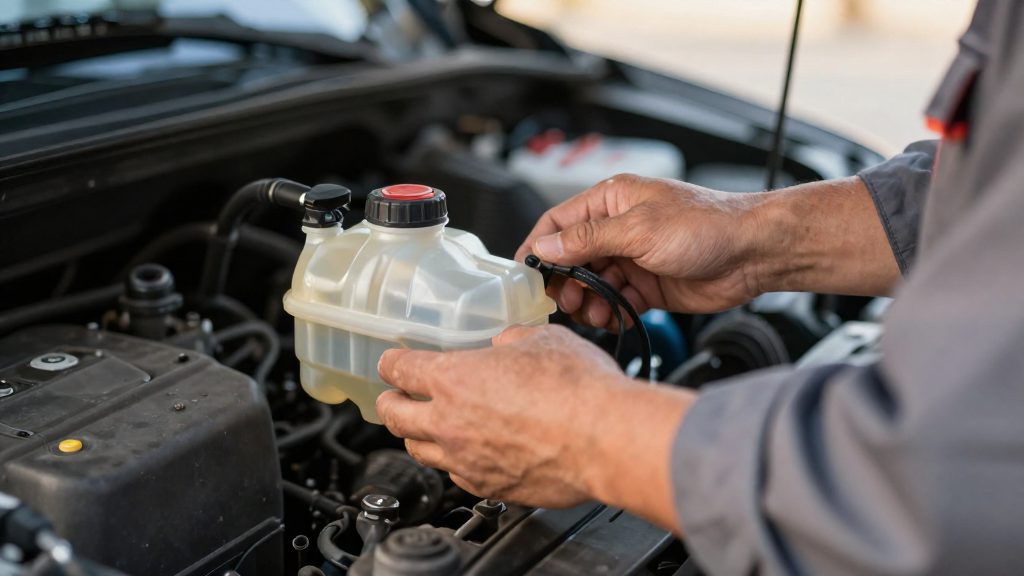
A warning light is a reason to act, not to panic, but do not ignore it. Start by checking that the parking brake is fully released, because the lamp can be shared with that warning. If the reservoir is visible and it is safe to look, check the level on level ground. If the level is below the minimum mark, do not simply top it up and carry on. A low level can mean worn pads or a leak, and the cause needs finding. If the pedal feels spongy, feels different from usual or goes further down than normal, stop driving the car and arrange recovery to a garage. If the light stays on after the parking brake is released and the level is correct, book a brake inspection before your next journey.
Can I change brake fluid myself?
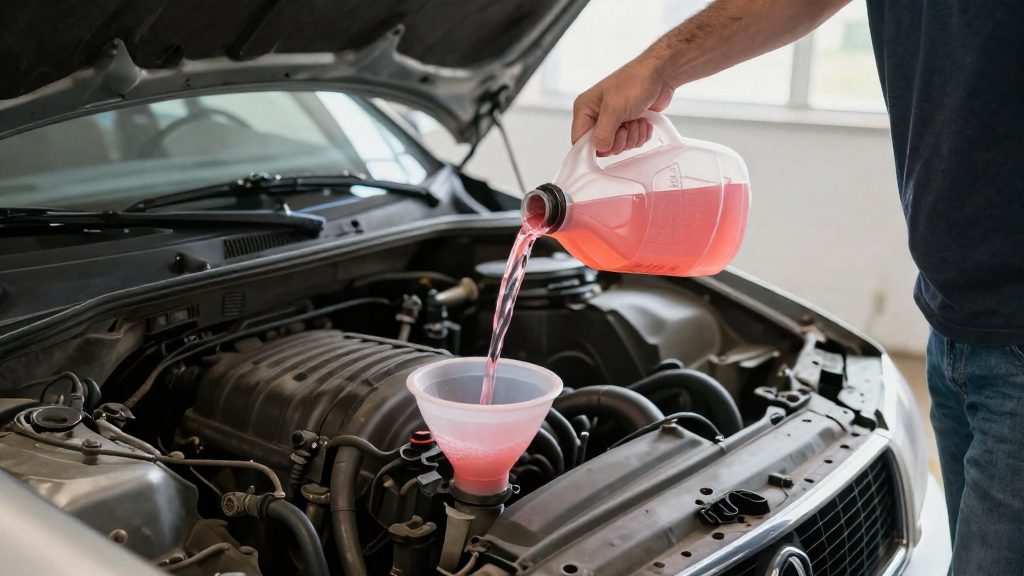
You can, but only if you have the right tools, the correct fluid and the confidence to bleed the system fully. The RAC publishes a do-it-yourself guide that explains the process. Air trapped in the lines causes a spongy pedal and reduces braking, so the bleed sequence must be followed carefully and the system must not be left partly drained. Brake fluid can damage paintwork and some plastics, so wipe up spills at once and wear eye protection. Never reuse drained fluid, and do not pour it down a drain. Take it to your local household waste recycling centre, which your local council can identify. If you are not sure you can complete the job safely, ask a garage to do it, because a fault in the braking system is a serious safety risk.
Frequently asked questions
Does brake fluid need changing on a car that is rarely driven?
Yes, the RAC’s guidance is based on time as well as mileage, so a car that is rarely driven can still be due a change after two years. Check the owner’s manual, and ask a garage to inspect the fluid if the car has been standing for a long time.
Can I mix different types of brake fluid?
Do not mix fluid types unless your owner’s manual allows it. If you are unsure what is already in the system, ask a garage to drain and refill it with the correct type.
Is a falling brake fluid level always a fault?
Not necessarily, but a level below the minimum mark is a defect the MOT records as Minor, and it can mean a leak. Find the cause rather than topping up repeatedly.
Where should old brake fluid be disposed of?
Never pour it down a drain or into the ground. Take it to your local household waste recycling centre, or ask your garage whether it will dispose of it for you.