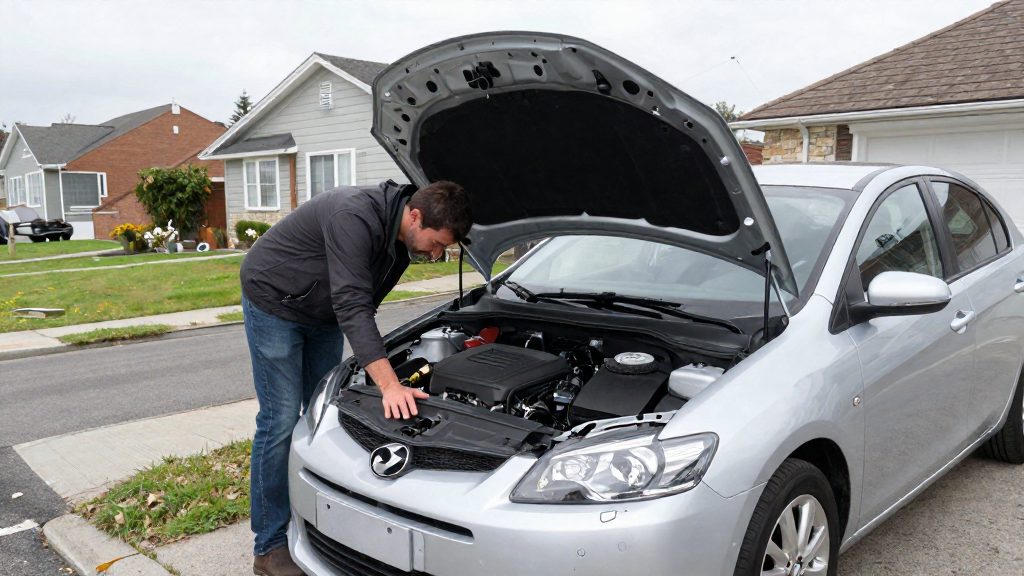
If a manufacturer recall letter arrives, read it in full, confirm that it refers to your car, and do not put it aside. According to GOV.UK (DVSA), the letter explains the fault, what you need to do next and who you should contact. Acting on it is presented as optional, but leaving a safety fault unrepaired could make the vehicle unsafe later or cause it to fail its next MOT. The repair is normally carried out by the manufacturer, and you usually do not have to pay for it. If the letter says the car must not be driven, follow that instruction before anything else.
What does a recall letter actually tell you?
A recall is started by the manufacturer, not by the government, so the letter comes from the company that built the car or the part. GOV.UK (DVSA) says the letter may tell you what the fault is, what you need to do next and who you should contact. The code of practice on vehicle safety defects and recalls (GOV.UK, 2024) says that manufacturers must notify DVSA when they are aware of a safety defect, and that owners are normally contacted by letter sent to the registered keeper, with DVLA keeper details used where necessary.
In practice, the letter is addressed to the person DVLA holds as the registered keeper. If you bought the car second-hand and the registration paperwork was not updated, the letter may have gone to someone else. Before you act, check that the letter refers to your make, model and either your registration number or your vehicle identification number (VIN). The VIN is shown on your registration certificate (V5C). If any of these details are missing or do not match, use the GOV.UK checker described below before you go any further.
How urgent is the recall?
Urgency depends on what the letter says, so read the wording rather than assuming. GOV.UK’s recall checker page states that if a vehicle has a serious safety defect, ‘you must not drive the vehicle’. The code of practice uses a ‘stop drive’ category for situations where there is an immediate threat to safety, meaning the vehicle must not be driven until it has been repaired.
If the letter tells you to stop driving the car, do not drive it, not even to the garage. Ask the manufacturer or dealer how the car can be moved to a repairer safely, and do not attempt a journey you have been told is unsafe. If the letter does not give that instruction, that does not mean the car is safe for every journey. If you are unsure, ask the manufacturer or dealer whether short local trips are acceptable before you use the car in heavy traffic, on fast roads or with passengers. Write down the answer, the date and the name of the person you spoke to.
Why would you still book the repair?
GOV.UK says you do not have to do anything about a fault if you do not want to. It also warns that not getting the fault fixed could mean the vehicle becomes unsafe later, or that it fails its next MOT. The code of practice refers to the responsibility of the user for acting on advice in warning letters. Taken together, these points mean the decision is yours, but the risk of the fault and any problems that follow from it stay with you.
Booking the repair while it is usually free to you is the simplest way to remove that risk. A recall also stays open in the official system until the work is recorded as done, so the notice will keep appearing in the checker and in any future check of the car. Dealing with it now avoids a surprise at a later MOT or when the car is sold.
Does the repair cost you anything?
GOV.UK says you usually do not have to pay to get the fault fixed, and its checker page states that you will not usually have to pay for any repairs or parts. The word ‘usually’ matters. The letter may not mention cost at all, so before you book, ask the manufacturer or dealer to confirm in writing that the repair, the parts and the labour are covered under the recall. Keep that confirmation with the letter.
If anyone asks you to pay for a recall repair, stop and check with the manufacturer, using contact details you have found yourself, before handing over any money. Paying for work that turns out to be covered is difficult to get back.
How do you book the repair?
Use the number, website or dealer named in the letter. If the letter gives none, contact the manufacturer or its dealer. GOV.UK says that the car should be fixed or replaced by the manufacturer if there is a problem. Have your registration number and VIN ready when you call.
When you book, ask how long the work will take, whether the car must be left overnight, whether a courtesy car or other transport is offered and on what terms, and whether any parts are on order, since that can delay the appointment. Agree a date and note the reference number. After the work is done, ask for a written record of what was carried out and keep it with the letter. If the repair is refused or delayed beyond what was agreed, put your complaint in writing to the manufacturer and keep copies of everything you send.
When should you check on GOV.UK?
Use the GOV.UK recall checker at gov.uk/check-vehicle-recall. For a car, enter the registration number. GOV.UK says this uses the Check MOT service and shows safety recalls that have not been checked or fixed, together with the car’s MOT history. Check when a letter arrives, before buying a used car, and again after the repair to confirm that the recall no longer appears as unfixed.
The checker has limits. It does not show non-safety recalls, because GOV.UK says the manufacturer will tell you about those. If you do not have a registration number, you need to know the manufacturer, model and year of manufacture to search. For other vehicles and parts, you will need the manufacturer and model, and the year for vehicles.
What if you think you are affected but never got a letter?
Do not wait for a letter if you have doubts. A letter may not reach you if the registered keeper details are out of date, so check that your address and details are correct with DVLA. Then run the checker. If it lists an unfixed safety recall, contact the manufacturer or dealer. GOV.UK says you can contact them to check for any registered faults. Give them your registration and VIN, and ask directly whether your car is affected.
If the checker shows nothing but you still have a concern about a specific part or warning, raise it with the manufacturer or dealer rather than relying on the absence of a letter. Keep a note of each contact, including the date, the name of the person you spoke to and what they told you.
When buying a used car, what should you check?
Before you buy a second-hand car, run its registration through the GOV.UK checker. An unfixed safety recall will appear there. Ask the seller for paperwork showing that any recall was carried out, and ask them to have an open safety recall completed before you take ownership. If the seller cannot show a completed repair, ask the manufacturer or dealer to confirm the status of the car using its VIN before you commit.
Once the car is yours, make sure the registered keeper details are updated so that future letters reach you. Keep any recall correspondence with the vehicle’s other paperwork so you can show what has been done.
Frequently asked questions
Could a recall letter be a scam?
It is possible, so treat unexpected letters with care. Check that the letter names your car, run the registration through the GOV.UK recall checker, and contact the manufacturer or dealer using details you have found yourself, not only those in a message that asks for payment or personal information.
Can an independent garage carry out a recall repair?
GOV.UK says the car should be fixed or replaced by the manufacturer, so contact the manufacturer or its dealer first. Taking the car elsewhere may mean the work is not carried out under the recall, so confirm this with the manufacturer before you go anywhere else.
Does an open recall affect my insurance?
This guide does not cover insurance policy terms. If you are unsure how an open recall affects your cover, ask your insurer directly and keep a note of what they tell you.