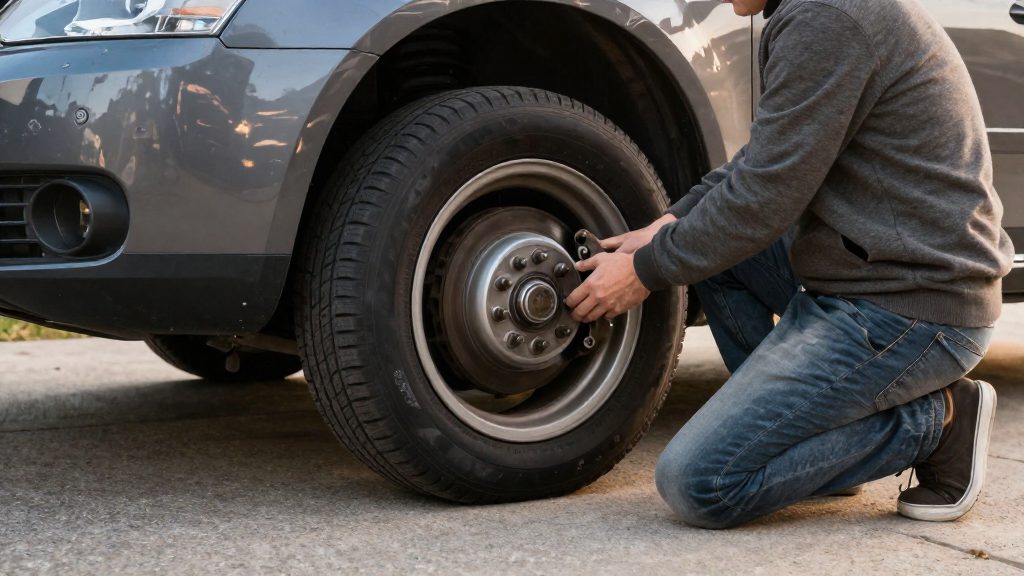
It depends on what the recall notice says, so read it before you drive. If the manufacturer has written to you about a serious safety defect, GOV.UK is clear: you must not drive the vehicle. For other recalls, the letter and the manufacturer’s instructions decide what is safe, and if they are unclear, do not guess. In every case, book the repair promptly, because the work is normally free and an open recall stays open until it is done.
What does a safety recall actually cover?
A safety recall is the process a manufacturer uses when it finds a serious problem with a vehicle, part or accessory. In the United Kingdom, the manufacturer must fix or replace the item. According to GOV.UK (DVSA), the scheme covers cars, motorcycles, quadricycles and motor trikes, caravans, horse boxes, buses, coaches, minibuses and lorries. It also covers child car seats, seat belts and harnesses, tyres, components and parts, and agricultural equipment.
A recall is therefore a specific safety action rather than a routine service. It can apply to a car that seems to drive perfectly well. When the defect is serious, the manufacturer writes to the owner, so a letter is the usual first sign. Do not dismiss a letter because the car seems fine, and do not assume a recall is minor because nothing has gone wrong yet.
When must you stop driving straight away?
Stop driving, and arrange another way to get the car to a workshop, in two situations:
- The recall notice, or the result of the recall check, says you must not drive the vehicle. GOV.UK states that when a serious safety defect is found, the manufacturer will write to the owner, and “You must not drive the vehicle.”
- You notice a warning light, a change in steering or braking, or another symptom you cannot explain while a recall is open. The symptom may or may not be linked to the recall, and you cannot tell from the car alone, so stop and get it checked.
Even where the notice does not forbid driving, the law still applies. Section 40A of the Road Traffic Act 1988 makes it an offence to use a motor vehicle or trailer on a road when its condition, or its load, involves a danger of injury to any person. Driving with a known, unrepaired safety defect that could injure someone can fall within that offence.
Where the notice does not tell you to stop, do not assume that normal use is fine. Contact the manufacturer, or a franchised dealer for your make, before driving further. The steps in the section below explain how to do this.
How do you check whether your car has an open recall?
Use the GOV.UK check-vehicle-recall service. For a car, the quickest route is the registration number. If you do not have it to hand, you need the manufacturer, model and year of manufacture. Parts and accessories, such as child car seats, can be searched by manufacturer and model. The result shows safety recalls that have not been checked or fixed, according to GOV.UK (DVSA).
Run the check when a recall letter arrives, before you buy a used car, and whenever you are unsure about a vehicle you own. An open recall stays with the vehicle, so a car you buy may carry a recall the previous owner never dealt with. If the check and a letter disagree, keep the letter and contact the manufacturer or a franchised dealer. Give them the reference and your registration number, and ask them to confirm the position.
How do you act when a recall letter arrives?
Follow these steps in order:
- Read the whole notice. Note the defect described, any instruction about driving, and the recall reference.
- Contact the manufacturer or a franchised dealer for your make, with the registration number and the reference. Book the repair, and ask whether you can drive the car until then. Ask about any limits on speed, load, passengers or distance.
- Ask for the answer in writing, or write down the name of the person you spoke to and the date. Written confirmation is far easier to rely on if a dispute arises later.
- If the answer is unclear, or you cannot get a repair date, do not drive the vehicle. Arrange transport and keep following up. Parts can be delayed, so ask for the expected date rather than assuming the fix will be quick.
- After the repair, keep the paperwork and check the car again on the GOV.UK service. The recall should no longer appear among the results.
Who pays for a recall repair?
Under a safety recall, the manufacturer arranges and carries out the repair or replacement. According to GOV.UK (DVSA), you will not usually have to pay for any repairs or parts. The AA adds that recall work should be carried out free of charge however much time has passed since the notice was sent, according to The AA (2018).
If a workshop asks you to pay for recall work, do not agree to a bill for that work. Explain that it is a manufacturer safety recall, show the letter, and ask them to contact the manufacturer. Keeping the letter and the workshop’s written record of the work protects you if you later need to show the repair was done under the recall.
Why does an open recall matter beyond the repair?
An unrepaired recall is more than an administrative task, for three reasons.
First, it does not expire. According to The AA (2018), a safety recall stays open indefinitely, and the manufacturer must report response rates to DVSA at three-month intervals. A letter you set aside years ago still describes an open recall.
Second, there is a legal risk. The AA warns that ignoring a safety recall could leave you open to a charge of “using a defective vehicle”. The offence described in section 40A, outlined above, is the broader rule that applies whenever a vehicle’s condition involves danger of injury. The AA also points out that you must keep your car in a safe and roadworthy condition, and should act promptly and follow the manufacturer’s instructions.
Third, your insurance may be affected. According to The AA (2018), ignoring a recall could affect any insurance claim you might make. If you are in a collision in a car with an open recall, it is worth checking with your insurer how the recall would be treated before you need to make a claim.
In short, treat a recall letter as a priority. Read it, follow its instructions on driving, book the repair without delay, and keep a record of every step.
Frequently asked questions
What if I think my car has a serious defect that is not under recall?
GOV.UK says drivers can report a serious safety defect that could cause injury. Use the reporting option linked from the GOV.UK vehicle recalls and faults guidance, and keep notes of the symptoms and the date you noticed them.
Does an open recall affect my MOT?
Since December 2017, the GOV.UK MOT history checker has flagged unresolved recalls, according to The AA (2018). Whether an open recall would cause an MOT failure should not be assumed, so ask your MOT testing station before the test.
Can I sell a car that has an open recall?
It is sensible to tell the buyer about any open recall and show them the GOV.UK result or your repair booking. The recall stays with the vehicle, so the buyer will see it on a check anyway.
Will I get a courtesy car while the repair is done?
Ask the manufacturer or dealer when you book. Availability varies, so this guide cannot confirm what will be offered in your case.