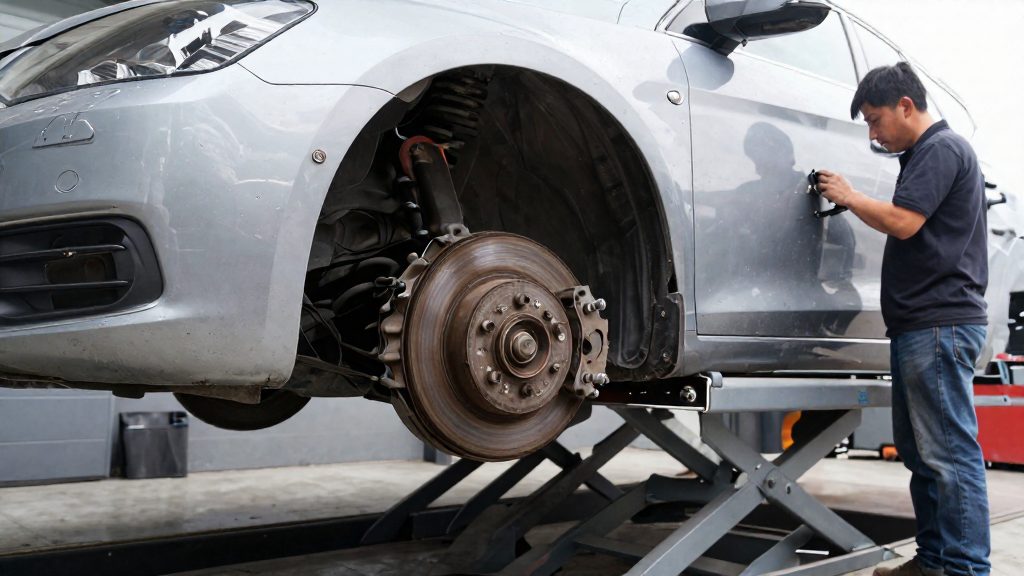
A dangerous defect is the most serious category an MOT tester can record. According to the DVSA’s MOT inspection manual on GOV.UK, a dangerous defect is one that is a direct and immediate risk to road safety or has an impact on the environment, and a vehicle with one must be failed. The manual places dangerous defects mainly in brakes, steering, tyres, wheels and suspension, where one fault can quickly lead to loss of control. This guide explains the categories, lists the faults that fall into the dangerous group, and sets out what you can do with the car afterwards.
How do MOT defect categories work?
Every fault found during an MOT is placed in one of four categories. Dangerous and major defects both cause a fail. A major defect is one that may prejudice the safety of the vehicle, have an impact on the environment or put other road users at risk. A dangerous defect goes further: it is a direct and immediate risk to road safety or has an impact on the environment.
Minor defects have no significant effect on safety or the environment, so the car passes. The fault is still written on the pass certificate and should be repaired as soon as reasonably possible. An advisory is an item that is not yet deteriorated enough to justify a fail but may become more serious. The car passes, and the item should be monitored. Testers must record dangerous, major and minor defects, whereas choosing an advisory is optional for them, so you may not always see one.
The result you receive is therefore a list, not a single verdict. Read every line. A fail is shown whenever there is at least one dangerous or major item, even if the rest of the list contains only minor items.
What counts as a dangerous defect?
The manual sets a wording and a threshold for each item, and the category often depends on how far a part has worn or how badly it has failed. The examples below are taken from the current manual’s tables. Because thresholds can change, check the manual on GOV.UK when you need the exact wording for a specific part.
Brakes
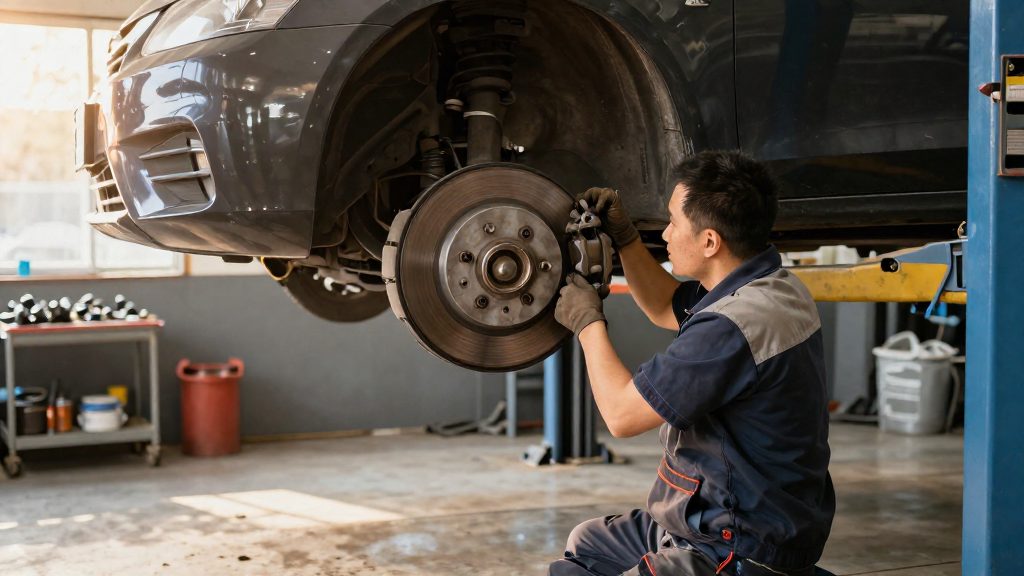
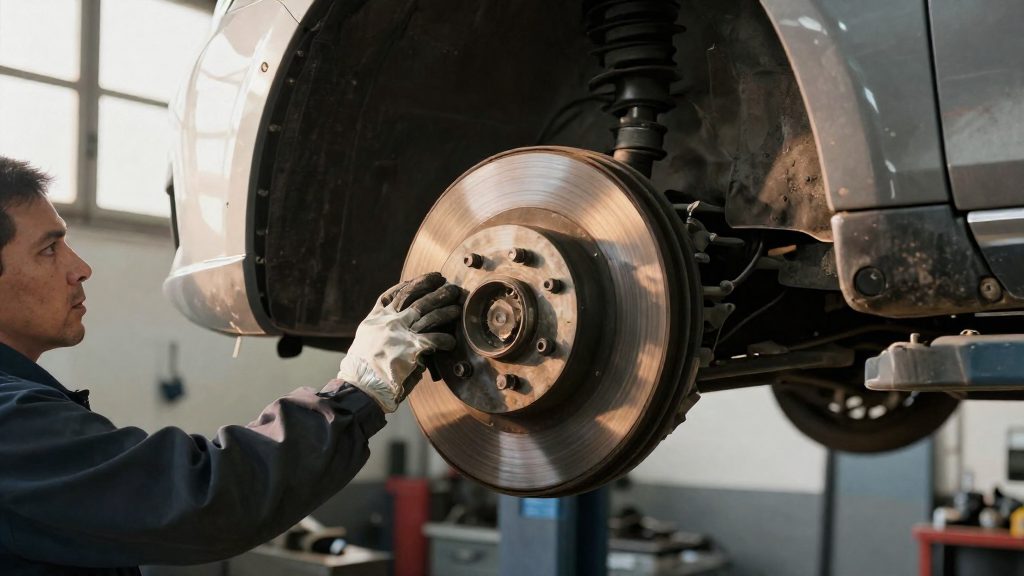
- Brake pads or linings worn below 1.5mm, or missing or incorrectly fitted. Pads worn down to the wear indicator are major, not dangerous.
- A hydraulic brake fluid leak from a valve, pipe, hose or connection that affects braking. The same leak on an air brake system is major.
- Brake fluid not visible in the reservoir.
- A brake hose damaged and likely to fail, or a rigid brake pipe at imminent risk of failure or fracture.
- A brake disc or drum that is insecure, fractured or likely to fail, or that is missing.
- A master cylinder that is leaking, or a brake servo that is inoperative.
- Service brake efficiency below 50% of the required value, or parking brake efficiency below 50% of the required value.
Tyres and wheels
- Tread depth that does not meet the requirements. For most cars and light goods vehicles, the primary grooves must be at least 1.6mm deep across the central three-quarters of the tread and around the full circumference. For pre-1933 vehicles, passenger vehicles with more than eight seats excluding the driver, and certain tricycles, the threshold is 1.0mm across a single band of at least three-quarters of the tread breadth.
- A lump, bulge or tear caused by separation or partial failure of the tyre structure. No millimetre threshold applies.
- Cords showing or damaged that can be seen without touching the tyre.
- Any fracture or welding defect on a wheel.
Steering and suspension
- Steering gear casing retaining devices dangerously loose, or relative movement visible between the casing and the chassis or bodywork.
- A steering ball joint worn to the extent that there is a serious risk of detachment, or a steering linkage component fractured or deformed so that steering is affected.
- Power steering inoperative with steering adversely affected.
- Steering play excessive to the extent that safe steering is affected.
- A spring main leaf that is fractured, or a shock absorber that is missing or likely to become detached.
Where the manual uses words such as ‘affected’ or ‘serious risk’, the tester judges the effect of the fault on that vehicle. A fault of the same type can therefore be major in one car and dangerous in another, depending on how it behaves.
Why is a dangerous fail more serious than a major one?
Both categories produce a fail, so the result sheet can look much the same. The difference is the level of risk. A major defect may prejudice safety, while a dangerous defect is a direct and immediate risk. In practice, dangerous means the car should not be used until the fault is corrected.
The brake pad example shows how the categories separate. A pad that has worn down to the wear indicator is major. A pad worn below 1.5mm, or missing, is dangerous. The part is the same, but the category changes with the measured condition. The same logic applies to brake fluid: a hydraulic leak that affects braking is dangerous, whereas an air-system leak in the same type of component is major.
When you read your result, look for the word dangerous next to each item. If you see it, treat the car as unsafe to drive regardless of how it appears to behave on the road. A dangerous item is not something to monitor or to repair when convenient.
Can I drive a car after a dangerous fail?
No, not as a normal course of action. GOV.UK guidance states that you may drive away after an MOT only if the current MOT is still valid and no dangerous problems were listed. If a dangerous problem was found, the car must be repaired before you drive it. The car must also meet the minimum standards of roadworthiness at all times, whatever the test result.
The legal position is set out in section 40A of the Road Traffic Act 1988. It is an offence to use a motor vehicle, or cause or permit another person to use it, on a road when its condition is such that its use involves a danger of injury to any person. Penalties are set by law and depend on the circumstances, so the safe course is to avoid moving the car on the road at all.
Practically, that means you should arrange for the car to be recovered to a repairer rather than driving it there, even if the garage is close. Do not attempt a short move to test the car, and do not try to drive it to a test centre for a retest. If the dangerous item affects brakes or steering, a short trip is not a safe test. Ask the test centre for the refusal of an MOT test certificate, which records the reasons for the fail, and give it to the repairer so the work can target the listed items.
When can I get a retest without paying again?
The retest rules depend on how the car leaves the test centre and when it returns. If you leave the car at the test centre for repair and it is retested within 10 working days, you need only a partial retest and there is no fee. If you take the car away and return it within 10 working days, a partial retest fee may be charged. In all other cases you need a full retest and must pay the full MOT test fee again.
There is also a route for certain items. GOV.UK lists about 40 items that qualify for a free partial retest if the car is returned to the same test centre before the end of the next working day. The examples on the page include battery, horn, mirrors, seats, steering wheel, tailgate, towbars and wheels and tyres. Some items apply only to class 5 vehicles, and headlamp cleaning or levelling devices qualify only where they do not need a headlamp aim check. Check the full list on the retests page before you assume that a particular item qualifies, because a dangerous fault can change what is required.
Ask the test centre at the point of the fail which route applies to your car. If you are unsure, the test centre can tell you whether the items on your certificate fall into the next-working-day group.
What should I do before the retest?
Repairs to brakes, steering, tyres, wheels and suspension are safety-critical. Have them carried out by a qualified technician, and ask for the work to be checked against the manufacturer’s repair information for your vehicle. Replace worn or damaged parts rather than adjusting them to pass, and use parts that meet the manufacturer’s specification.
If you do the work yourself, be honest about your competence. Brake and steering work needs correct torque settings, bleeding procedures and checks that many home workshops cannot perform. If the manufacturer’s instructions are not available to you, the safest option is a garage with the right equipment and training.
Keep the repair invoice and the refusal certificate together. Both help the test centre see which items were repaired and help you show that the car was returned in a safe condition. After the repair, bring the car back under the retest route that applies to your case, and make sure the items that failed are the ones inspected.
Frequently asked questions
Can I appeal an MOT fail?
Yes. If you believe the result is wrong, you can appeal it. GOV.UK explains the appeal process on its after-the-test page. Correcting a mistake in the official MOT record is a separate process, so check which one applies to your case.
Is an expired MOT the same as a dangerous fail?
No. An expired MOT is a legal status. According to GOV.UK, you cannot drive or park your vehicle on the road once the MOT has run out, except when driving to or from a repair or to a pre-arranged MOT test. A dangerous fail is a result about the condition of the vehicle at the test. A car can have both problems at once.
Can I repair a dangerous defect myself?
Only if you have the skills, the right tools and the manufacturer’s repair information for your vehicle. Brake, steering and suspension work is safety-critical, so a qualified garage is the safer choice if you have any doubt. Check the manufacturer’s documentation before starting any repair.