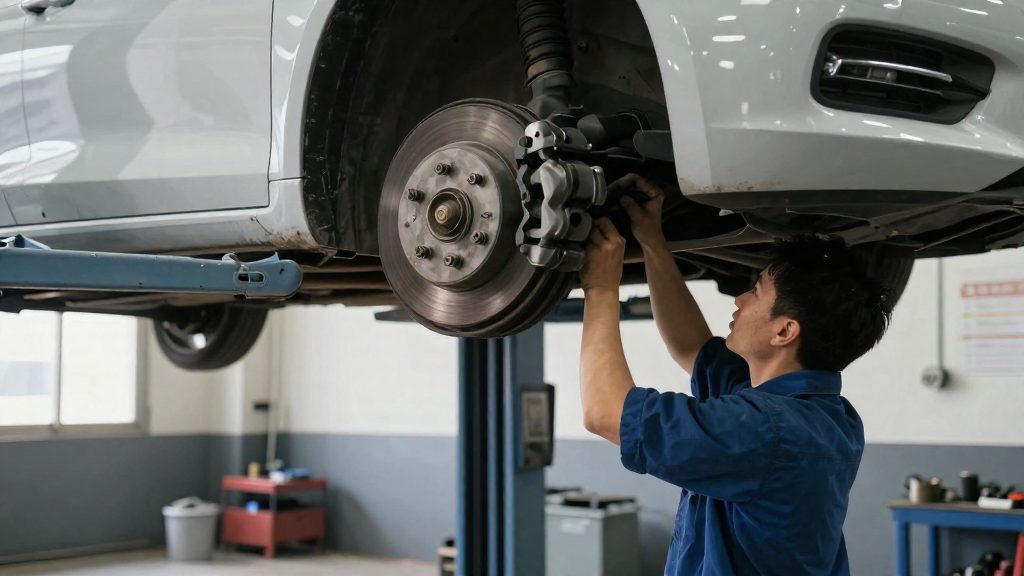
What a safety recall means
A safety recall is a formal action taken when a manufacturer, or the US National Highway Traffic Safety Administration (NHTSA), decides that a defect in a group of vehicles is a safety problem. The manufacturer then has to notify owners and fix the defect. A recall is not the same as a routine warranty repair. It applies to a defect that can cause a crash, a fire, or an injury, and it applies to every vehicle in the affected group, including yours.
A recall is not a sign that your car is being singled out. Many recalls cover thousands of vehicles built over several model years. The practical question is whether your specific vehicle is in the group, and what you need to do next.
Confirm the recall with your VIN
Start by confirming that your vehicle is affected. You will need the 17-character vehicle identification number (VIN), which is printed on your registration and insurance papers and is usually visible on the driver’s side of the dashboard and on the driver’s door frame.
Enter the VIN on NHTSA’s recall lookup on nhtsa.gov. It lists open safety recalls for that vehicle. Do this even if you have not received a letter. Mailed notices depend on the owner records the manufacturer holds, and those records can be out of date after a move, a name change, or a used-car purchase. If you bought a used car, run the check before you drive it much, because the previous owner may never have passed on the letter.
When you find a matching recall, note its campaign number. You will need it when you call the manufacturer or the dealer.
Read the notice before you book
If you have a letter, read the whole thing. A federal rule requires the owner notice to open with the words “IMPORTANT SAFETY RECALL” in capital letters, to state the VIN, and to describe the defect. It must also explain the malfunction that may occur and the conditions that can trigger it. The notice must say whether the defect can cause a crash without warning, or whether there is a warning first and what happens if you ignore it. Finally, it must list any precautions you should take before the repair.
That last section is the one to act on first. The precautions are the interim safety steps that apply until the fix is done. Follow them exactly, even if the car seems to run normally.
Interim steps and parking warnings
Some recalls carry a specific warning. The most common ones are an instruction not to drive the vehicle, a request to park it outside and away from buildings, or a limit on how the vehicle may be used, such as avoiding towing or heavy loads. These warnings exist because the defect can cause a fire or a loss of control, and a garage or a building can make a fire more dangerous.
If the notice tells you not to drive the vehicle, do not drive it to the dealer. Arrange another way to get there, such as a ride, a tow, or a rental, and ask the manufacturer or dealer to confirm how the car should be transported. If the notice only asks you to park outside, park the car in an open area away from homes and other structures until the repair is done.
If you are unsure what the notice means for your car, call the manufacturer’s customer line listed in the notice before you drive. Do not rely on general advice from a website or from another owner.
Is the repair really free?
For a safety recall, yes. Under federal law, a manufacturer must remedy a defect without charge when the vehicle is presented for the remedy. The manufacturer may choose to repair the vehicle, replace it with an identical or reasonably equivalent vehicle, or refund the purchase price less a reasonable allowance for depreciation. The owner should not be asked to pay for the fix, and a dealer must not charge you for the recall work.
You may still see a bill for a related item, such as a part that is not covered, or work that is not part of the recall. Ask the service advisor to show, in writing, which items are covered by the recall campaign number before you agree to pay for anything.
If you already paid for the same repair before the recall was announced, ask the manufacturer whether it offers reimbursement. The process differs by manufacturer, so the instructions in the notice or on the manufacturer’s recall page are the place to start.
If the remedy is not yet available
Sometimes the notice comes out before the fix is ready. The notice must state the earliest date on which the remedy will be provided free of charge. For a repair, that date is when parts and instructions are expected to reach the dealers or service facilities. If that date has not arrived, the notice may be an interim notice, meaning the manufacturer will send a follow-up letter once the remedy is ready.
In that situation, keep the interim notice. Ask the manufacturer whether an interim repair is available, which may reduce the risk while you wait for the final fix. Some manufacturers also provide a way to register your VIN for alerts when parts become available. Check the notice for a website or phone number. If the notice tells you to take precautions, keep following them until you receive the final remedy instructions.
If the dealer refuses or delays
If the dealer will not perform the recall work, or says it cannot be scheduled within a reasonable time, first ask the service manager for the reason in writing. Then contact the manufacturer’s customer service line listed on the notice and give the campaign number and your VIN.
If the remedy still fails or is not completed within a reasonable time, you can file a complaint with NHTSA. You can call the Vehicle Safety Hotline at 1-888-327-4236, or the TTY line at 1-800-424-9153. You can also file a report online through NHTSA’s vehicle complaint form. A complaint helps NHTSA decide whether a problem needs further action, but it does not replace the manufacturer’s obligation to fix the vehicle.
Keep a record of every call, email, and visit, with the date, the person you spoke to, and what they said. A clear timeline makes it much easier to escalate.
Keep proof of the repair
After the work is done, ask for a written repair order that lists the recall campaign number, the work performed, the date, the mileage, and the dealer’s name and address. Keep this document with your recall notice and your VIN check result. If the dealer only gives you a receipt that says “maintenance” or does not mention the recall, ask for a corrected copy.
Keep these papers for as long as you own the vehicle, and give them to the next owner if you sell it. They protect you if the remedy is later questioned, if another recall is opened on the same system, or if you need to show that the defect was fixed. If you are told a recall is closed but your VIN check still shows it as open, contact the manufacturer with your repair order and ask them to update the record.
Finally, check the recall lookup again after the repair and after any new recall letter. The safety of the vehicle depends on fixing every open campaign, not only the first one you received.
Frequently asked questions
Can I check recalls for a car I am thinking of buying?
Yes. Enter the vehicle’s VIN on NHTSA’s recall lookup before you buy. It shows open safety recalls for that vehicle, which helps you judge what repairs may be needed before you drive it.
Is a recall repair the same as a warranty repair?
No. A recall addresses a safety defect the manufacturer must fix for the affected group of vehicles, and the remedy is free. A warranty covers defects within its terms, and the coverage depends on the warranty document for your vehicle.
What should I do if I cannot find the VIN on my car?
The VIN is also printed on your registration and insurance papers. If you have neither, ask the dealer or a licensed registration office for help confirming the number before you run the recall check.